Start with the bag you actually carry
The most useful portable first-aid kit is the one that comes with you. Before buying supplies, choose a pouch that fits comfortably in your everyday bag, bike bag or coat pocket. A small zippered pouch keeps loose items together; a clear or light-colored one makes them easier to find. If spills or rain are likely, put moisture-sensitive contents inside a resealable bag.
Pack for the kinds of small problems you might encounter on an ordinary day, rather than trying to duplicate a home medicine cabinet. A commute, a walk across town and an afternoon at a park may call for slightly different extras, but the core kit can stay the same. Leave enough room to see and remove items without emptying the entire pouch.
Build a compact core for minor injuries
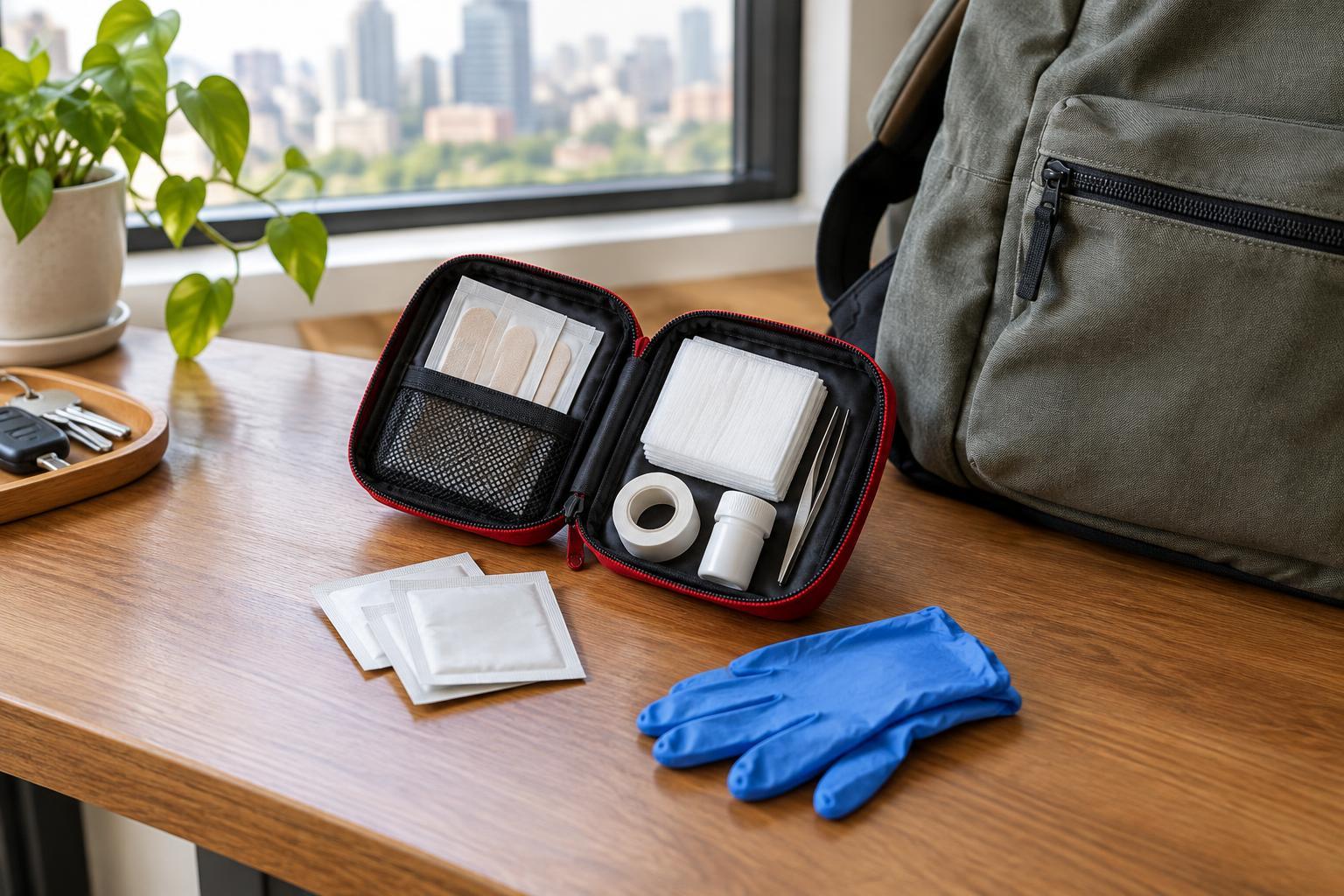
For everyday use, begin with a few adhesive bandages in different sizes, one or two sterile gauze pads, a small roll of medical tape and a couple of individually packaged antiseptic wipes. These cover common needs such as protecting a small scrape until you can clean up properly. Add a small pair of disposable gloves, preferably in a size you can put on quickly. Keeping supplies in their original wrappers helps them stay clean and makes it easier to check what needs replacing.
A compact pair of tweezers can be useful for handling a small, visible splinter, while a tiny pair of blunt-tip scissors may help cut tape or gauze. Check any venue or travel rules before carrying sharp tools. A small packet of tissues or clean wipes is handy for general cleanup, but it is not a substitute for washing your hands or cleaning a wound with suitable water when you can. Keep the kit focused: bulky duplicates can make it less convenient to carry.
Add personal items with a clear purpose
Your routine determines the extras. Someone who walks a lot might add a blister bandage; someone who frequently deals with chapped skin might carry a small, sealed lip balm. A spare hair tie, safety pin or compact cold pack can be useful in some situations, but only if it earns its space. If you travel with children or other people, consider whether the basic sizes and supplies in your kit will work for them.
Keep any personal medication in its labeled packaging, and follow the directions provided with it. If you are unsure what is appropriate for you to carry or use, ask a pharmacist or another qualified professional. Do not put loose tablets in an unmarked pouch, and do not assume medication suitable for you is suitable for someone else. A brief note with an emergency contact or relevant personal information may be helpful, provided you are comfortable with how securely it can be stored.
Make it easy to use under pressure
Organization matters as much as contents. Group bandages and gauze together, keep gloves near the top, and place small items in a separate pocket or bag so they do not disappear beneath everything else. If other people may need to find your kit, tell them where it lives. Choose packaging you can open without special tools, and avoid packing the pouch so tightly that removing one item spills the rest.
A portable kit is meant for initial, minor needs; it is not a replacement for first-aid training or urgent care. Consider taking a first-aid course if you want to feel more prepared. For a serious injury, severe symptoms or any situation you cannot assess safely, seek appropriate emergency help rather than relying on what is in the pouch.
Keep it ready between outings
A small kit only stays useful if you replenish it. After using a bandage or wipe, replace it before the next trip. Every so often, look for damaged wrappers, leaks and expired products, then swap out anything that is no longer in good condition. If the pouch lives in a bag that gets hot, damp or crushed, inspect it more often and follow storage directions on the items inside.
Once the core kit is set, resist adding an item just because it might someday be useful. Instead, notice what you have actually needed while out and adjust accordingly. A portable first-aid kit should be simple to carry, quick to search and easy to maintain—small advantages that make it more likely to be there when you need it.