Start with where and how you read
The best reading light for a shared bedroom may not be the best one for a sofa or a train seat. Before comparing lamps, picture your usual position: Are you sitting upright, lying on your side or changing positions often? Are you reading a paperback, a large book or an e-reader? Notice where another person’s face will be relative to the lamp. That tells you more than a brightness label alone.
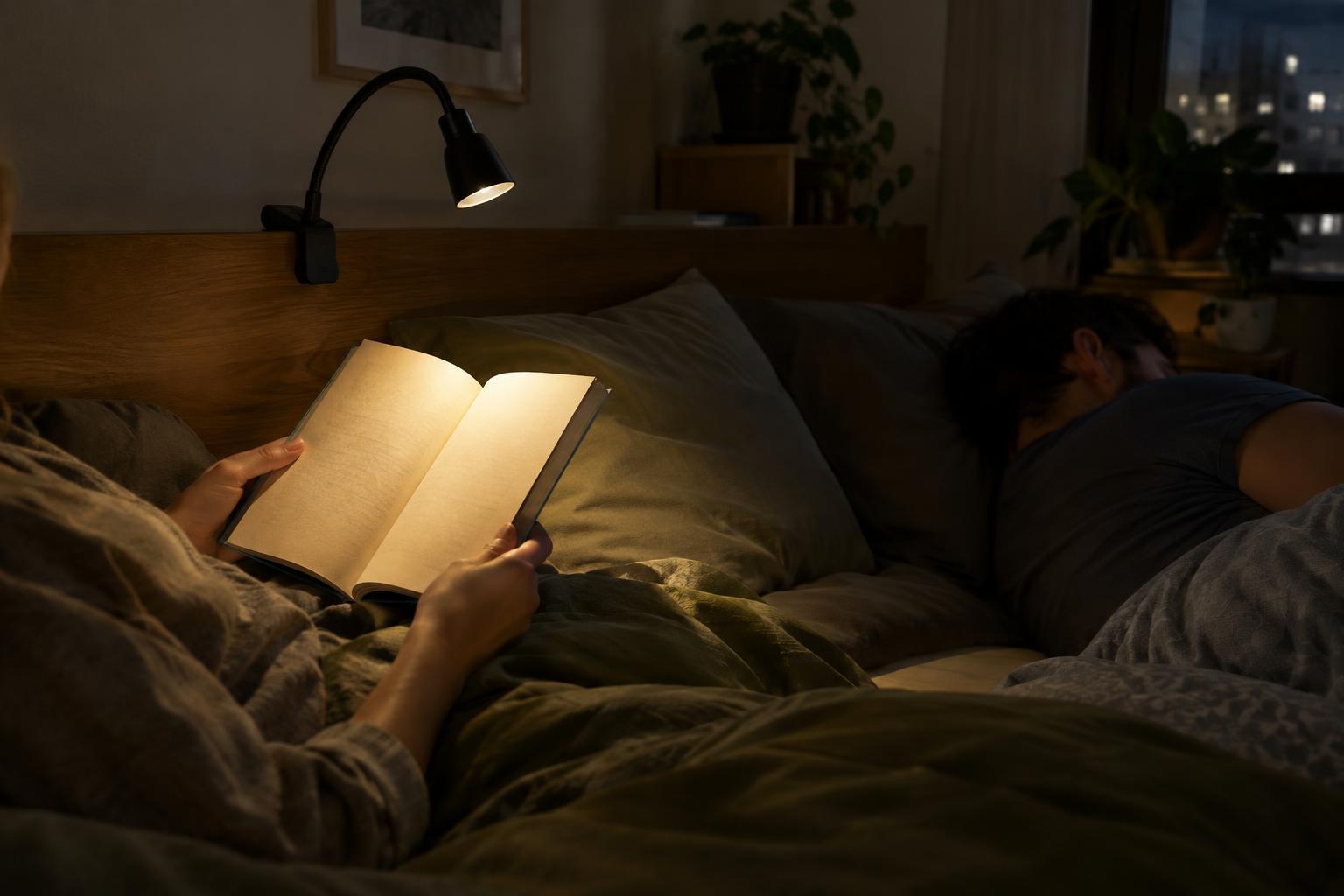
If you mainly read in one chair, a small lamp with an adjustable arm may stay out of everyone’s way. If you move between rooms, a clip-on or neck light may be easier to carry. For a shared bed, look for a light you can aim from your side toward the center of your page, rather than one that shines across the pillows. No portable light can guarantee that another person will see no glow, but placement makes a noticeable difference.
Look for a controlled beam, not just a dim one
A light can be fairly dim and still bother someone if its bulb is visible from their position. Look at the shape of the beam: Does it cover the page, or spill across the wall and ceiling? A shade, recessed light source or narrow, adjustable head can help keep the brightest part of the light where you need it. If possible, check the light from the other person’s usual seat or side of the bed as well as from your own.
Brightness adjustment is useful because the amount of light you need can vary with the room and the book. Small print or low-contrast paper may call for a brighter setting than a familiar paperback. Choose a light with several usable levels or a smooth dimmer, and try the lowest level that lets you read comfortably. A lamp that is bright only at its maximum setting is less flexible in a shared space.
Light color is another preference worth testing. A warmer setting may feel less conspicuous in a dark room, while some readers prefer a more neutral light for seeing fine detail. If a lamp offers adjustable color, treat it as a way to fine-tune your setup, not as a substitute for aiming the beam carefully.
Choose a mount that stays put
Clip-on book lights keep the light close to the page and take up little space. Check that the clip grips your usual book or cover without slipping or leaving marks. A heavy light clipped to a thin paperback may pull the pages down, while a stiff clip can make page turns awkward. If you read from an e-reader, make sure the clip will not cover the screen or press a button.
Neck lights leave your hands free and can work well when you switch between books, knitting and other close-up activities. Their two adjustable ends can also create two patches of light, so check whether they shine beyond your lap. An adjustable bedside or desk lamp is less portable, but a stable base can be convenient when you read in the same place every night. In a compact room, measure the space it needs before choosing one with a long arm or broad shade.
Whatever the style, test how easily you can redirect it after changing position. A flexible arm should hold its angle instead of slowly drooping. If you often read on your side, check that the light can reach the page without pointing directly toward the other person.
Pay attention to the small everyday details
Controls matter when the room is quiet. A button you can find by touch is easier to use than one hidden behind the clip, and a light that remembers your preferred setting may save you from switching through brighter levels each time. Consider whether charging indicators, illuminated buttons or a loud click would be distracting in your space.
Think about power in terms of your routine. A rechargeable light avoids replacing batteries, but you will need a convenient place to charge it. A replaceable-battery model may suit occasional use or travel. If a corded lamp is the better fit, plan a cable route that will not cross a walkway or catch when you turn a page. Check the stated run time or cord length against how and where you actually read, rather than choosing by a single feature.
Test the whole setup before committing
If you can try a light, bring it into a room with lighting similar to your usual reading spot. Put it on your actual book, then check three things: Can you see the full page without repeatedly moving the lamp? Can you turn pages comfortably? From the other person’s position, is the light source visible or is the beam spilling into their space?
You can improve a modest light by changing its position. Move it closer to the page, angle it away from faces or place it on the side opposite your companion. If you share a room regularly, ask what bothers the other person most: glare, light on the ceiling or the sound of controls. Choosing a reading light is less about finding the smallest possible glow than about giving yourself enough useful light while directing the rest away.