Start with how you will carry it
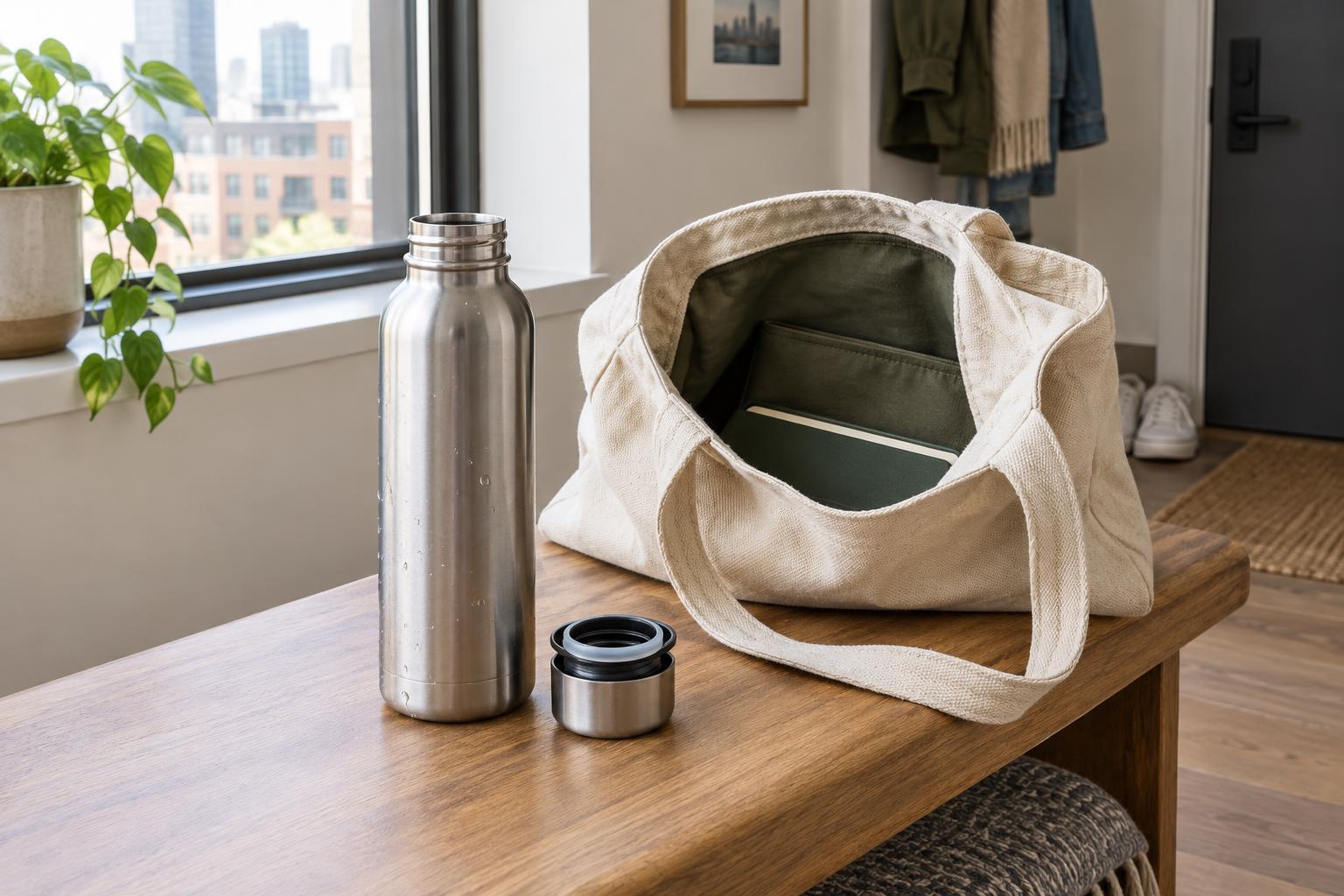
“Leakproof” matters most when a bottle is on its side in a tote, pressed against other items in a backpack or bouncing around during a commute. Before comparing designs, picture where yours will spend the day. Will it sit upright on a desk, ride beside a laptop or hang from a bag? A bottle that works well for occasional walks may be inconvenient when you need to pack it tightly every morning.
Check the bottle’s height and width against the spaces you use, including your bag’s side pocket and any cup holder you rely on. Consider its weight when full, not just when empty. A large insulated bottle may keep a drink at a comfortable temperature, but it also takes up more room. The most useful size is one you can carry easily and refill when needed.
Look closely at the lid and seal
A secure lid usually depends on a seal, such as a silicone gasket, making even contact with the bottle opening. Look for a gasket that sits firmly in place and is easy to remove or inspect for cleaning. Check that the lid threads engage smoothly; a lid that feels crooked or needs force may be easy to close incorrectly when you are in a hurry.
Think about what happens after you drink, too. A simple screw cap has fewer moving parts to check, but it usually takes two hands to open. Flip-top and straw lids can be convenient on the move, yet their hinges, drinking ports and vents create more places to inspect. If you prefer a one-handed lid, look for a clear locking mechanism and confirm that the maker describes it as suitable for carrying in a bag. A closed drinking spout is not necessarily a sealed bottle.
No lid can compensate for a damaged gasket, an overfilled bottle or a cap that has not been fully closed. A bottle may also release liquid if it is opened while under pressure, especially after being shaken or filled with a fizzy drink. Check the maker’s guidance before using anything other than still water.
Choose an opening you can live with
A wide mouth makes it easier to add ice, refill from a tap and reach inside with a brush. Its cap may be simple to clean, though the opening can be less comfortable for sipping while walking. A narrow mouth offers a more controlled drink but may need a slim brush for thorough cleaning. Straw bottles can be convenient when seated or on transit, provided you are willing to wash the straw and its small connecting parts.
If possible, try opening and closing the bottle with the same hands and routine you would use each day. Notice whether the cap stays attached, whether you have a clean place to set it down and whether the drinking edge is protected inside your bag. A design that feels easy to use is less likely to be left partly closed.
Balance material, comfort and upkeep
Stainless steel, plastic and glass each have practical trade-offs. Insulated stainless steel can help maintain a drink’s temperature, but it may be heavier and can hide how much water remains. Clear plastic lets you see the level and is often lighter; look for care instructions that match how you plan to wash it. Glass is easy to see through and may suit desk use, though its weight and breakability can make it less appealing for a crowded commute.
Pay attention to the parts that touch your mouth and the parts you will wash. A smooth interior, accessible lid and replaceable seals can make routine care simpler. Check whether the bottle and lid have different washing instructions; do not assume every component belongs in a dishwasher. If you use a bottle daily, ease of cleaning is as important as how it looks on a shelf.
Test it before trusting it in your bag
When you get a new bottle, fill it with water, close it as directed and test it over a sink. Turn it upside down, lay it on its side and gently move it around. Dry the outside first so you can tell whether any new moisture appears. Then open the lid, reseat the gasket if needed and repeat. This small check is particularly worthwhile before placing it near electronics or papers.
For everyday use, give the seal a quick look when washing up and make sure the threads are clean before closing the cap. Replace worn or missing parts if replacements are available rather than relying on an uncertain seal. The right bottle is not simply the one with the strongest leakproof promise: it is the one you can close confidently, carry comfortably and clean without turning a basic habit into a chore.