Start with the trip you actually take
The smallest umbrella is not automatically the most useful one. A tiny model may disappear into a coat pocket, but its canopy might leave your shoulders or bag exposed. Before shopping, decide where the umbrella will live and what it needs to cover. A commuter carrying a backpack may value a wider canopy; someone who wants a backup for short walks may prefer less weight.
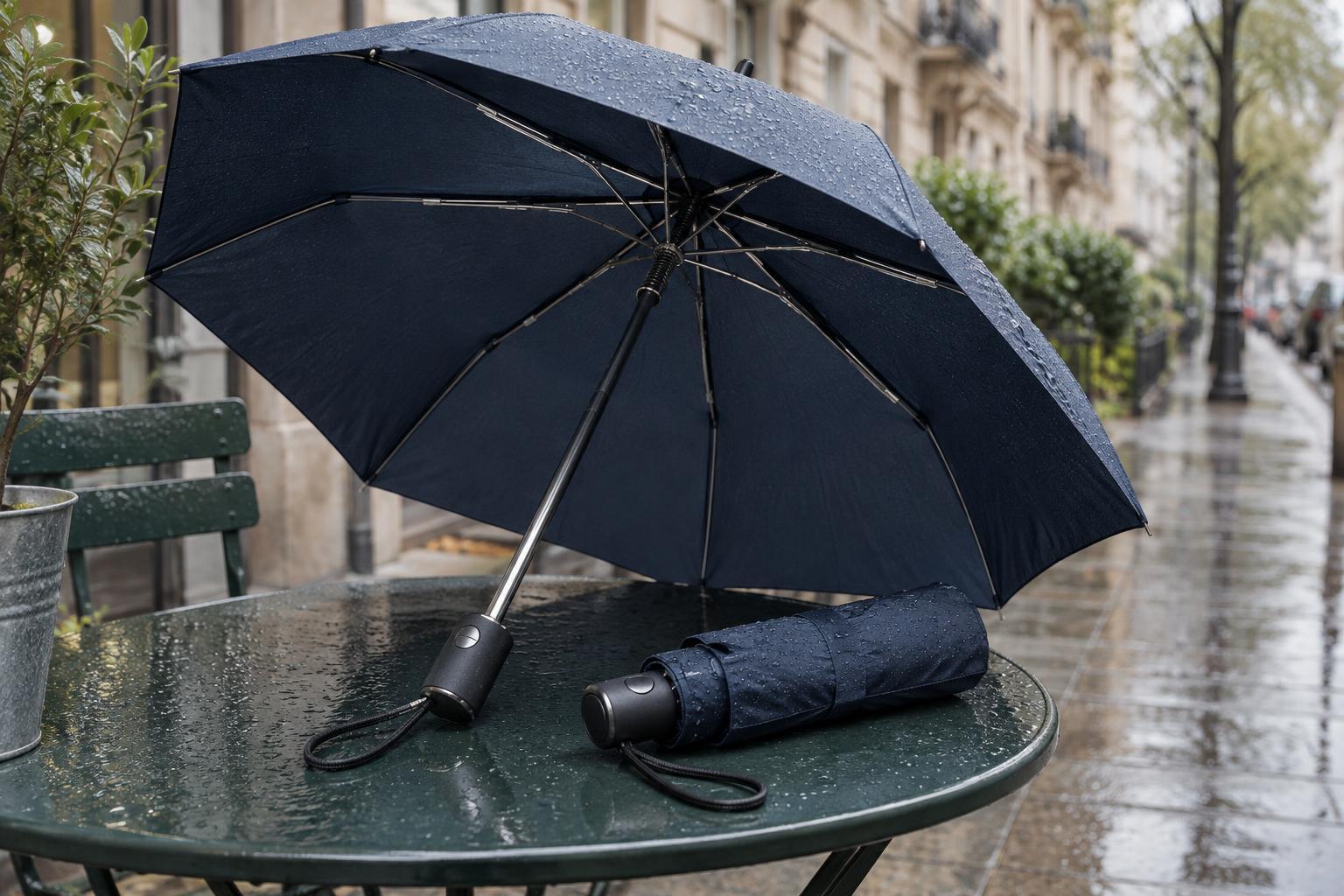
Compare both the folded length and the open canopy size. Check whether the folded umbrella fits your everyday bag without pushing against other belongings. If you can try it in person, open it and stand beneath it with the bag you usually carry. Notice whether you have to hold it at an awkward angle to stay covered. A slightly larger umbrella that you willingly take along is often a better choice than a smaller one you find frustrating to use.
Look closely at the frame and joints
Compact umbrellas fold at several points, and those moving parts deserve attention. Open the umbrella fully and inspect the ribs, hinges and central shaft. The frame should settle into place without visible twisting, loose joints or sections that refuse to align. Give the open umbrella a gentle shake; a little movement is normal, but pronounced rattling can make it less pleasant to use.
Ribs may be made from metal, fiberglass or a combination of materials. Rather than choosing by material name alone, pay attention to how the whole frame behaves. A frame that flexes slightly may cope better with a gust than one that feels brittle, but no compact umbrella is immune to strong wind. If it turns inside out, bring it down and reset it carefully instead of forcing the ribs back while the wind is still pushing against them.
Check the tips where the ribs meet the canopy, too. They should appear secure and free of sharp edges that could catch on the fabric. A reinforced point at a high-stress joint is worth noticing, although neat assembly and smooth operation matter more than any single advertised feature.
Test the canopy and opening mechanism
Hold the open umbrella up to the light. The fabric should look evenly attached and reasonably taut, without obvious holes, pulled stitches or seams under unusual strain. A canopy that sheds water is useful, but fabric alone will not compensate for gaps at the seams or a frame that cannot keep its shape. Dark fabric may conceal marks from daily use; a brighter color can make the umbrella easier to spot when you set it down.
Open and close the umbrella several times before deciding. With a manual model, the runner should slide smoothly and lock without requiring excessive force. With an automatic model, the button should be easy to locate without being so exposed that it is pressed accidentally in a bag. Some automatic umbrellas require you to push the shaft back in firmly after closing the canopy. Make sure that action feels manageable, especially if you will be doing it with wet hands at a doorway.
The handle deserves a test as well. You should be able to grip it securely for a full walk, not just for a few seconds in a shop. A wrist strap can help when you need to free a hand briefly, while a cover or sleeve can keep a damp umbrella separate from the contents of your bag. Treat these as conveniences, not substitutes for a comfortable handle and dependable frame.
Buy for repeat use, not a perfect forecast
A useful final check is to imagine the umbrella on an ordinary rushed day. Can you find it quickly, open it without struggling and carry it alongside a phone, keys or shopping bag? Does it close into a shape you can reasonably take indoors? If two models seem equally sound, choose the one whose weight and operation suit your routine. An umbrella that stays home because it is cumbersome cannot help you in the rain.
A repair or replacement policy may add value, but read what it covers rather than relying on a broad durability claim. Price is not a reliable shortcut by itself: an expensive umbrella can still be awkward, and a modest one may meet your needs well. Hands-on checks of the joints, fabric and mechanism give you a more practical basis for choosing.
Help it last between rainy days
After use, let the umbrella dry open when you have a suitable space, keeping it away from walkways where someone might trip over it. If space is tight, leave it loosely closed until you can spread it out. Packing it tightly into its sleeve while wet can keep moisture against the frame and fabric longer than necessary.
Once dry, brush away grit around the moving parts and fold the canopy along its natural creases instead of twisting it into the strap. Do not hang heavy items from the handle or use the umbrella as a walking stick. These small habits will not make it storm-proof, but they can reduce avoidable wear. The best compact umbrella is one you can carry comfortably, operate easily and look after without much effort.