Start with the day you need to cover
The best power bank is the one you will carry when you need it. Before comparing specifications, picture a typical day away from an outlet. Are you topping up a phone during a commute, keeping headphones and a phone charged through an afternoon out, or working from a tablet between stops? These situations call for different amounts of power and different ports.
Make a short list of the devices you actually carry, how often they run low, and whether you need to use them while charging. If your phone usually needs only a modest boost, a small, light bank may be more useful than a larger one that stays at home. If you regularly charge several devices, extra capacity and multiple ports may be worth the weight.
Understand what capacity can—and cannot—tell you
Capacity is commonly advertised in milliamp-hours, or mAh. A higher number generally means more stored energy within a comparable product range, but it does not translate directly into a guaranteed number of phone charges. Energy is lost as the power bank converts and delivers power, and results also depend on the device, cable and whether you use the device while it charges.
A bank around 5,000 mAh is often a sensible place to look for an occasional phone top-up. Around 10,000 mAh offers more flexibility for a long day, while larger models may suit multiple devices or longer stretches away from outlets. Treat these as shopping categories, not promises of how many charges you will get. When comparing models, watt-hours, shown as Wh, can be another useful measure of stored energy.
Consider size alongside capacity. Larger batteries usually take up more bag space and take longer to refill. If you plan to fly, check the current rules of your airline and relevant authorities before packing a power bank; limits and carrying requirements can vary.
Match the ports and charging speed to your devices
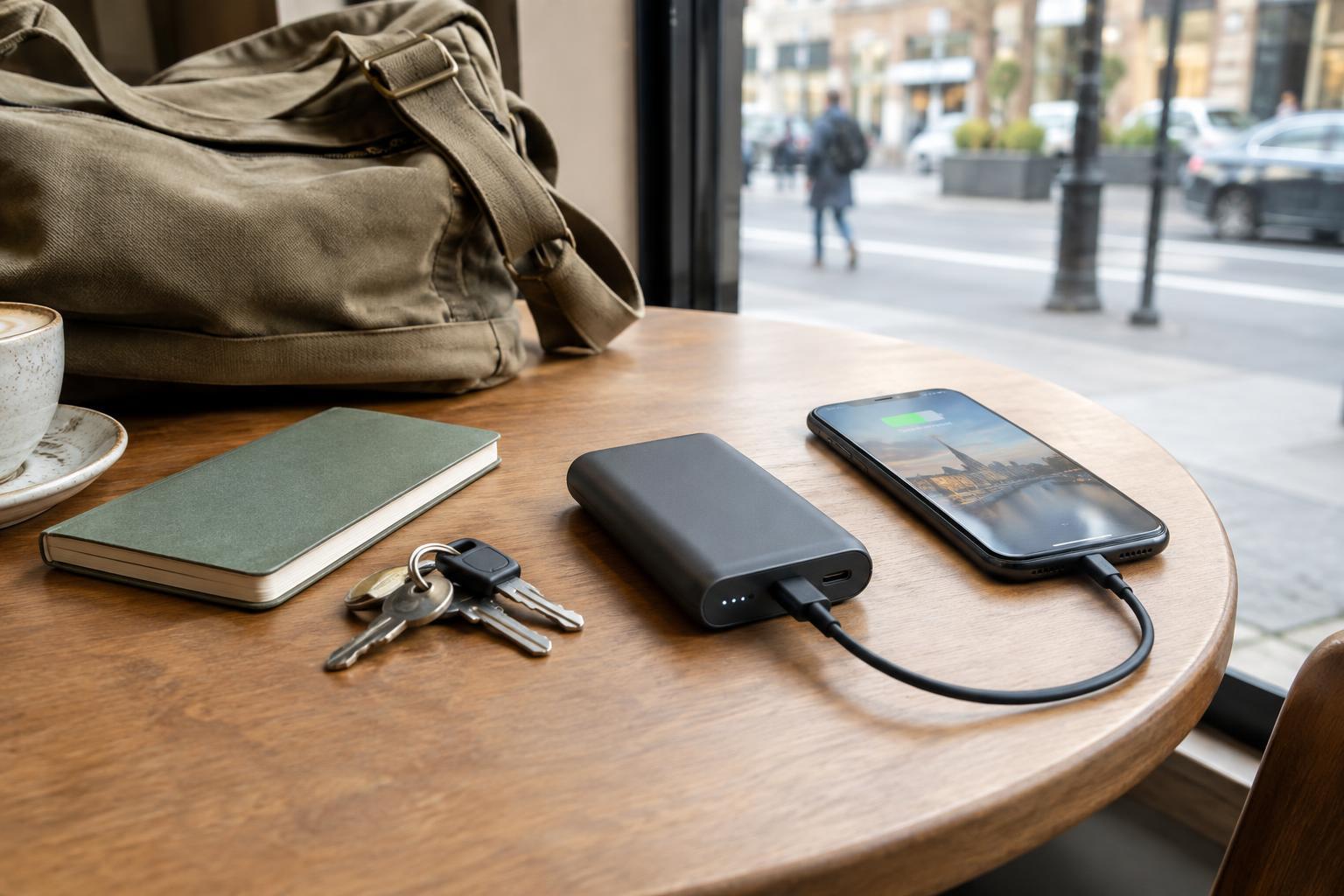
Check the connector on each device and the ports on the power bank. USB-C is particularly convenient if your phone and other accessories already use it. Some USB-C ports work for both charging devices and recharging the bank; others have more limited roles. Read the port labels or product specifications rather than assuming every opening does the same job.
Charging speed is usually described in watts. A higher advertised output is helpful only if your device supports it and you have a suitable cable. USB Power Delivery, often shortened to USB-C PD, is a common fast-charging standard. If you want to charge a tablet or compatible laptop, check that the bank’s USB-C output meets that device’s requirements. A power bank intended mainly for phones may have the right connector but insufficient output for a laptop.
Also look at the bank’s input rating: this affects how quickly you can recharge the bank itself with a compatible charger. If you expect to use two ports at once, check the combined output. Some models share their available power between ports, so each device may charge more slowly than it would alone.
Choose features that earn their space
Small design details matter when you use a power bank regularly. A clear battery indicator helps you avoid leaving with an empty bank. A built-in cable reduces what you have to pack, although a separate cable is easier to replace if it wears out. Wireless charging can be convenient for a compatible phone, but alignment matters, and a cable may be a better choice when you need a dependable connection on the move.
Compare the stated weight and dimensions with the pocket or bag where you intend to keep it. Check whether your preferred cable can reach your device comfortably while both are in use. If your bag is already crowded, a simple bank with one well-placed port may serve you better than a feature-heavy model with ports you rarely touch.
Buy thoughtfully and look after it
Look for a product with clear capacity and port specifications, understandable instructions, and a warranty or support contact. Be cautious of listings that make impressive charging claims without explaining which port delivers the stated output. Using a sound, compatible cable is part of the purchase decision, especially for higher-power charging.
Keep the bank away from excessive heat, moisture and physical damage. Stop using it if it swells, leaks, smells unusual or becomes damaged. Recharge it periodically if it sits unused, following the maker’s storage guidance. Once you know your devices and routine, the choice becomes simpler: pick enough capacity for your day, the ports and output your devices require, and a size you will actually bring along.