Start with the life you actually live
Before browsing listings, write down the trips and routines that shape an ordinary week. Include work or study, groceries, laundry, exercise, visits with friends, and the places you go to unwind. An apartment near an appealing café may matter less than one that makes your most frequent trip easier. Separate essentials from preferences so a bright kitchen or attractive street does not distract you from a difficult commute.
Map the routes you would use, then look beyond the distance shown on a screen. Consider transfers, hills, crossings, carrying groceries, and how you would get home after dark. If you rely on a bus or train, check whether its schedule works at the hours you need it. If you drive or cycle, find out where you would park or store a bike. A manageable route once a week may feel very different when repeated every day.
Visit the neighborhood more than once
A single afternoon visit gives only a narrow view. If possible, walk the area on a weekday and again during an evening or weekend. Notice traffic, street lighting, construction, noise from nearby businesses, and how comfortable you feel on the route to the building. Look for the services you expect to use regularly rather than assuming they are close because the listing describes the area as convenient.
Spend a little time on the surrounding blocks, not just outside the front door. Is there a practical place to buy basic groceries? Where would you pick up a package, meet a friend, or take a short walk? None of these needs requires a perfect neighborhood. The goal is to spot small inconveniences before they become part of your routine—and to distinguish a genuine concern from an unfamiliar place that simply needs a closer look.
Test the apartment as a working space
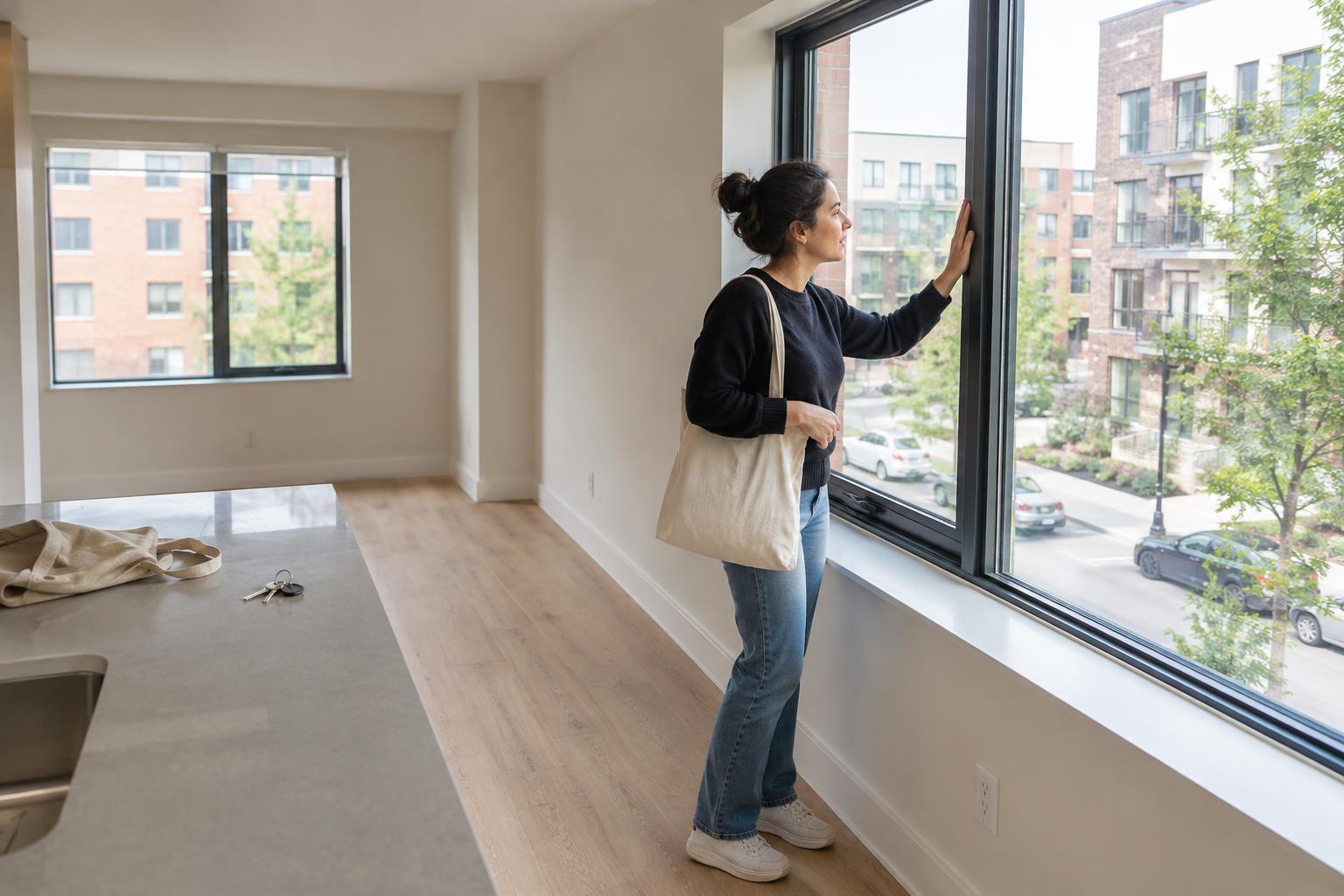
During a tour, move through the apartment as though you already live there. Open closets and windows where permitted, check that doors close properly, and look for signs of moisture around sinks, windows, and ceilings. Turn on lights and taps, ask how heating and cooling are controlled, and note whether outlets are positioned where you need them. If something cannot be tested during the visit, ask when and how you can verify it.
Pay attention to usable space, not just room labels or floor area. Consider whether your bed, desk, and dining setup would fit while leaving clear paths. Check where you would put coats, cleaning supplies, luggage, and recycling. Listen for sound from the hallway, street, and neighboring units, while remembering that one brief visit cannot tell you exactly how noisy a home will be. Photos and measurements can help you compare apartments later, provided you have permission to take them.
Ask how the building works day to day
The building’s routines can affect your free time as much as the apartment itself. Ask how deliveries are handled, where trash and recycling go, whether laundry is available, and how maintenance requests are submitted. Check access arrangements for guests and any shared spaces you expect to use. If you have a pet, a bicycle, or an unusual work schedule, raise those needs early rather than assuming the building can accommodate them.
Clarify what is included and what you must arrange yourself, such as internet or utilities. If you expect to work from home, ask about available service options and consider testing mobile reception during the visit. For an upper-floor apartment, confirm how you would move furniture in and whether the elevator, if there is one, meets your needs. Small logistical details can become recurring frustrations when they are left until move-in day.
Compare the full commitment before deciding
Look beyond the advertised monthly rent. Request a clear breakdown of deposits, application or move-in charges, utilities, parking, storage, and any other recurring costs that apply. Read the rental documents carefully, particularly the terms covering the rental period, notice, guests, pets, repairs, and changes to the rent. Rules and practices vary by location, so ask for clarification from the appropriate party when a term is unclear rather than relying on assumptions.
After each viewing, record three things: what works, what worries you, and what you still need to confirm. Compare your notes against your original essentials instead of trying to remember which apartment made the strongest first impression. A good choice is rarely flawless. It is one whose costs, condition, location, and everyday routines make sense together—and whose unanswered questions have been resolved before you commit.