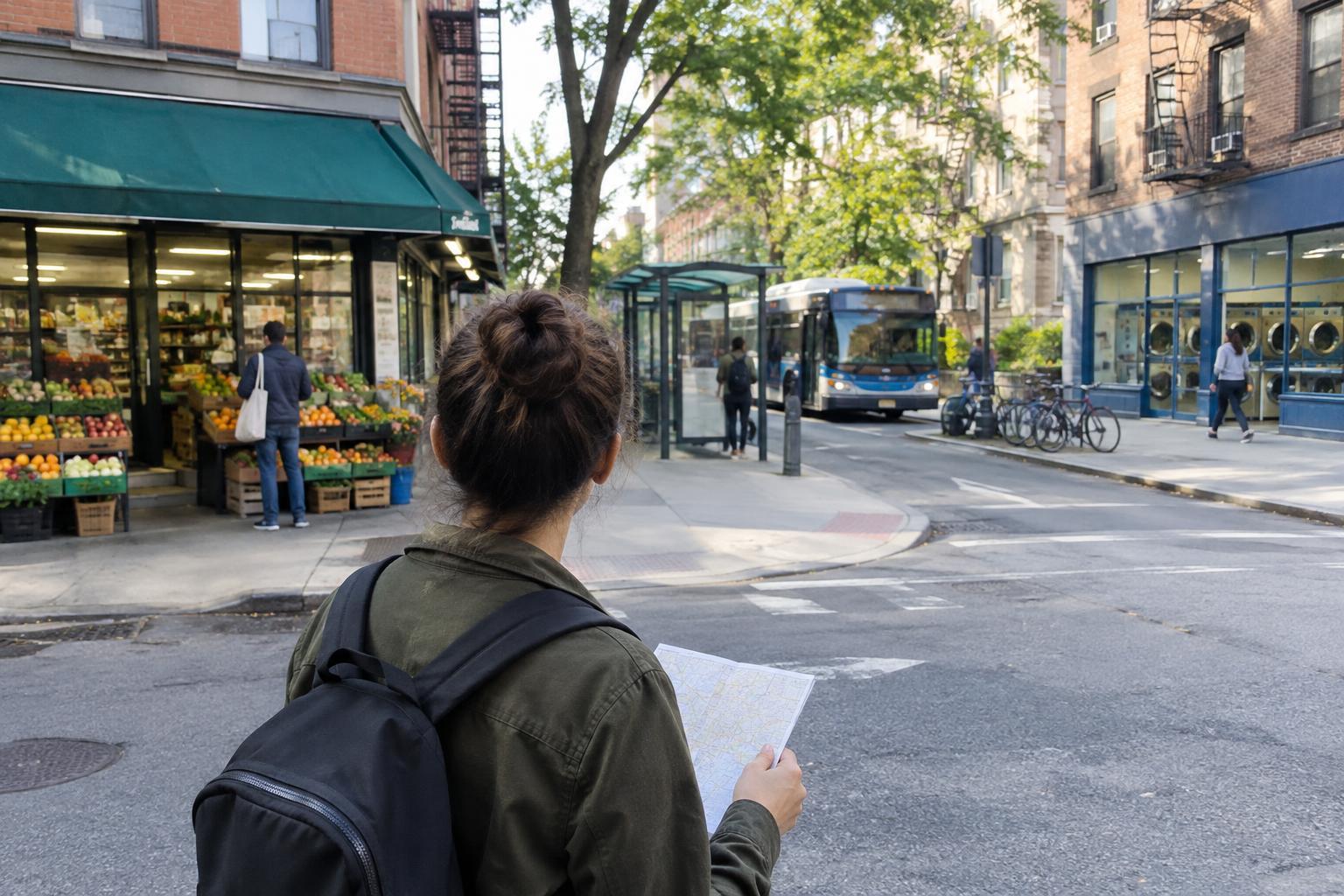
Start with the needs of your first week
Moving can make every small errand feel like a research project. Rather than trying to map the whole neighborhood, list the services you are likely to need in the first week: groceries, a pharmacy, public transport, a place to collect or send parcels, and any household services your new home requires. Keep the list short enough that you can act on it between unpacking and your usual commitments.
Mark each item as either urgent or useful later. A reliable grocery option may matter immediately; finding your favorite café can wait. If you depend on a particular product or service, check its availability rather than assuming the closest shop will carry it. Save the address, opening hours, and a backup option for your highest-priority errands. A simple note on your phone is easier to update than a detailed neighborhood guide.
Build a small map of everyday routes
A service is only useful if you can reach it when you need it. Look at the routes between home, work or school, and the places you visit regularly. A shop that sits along an existing journey may be more convenient than a nearer one that requires a separate trip. Note walking entrances, transit stops, bike parking, or vehicle access where those details affect your plans.
Test one or two routes at the times you would normally use them. A daytime walk will help you spot entrances and crossings, but it may not tell you what an evening errand feels like. Check service hours and transit schedules before relying on them, especially for weekends or late trips. Keep an alternative route or destination in mind for essentials so a closure or missed connection does not derail your day.
Confirm the services tied to your address
Some important services depend on the building or address rather than the broader neighborhood. Find out how rubbish and recycling are collected, where deliveries can be left, and whom to contact about repairs or shared-building issues. Your lease documents, building notices, property manager, or local service information may provide different parts of the answer. Write down the details that are easy to forget, such as collection locations and how to report a problem.
It is also worth locating the main controls in your home, including the water shutoff and electrical panel if you can access them safely. You do not need to solve every possible problem in advance. Knowing where information is kept and who handles which issue can save time when something needs attention. Store useful contact details somewhere you can reach even if your internet connection is unavailable.
Use local recommendations as leads, not guarantees
Neighbors, coworkers, building staff, and local community groups can point you toward useful services that are easy to miss on a map. Ask specific questions: Where can you buy a few groceries after work? Is there a convenient place for parcel returns? Which nearby shop handles a routine repair? Specific questions tend to produce suggestions that fit a real need rather than a long list of favorites.
Treat recommendations as starting points. Check the location, hours, accessibility, and services offered before making a special trip. If you are choosing someone to work in your home, clarify the job, expected cost, and scheduling before committing. Your priorities may differ from a neighbor’s: one person values the shortest walk, while another needs a later closing time. Keep the options that work for your routine and let the rest go.
Keep the guide small and revise it as you go
Once you have tried a few places, turn your notes into a compact personal directory. Group entries by purpose, such as food, transport, home, and parcels. For each essential service, record only what you will actually use: its name, location, hours to double-check, and a brief reminder such as “on the way home” or “step-free entrance.” Save a second choice where being left without one would be inconvenient.
Your first choices do not have to be permanent. A nearby shop may prove less practical than one beside your transit stop, and your needs may change as you settle in. Review the list after you have followed your normal routine for a while. The goal is not to become an expert on the area overnight; it is to make ordinary tasks predictable enough that you have more free time to enjoy your new neighborhood.