Start with the kind of space you actually have
A dedicated art desk makes almost any medium easier. If your drawing spot is also your dining table, work desk or kitchen counter, the more useful question is how quickly you can begin and put everything away. Colored pencils have the advantage here: a small set, paper and a sharpener are enough to start. You can pause mid-drawing, close a sketchbook and return later without much preparation.
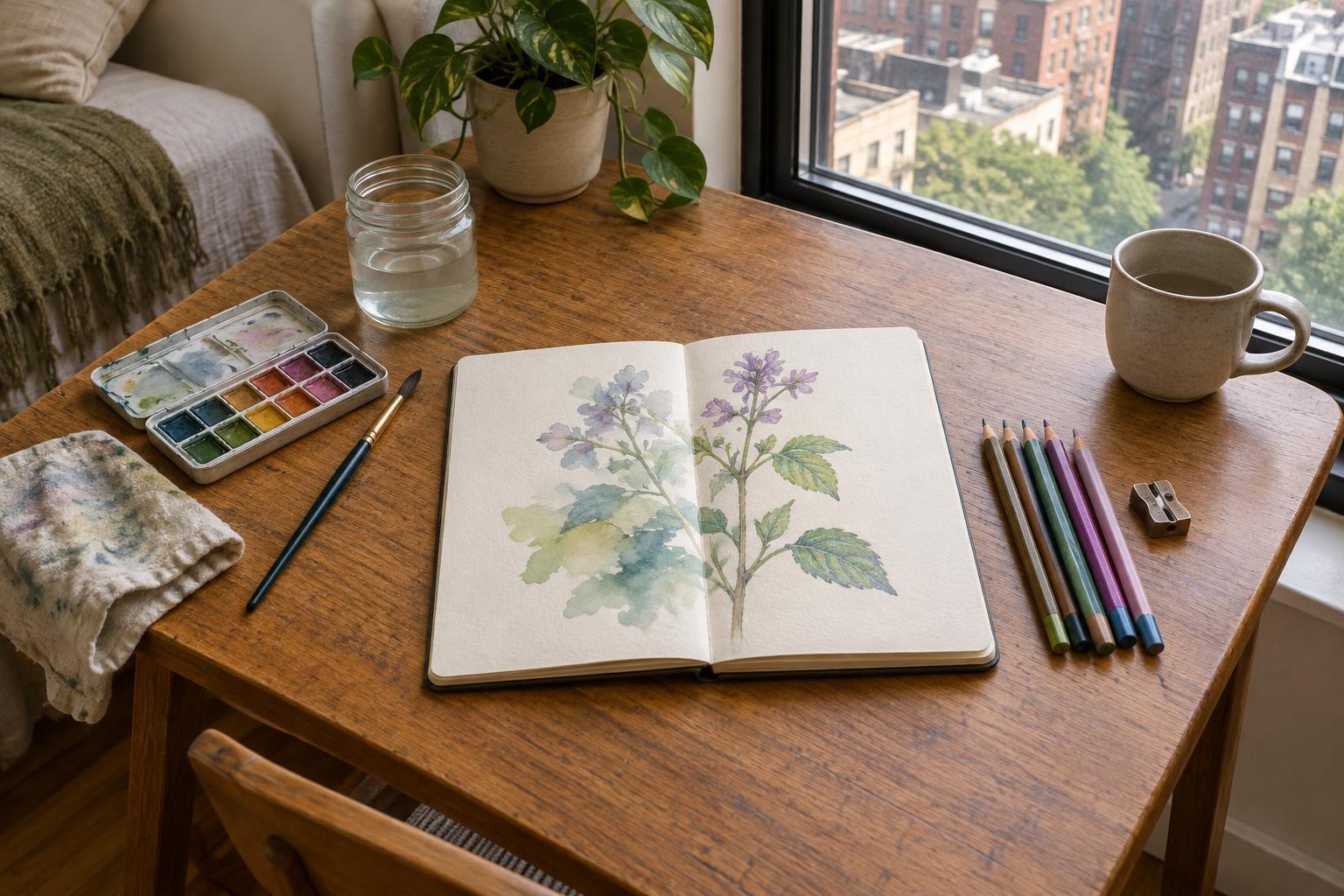
Watercolor can also fit in a small home, but it usually needs a little more temporary space. Alongside paint and paper, you will want a brush, water and something to wipe the brush on. Wet pages need a safe place to dry. None of this requires a studio; it does mean checking whether your available surface can stay occupied after you finish painting.
Compare setup and cleanup, not just supply size
A compact watercolor palette may take up less storage space than a large pencil collection. During use, though, its working area tends to spread out. Keeping a water cup away from a laptop, adding a cloth under the page and finding room to set down a wet brush can matter more than the size of the paint box. A tray can help define the work area and make it easier to clear the table afterward.
Pencils are simpler to pack up, but they are not entirely mess-free. Sharpening creates shavings, and erasing can leave crumbs. A small covered sharpener and a scrap-paper sheet catch most of that mess. If you like to keep a project ready to resume, a sketchbook with a pencil case nearby is especially convenient. With watercolor, you may need to wait for the page to dry before closing a book or stacking supplies.
Think about how you like to work
Colored pencils offer a controlled, gradual process. You can add color in short stretches, work on a small detail and stop almost anywhere. That makes them well suited to ten-minute breaks or shared rooms where the table may be needed suddenly. They also travel easily if you sometimes draw away from home.
Watercolor offers a different sort of downtime. Broad washes can cover a page quickly, and watching colors move across damp paper may be part of the pleasure. It is less convenient when you need to stop at a moment’s notice: a wash may need time to settle, and a brush should be rinsed before you leave it. Beginners may also find that water control takes practice, especially when painting on small sheets.
Neither medium is automatically easier to learn. Pencils can feel familiar because they handle like writing tools, yet building smooth layers takes patience. Watercolor can produce satisfying loose sketches with few strokes, yet it offers less opportunity to undo a mark once it dries. Choose based on whether you enjoy deliberate detail or are comfortable with a little unpredictability.
Build a kit that suits a shared table
For colored pencils, start with a modest set you can store in one case, a small sketchbook and a covered sharpener. You do not need every shade to find out whether you enjoy the process. Choose a sketchbook size that leaves room for your elbows and other items on the table. A case that closes securely makes it easier to move the kit without searching for loose pencils.
For watercolor, a small palette, one or two brushes, a water container and a cloth or reusable towel make a workable starting kit. Paper intended for watercolor is helpful because ordinary thin paper may wrinkle or weaken when wet. Keep the setup on a tray or washable mat if you are using a multipurpose surface. Before starting, decide where the painting can dry without being bumped.
Make the choice around your routine
Pick colored pencils if your creative time comes in brief, unpredictable windows, you need to clear your surface quickly or you want the fewest items out at once. Pick watercolor if you can leave a page to dry, have easy access to water and enjoy making quick, loose images more than carefully controlled ones.
If you are still unsure, try the same small subject in each medium: a mug, a window view or a leaf. Notice not only which result you prefer, but also which process you want to repeat and how much effort it takes to restore your space afterward. In a compact home, the easiest art supply is often the one you will actually take out again.