Give your walk a small assignment
An ordinary route can feel unpromising because you already know what is there. Instead of searching for a spectacular subject, give yourself one thing to notice. You might look for circles, reflections, plants growing beside pavement, or places where two colors meet. A narrow assignment makes decisions easier: you can ignore most of the street and pay closer attention when your chosen detail appears.
Keep the assignment loose enough to surprise you. If your theme is “signs of repair,” a patched wall, a freshly painted railing, and a mended bag could all belong in the same set. Try taking several different pictures of one subject before moving on. A wider view shows where it sits; a close view reveals texture; a step to the side may change the background entirely. Even a ten-minute walk can produce a useful group of images when you are looking with a purpose.
Let light change a familiar place
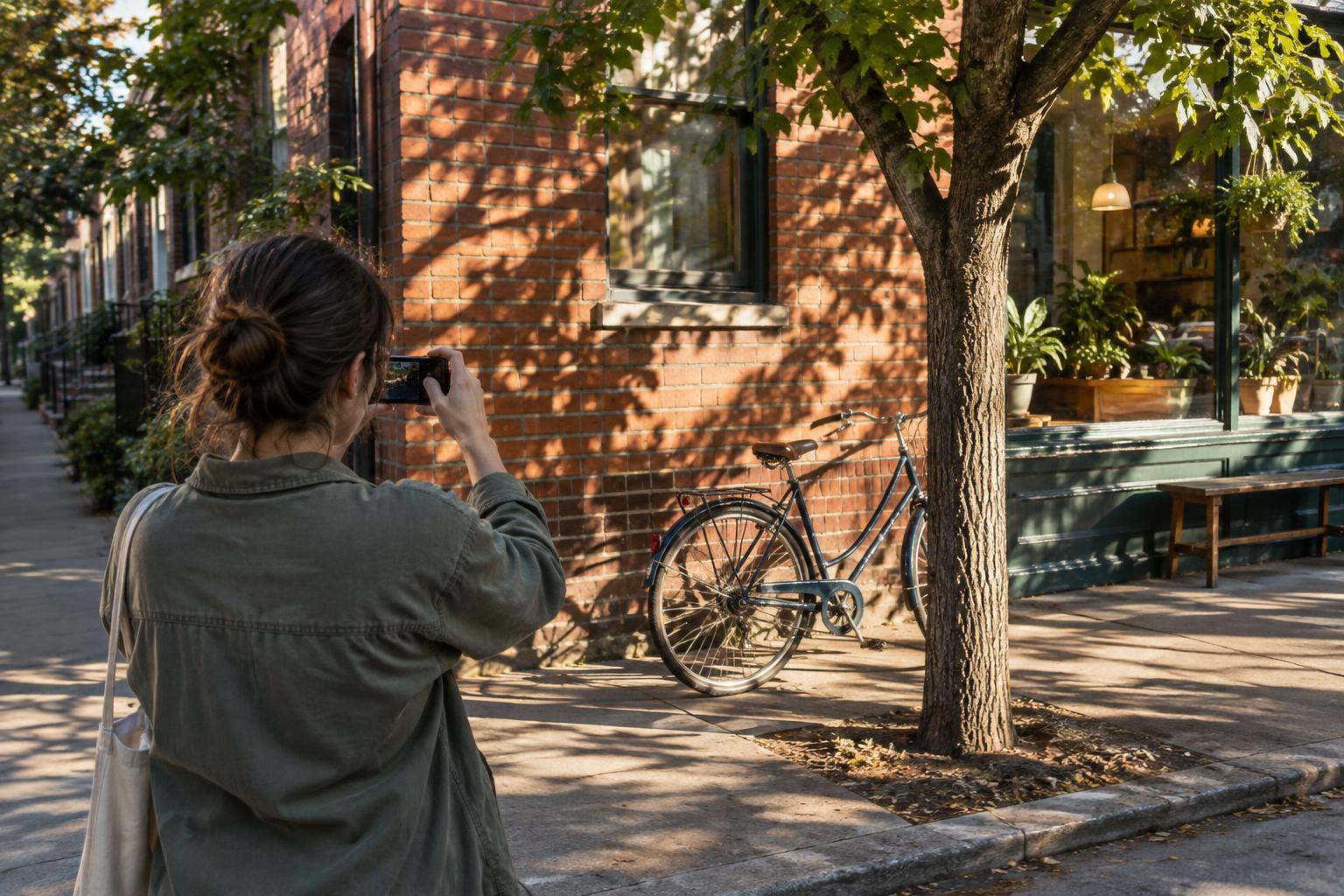
Light often matters more than the importance of the subject. Notice where it falls before you lift your camera. A bright patch on a stairway may separate its shape from a darker wall. On an overcast day, softer light can make colors and small surface details easier to see. In strong sun, shadows from railings, trees, or window frames can become subjects of their own.
You do not have to plan a walk around perfect conditions. Work with what is available: turn so a reflective window catches a different part of the street, or move a few steps to keep a bright sky out of the frame. If your phone lets you adjust exposure, tap the part of the scene you care about and check whether its detail remains visible. Take one shot, look at it, and make a small change rather than taking many identical frames.
Make the frame do some work
Interesting photographs often depend on what you leave out. Before taking a picture, check the edges of the frame. Is a stray object distracting from the shape or color that caught your eye? Can you move closer, crouch slightly, or turn the camera to simplify the scene? These small changes can make a common doorway or stack of chairs feel more deliberate.
Look for relationships as well as individual objects. A small figure passing a large blank wall creates a sense of scale. Repeated windows set up a pattern that one open window can interrupt. A foreground object, such as a branch or bicycle handlebar, can suggest depth if it does not block the main subject. Try making both a tidy version and a busier version of a scene. Later, you may find that the surrounding clutter tells more of the story than you expected.
Make room for a few surprises
A photo walk is easier to enjoy when it is not a hunt for a predetermined number of good shots. Leave time to pause at corners and look behind you. A storefront you passed without noticing may have an appealing reflection from the opposite direction. Revisit one block at a different time, and you may notice changes in shadows, activity, or color.
Be considerate while you work. Stay aware of traffic and other people, keep entrances and sidewalks clear, and respect posted restrictions. If someone is the clear subject of a close photograph, asking first is a courteous choice. You can also tell a story about public life through traces of activity—an empty bench, chalk marks, or objects arranged in a window—without making a stranger the focus.
Choose a small set, not just a favorite
When you get home, wait a little before sorting your pictures. Then choose five to eight images that work together, rather than only picking the single sharpest shot. Look for variety in distance and subject: a wide view can establish the route, while details bring attention to things a passerby might miss. If two pictures do the same job, keep the one that communicates more clearly.
Simple edits can help you finish the exercise. Straighten a tilted line if it was accidental, crop an unnecessary edge, and adjust brightness gently if needed. Avoid treating every photograph as a problem to fix. The point is to notice what drew your attention and learn from it. Save your small set with a short name for the walk or its theme. Next time, choose a different assignment and see what the same streets offer you.