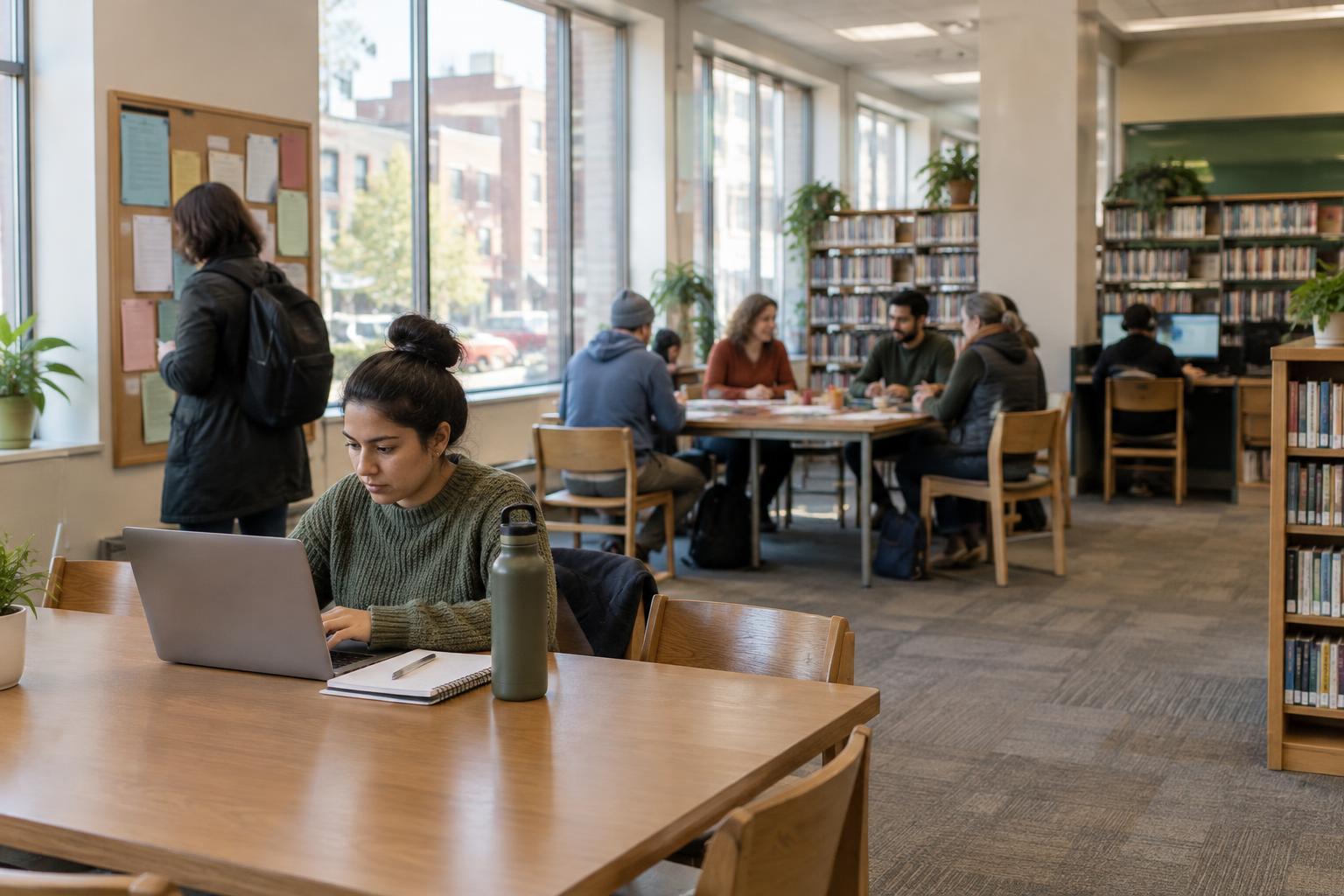
Start with the branch that fits your day
In a busy city, a public library can offer something surprisingly valuable: a place to pause without having to buy anything. It may be a spot to read before an appointment, plan an errand route or work through a small task away from a crowded home. Branches differ in size, hours, seating and atmosphere, so the most useful one is not necessarily the closest to your front door. A branch near a transit stop, workplace or regular shopping route might fit your day better.
Before making a special trip, check the library’s website or contact the branch for its current hours, available spaces and rules. Some areas require a library card for particular services, while others allow anyone to use the reading room. It helps to distinguish what you can do during a quick drop-in from what takes a reservation or registration. That small bit of planning can turn the library into a dependable part of your routine rather than another errand with an uncertain outcome.
Make room for focused time
A library table can be useful when you need a change of scene for writing, studying, filling out forms or simply thinking through a decision. If the branch has several seating areas, look for one that suits your task. A lively area may be fine for browsing and note-taking, while a designated quiet area may be better for concentration. Some libraries also offer reservable study rooms, though availability and permitted uses vary.
Pack for a short, self-contained visit: the materials you need, headphones if appropriate, a charger and a manageable task. Give yourself a clear stopping point, such as drafting an outline or sorting one folder of paperwork. Shared space works best when you keep calls to permitted areas, follow posted food rules and leave seats and outlets available when you are finished. The goal is not to recreate a private office; it is to use a public space thoughtfully.
Explore what you can use, not just what you can borrow
Many library systems offer resources beyond print books, but the selection can vary considerably. Depending on your branch, you might find computers, printers, scanners, digital reading materials, language-learning resources or equipment for creative projects. Some services are available on a walk-in basis; others may have time limits, fees, card requirements or advance booking. Ask staff what is available and what you should bring before starting a time-sensitive task.
Think of these resources as ways to test an interest or complete an occasional job without finding permanent storage at home. A scanner might help you organize a few documents. A workshop could let you try a new skill before buying supplies. If you are using a shared computer, sign out of accounts, avoid saving sensitive files to the device and collect anything you print. For private or complicated matters, consider whether a public workstation offers enough privacy for your needs.
Use the calendar to get to know the neighborhood
Library events can make city life feel more approachable, especially if your free time comes in small pieces. A talk, craft session, reading group or introductory class gives you a reason to visit a familiar place with a specific activity in mind. Look at the event description before you go: it may identify the intended age group, accessibility details, registration requirements or materials to bring. If a session is full, the calendar can still show you which topics the branch returns to regularly.
The library can also help you discover nearby places without turning every outing into a major plan. Community noticeboards, local-history collections and staff suggestions may point you toward parks, exhibitions or neighborhood organizations worth exploring. Treat listings as leads rather than guarantees, and confirm details with the organizer before heading out. One library visit might be enough to give you an idea for another low-pressure afternoon.
Build a routine that stays flexible
You do not have to use every service to benefit from a library. Try pairing one visit with something you already do: stop in after groceries, spend half an hour there before a commute or browse the event calendar at the start of each month. Notice which times are comfortable for your purpose. A branch that feels busy after school may be ideal for a family visit but less suited to a quiet work session.
If your schedule, mobility or responsibilities make visits difficult, check whether your library offers remote materials, accessible services or other ways to participate. Staff can explain what applies locally. A good library habit is modest and adaptable: know where your branch is, know how to check what it offers and return when it serves a real need. That makes the library more than a place to borrow books—it becomes one useful part of navigating the city.