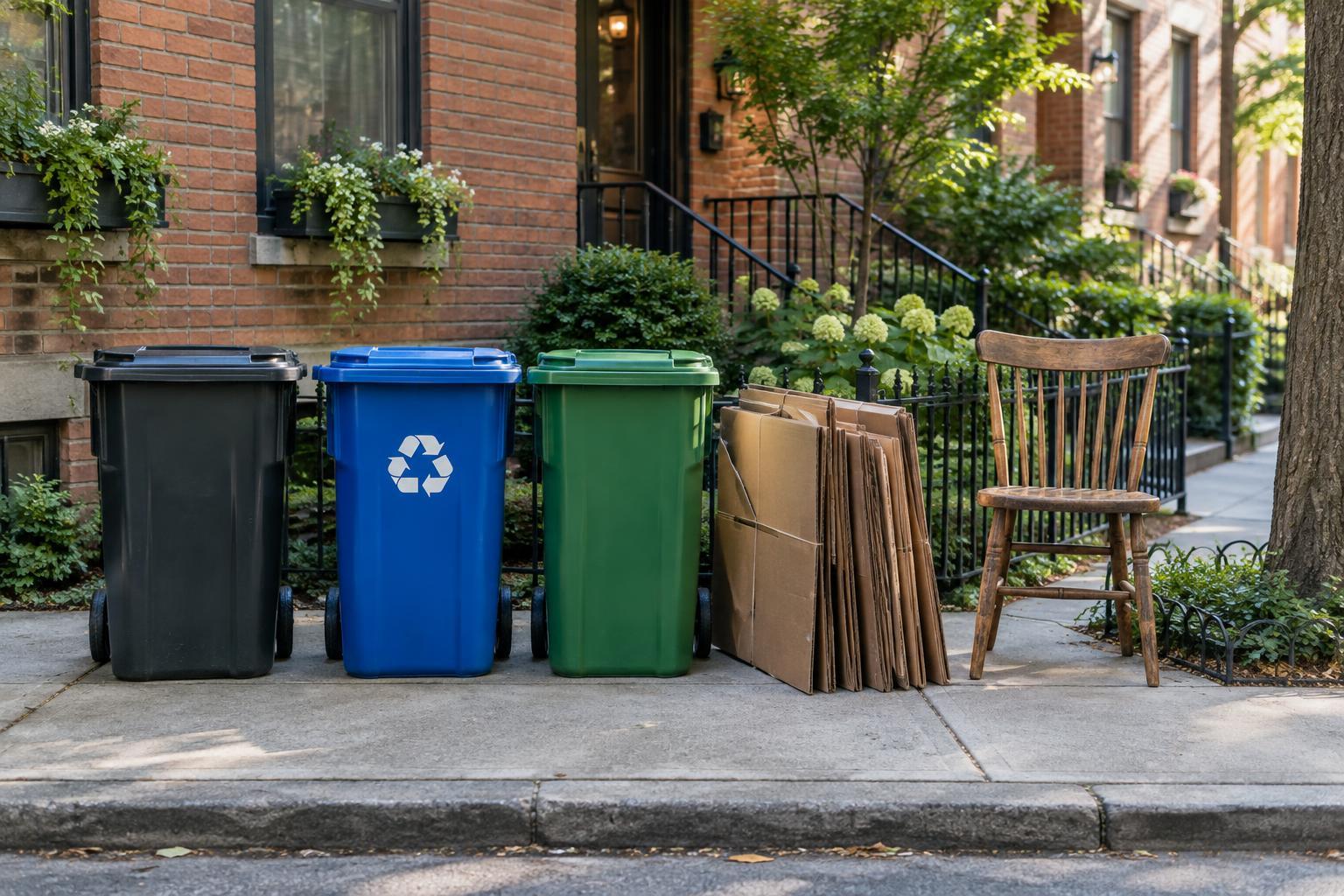
Start with the rules for your address
A neighbor’s routine is a useful clue, but it may not be the rule for your home. Collection can differ between nearby streets, apartment buildings, and houses. A property manager may arrange private pickup, while homes across the road use a municipal service. Before buying bins or putting anything at the curb, confirm which system serves your address.
Look for the local sanitation department’s address-specific collection information, then check any instructions from your landlord, building manager, or homeowners’ association. Note which materials are collected, where containers belong, when they may be put out, and whether holidays affect pickup. If two sets of instructions seem to conflict, ask the people who manage your building which service actually collects its waste. Keep the answer somewhere easy to find; it will be more useful than trying to remember every detail on collection night.
Learn what belongs in each stream
Trash, recycling, food scraps, and yard waste are not universal categories. Some programs take mixed recyclables in one container; others require materials to be separated. An item accepted in one city might not be accepted in the next. Check the local list for everyday materials first: paper, cardboard, bottles, cans, plastic packaging, and food-soiled containers.
Pay attention to the preparation rules as well as the item list. Your service may ask you to empty containers, flatten boxes, remove certain lids, or keep recyclables loose rather than bagged. These details help collection crews handle the material as intended. They can also matter in a shared bin, where one person’s oversized box may leave no room for everyone else’s recycling.
When an object is hard to classify, avoid guessing from its appearance or a recycling symbol alone. Look it up in the local sorting guide or ask the service provider. Batteries, electronics, paint, and other potentially hazardous items often need a separate drop-off or collection route. Keep them aside until you know the appropriate option rather than slipping them into an ordinary bin.
Plan bulk pickup before moving a large item
A chair, mattress, appliance, or broken shelving unit may need a different process from regular trash. Some services require an appointment, a label, a fee, or a particular set-out day. Others do not collect certain items at all. Building rules may add requirements about elevator use, storage, or where an item can wait before pickup.
Check the instructions before carrying anything downstairs. Identify the item accurately, including its size and major materials, and ask whether it needs special preparation. If your building uses a shared waste area, confirm that the item will not block doors, bins, walkways, or access for collection crews. Do not assume that leaving it beside a dumpster makes it eligible for pickup.
If the item is still usable, consider a suitable donation or reuse option, provided it meets that organization’s acceptance rules. If it is not, arrange the approved collection or drop-off method. Either way, deciding before you move it prevents a bulky object from becoming a long-term obstacle in a hallway or small apartment.
Build a routine that fits a compact home
You do not need a row of large indoor bins to follow local rules. Start with containers sized to your household and the space you have. A small trash can, a bag or box for dry recyclables, and a separate spot for items awaiting special disposal may be enough. Place them where sorting happens naturally, often near the kitchen, and label them if multiple people share the space.
Set a reminder for collection day and any permitted set-out window. Breaking down boxes as they arrive can keep them from taking over a closet. If your area collects food scraps, use a container you can empty and clean regularly according to the program’s instructions. For less frequent items, such as batteries or electronics, choose a designated holding place and review it occasionally so it does not become a mystery pile.
Finally, revisit the rules when you move, your building changes its service, or you notice a new collection notice. A simple address-specific checklist—what goes where, pickup days, and how to arrange bulk collection—makes the routine easier to follow for housemates and guests. The goal is not to memorize every disposal exception. It is to know where to check before an unfamiliar item leaves your home.