Build a restroom plan around your route
A restroom is easiest to find before you urgently need one. When planning a day across several neighborhoods, mark a few likely stops near places where you expect to spend time: a transit hub, a museum, a library, a park building or a large shopping area. Availability varies by city, building and time of day, so think of these as possibilities rather than guarantees.
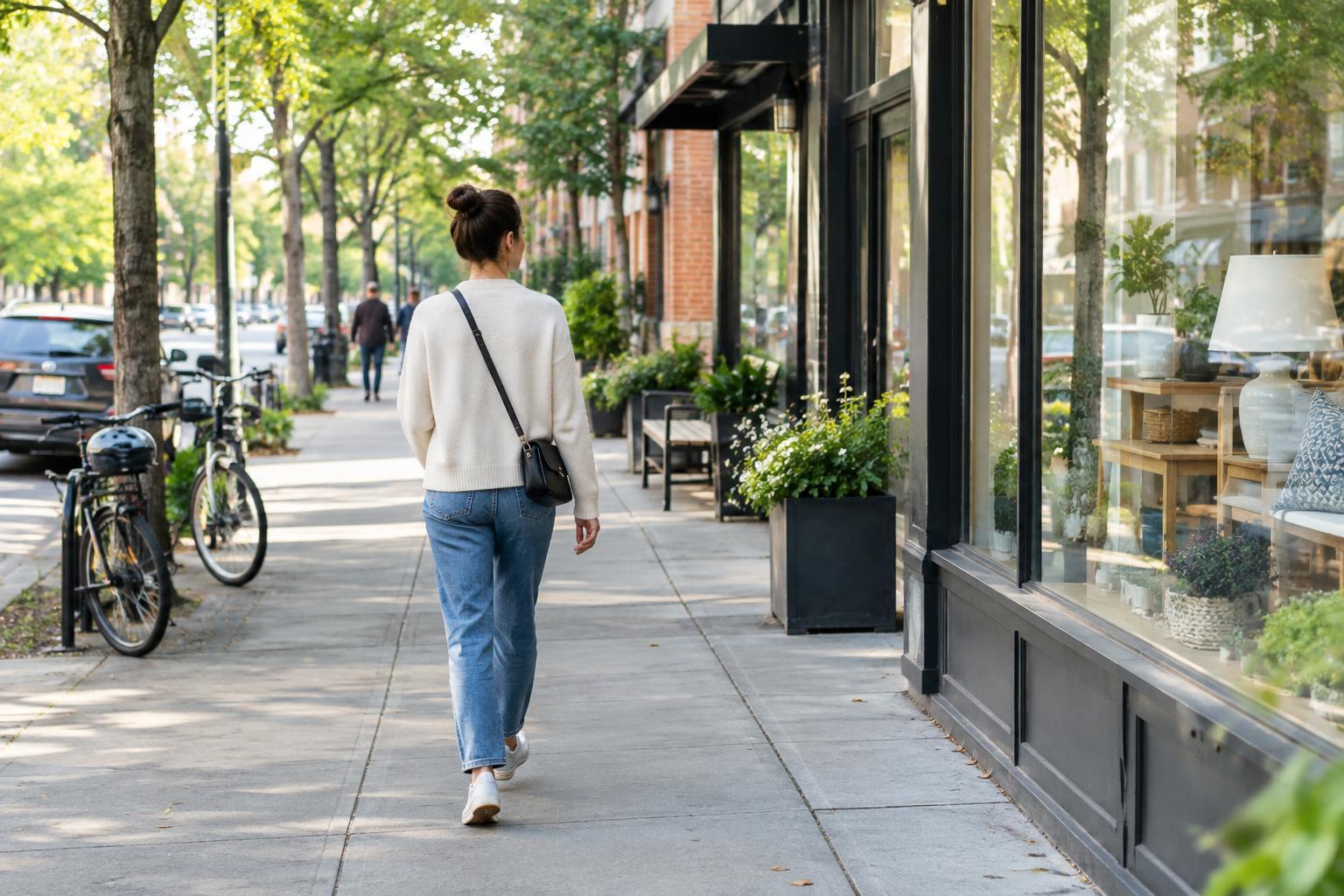
Look at the shape of your outing, too. A long walk along a waterfront or through a residential area may have fewer options than a busy commercial street. If your route includes one of those stretches, use a restroom before you start it. For an unfamiliar destination, note an alternative a few blocks away in case your first choice is closed.
Know where to look
Public libraries, recreation centers, visitor centers and staffed park facilities can be useful starting points. Larger train or bus stations may also have restrooms, though access rules can differ. In shopping districts, department stores and malls are often easier to navigate than a string of small businesses. Museums and other attractions may have facilities, but some restrict them to ticket holders.
A map search can help you spot nearby options, and some cities provide maps of park or public facilities. Treat listings, opening hours and user notes as clues, not promises: a restroom may be temporarily closed, inside a paid area or difficult to find. If a location matters to your plans, check its official visitor information when available or ask staff when you arrive.
Cafés and restaurants are possible backups, but their restrooms may be reserved for customers. Read posted signs and ask politely rather than assuming access. Keeping a couple of options in mind makes it easier to respect a business’s policy without losing time searching from scratch.
Make access and comfort part of the search
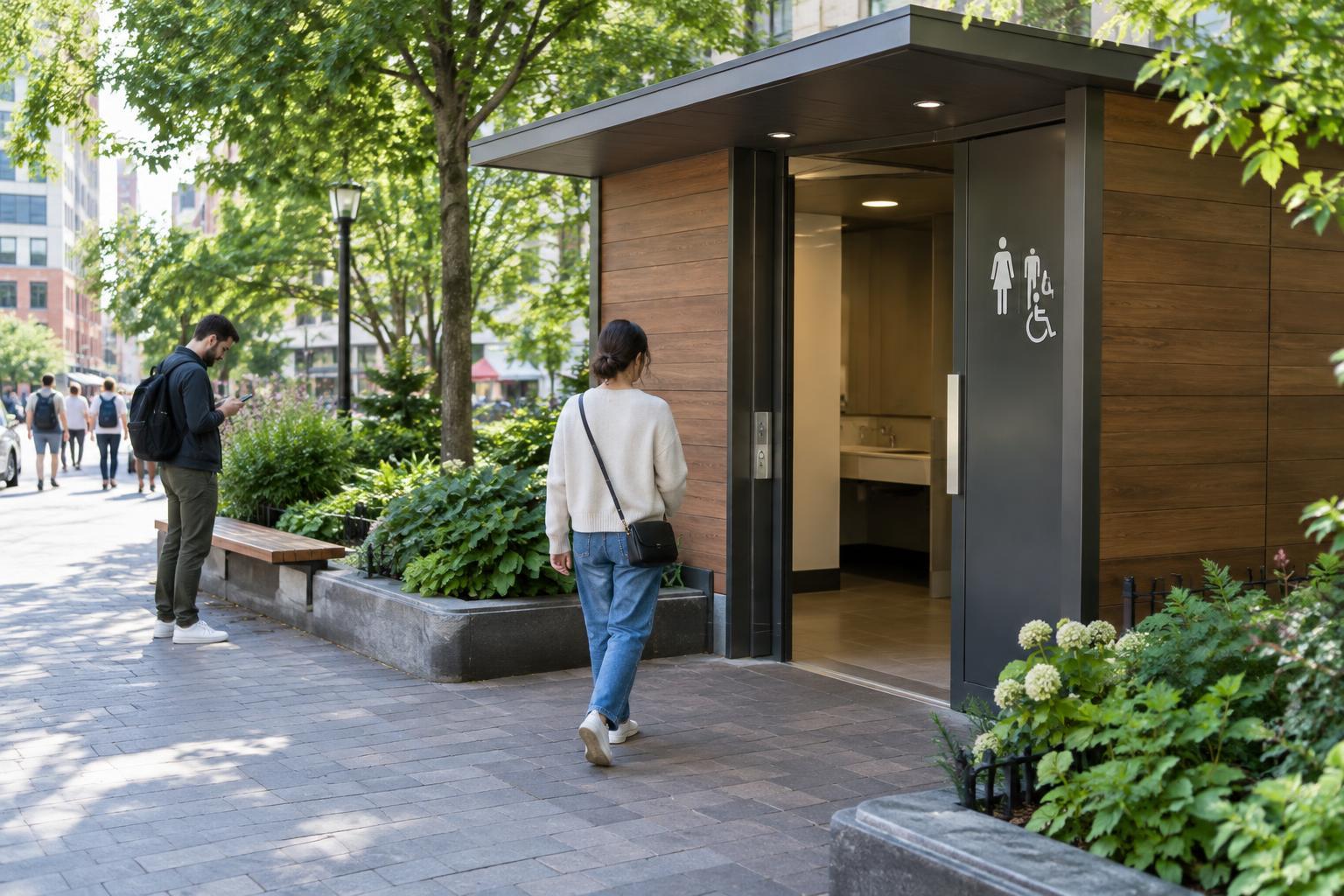
The closest restroom is not always the most usable one. If you need step-free access, room for a mobility device, a changing table or a particular type of facility, try to confirm those details before making a detour. An accessibility label on a map may not tell you whether the entrance, lift and restroom are all available at that moment. Staff at a staffed venue may be able to point you toward the best entrance or an alternative nearby.
Choose places where you feel comfortable stopping. A well-lit, staffed building may be preferable to an isolated facility, especially after dark. If a restroom is closed, poorly maintained or feels unsafe, leave and try your backup. Give yourself enough time that you do not feel pressured to use a place that does not meet your needs.
Carry a small, useful kit
A few lightweight items can make an unpredictable stop easier: tissues, hand sanitizer and a small bag for items you need to carry out. If you use period products, incontinence supplies or other personal items, keep a spare in a pouch you can move between bags. Soap, toilet paper and bins are not available in every facility, so a compact kit provides a little flexibility without taking over your bag.
Pack with your actual routine in mind rather than preparing for every possible problem. A pouch you can find quickly is more useful than supplies buried at the bottom of a backpack. After an outing, replace what you used so the kit is ready next time.
Use the stop considerately, then update your route
Follow posted rules, leave the space as you would hope to find it and keep an accessible stall available when you have another suitable option. If a facility has a queue, check whether everyone is waiting for the same room or fixture before joining it. At a small business, a brief thank-you is appropriate whether or not its restroom is available.
When you find a reliable stop, make a note of its location and any important limits, such as restricted hours or a hard-to-spot entrance. Over time, you can build a short list for routes you travel often. It will not eliminate every surprise, but it can turn restroom planning into a quick habit rather than an urgent search.