Start with a route you can understand
A short ride across town can involve several kinds of streets: a quiet block, a painted bike lane, a shared roadway, and a busy junction. Before leaving, look over the route and note where those changes happen. The shortest route is not always the most comfortable one. A slightly longer trip on calmer streets may give you more time to notice signs, position yourself, and make decisions.
For an unfamiliar journey, allow extra time and choose a destination where you know you can leave your bike. Check your tires, brakes, and lights before setting off. Keep a lock and any essentials where you can reach them without unpacking everything at the curb. These small preparations make it easier to concentrate on the street rather than on a problem you could have caught at home.
Read bike lanes as part of the street
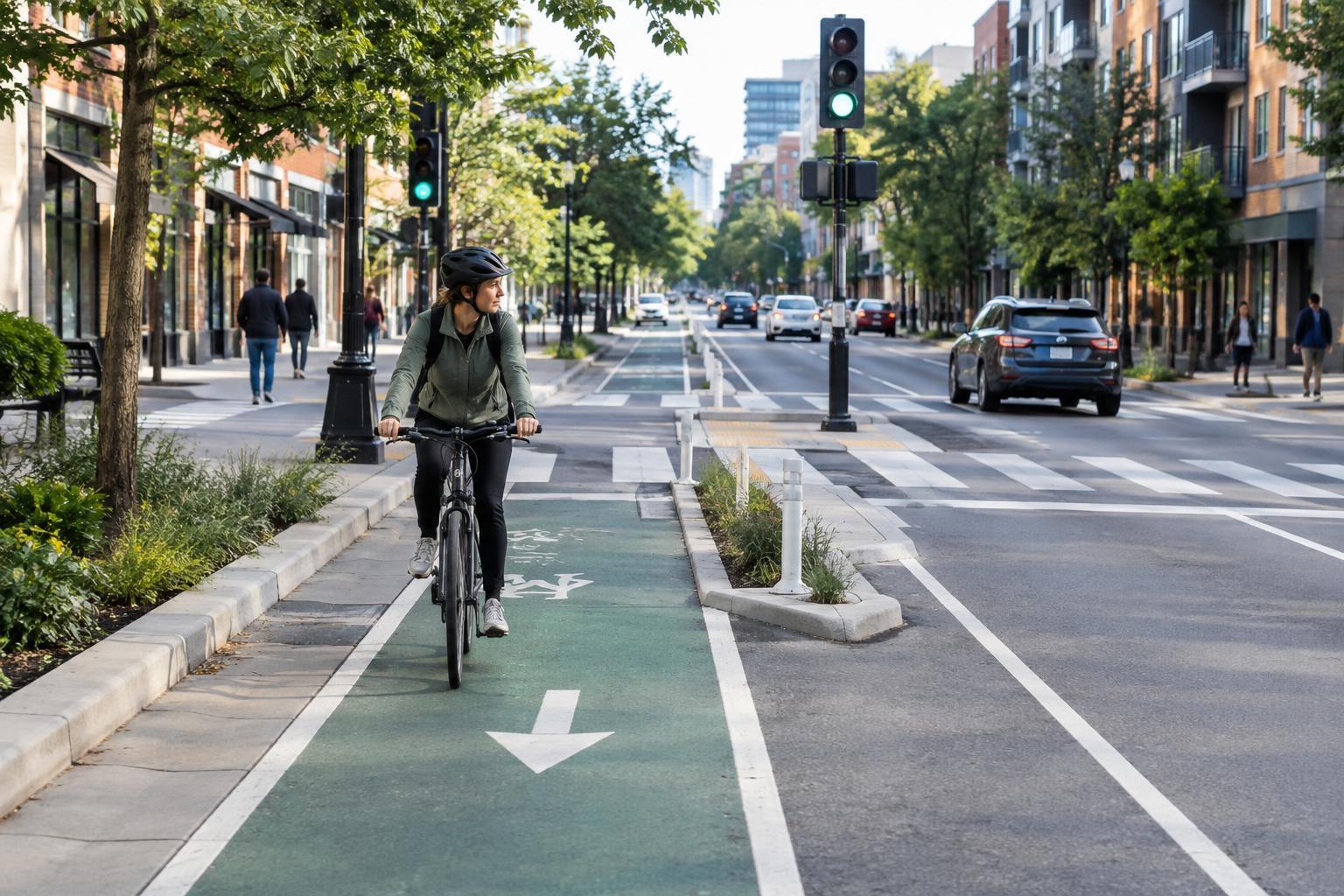
Bike lanes differ in design. Some are separated from traffic; others are marked only with paint. A painted lane may run beside parked cars, cross a driveway, or disappear before an intersection. Follow the markings and signs you encounter, but keep looking ahead rather than assuming the lane will continue unchanged.
Leave room for a parked-car door when you can, and watch for people stepping between vehicles. Near driveways and side streets, look for drivers who may turn across your path. If a lane is blocked, check behind you before moving around the obstruction, signal when useful, and make the move smoothly when there is space. If the situation feels too tight to judge, stopping and waiting is a reasonable choice.
A bike lane is not a substitute for attention to the rest of the road. Scan far enough ahead to spot surface hazards such as grates, debris, or uneven pavement, while also checking what nearby drivers and pedestrians are doing. The aim is to leave yourself options, not to hold a perfectly straight line at any cost.
Give intersections your full attention
Intersections bring several movements together at once. As you approach, ease to a speed that lets you read the signals, signs, lane markings, and people around you. Look for turning vehicles, including those traveling in the same direction as you. Do not rely on a driver having seen you simply because you are in a marked lane.
Position yourself for the direction you intend to travel, using the space and markings available. When turning, signal clearly if you can do so while maintaining control, then return your hand to the handlebar for the maneuver. If a junction is too complex or busy for a comfortable turn, you can stop somewhere safe, dismount, and cross as a pedestrian where permitted. There is no need to force a move because you already entered the approach.
Be especially careful when a large vehicle is turning. Give it space rather than trying to pass beside it at the corner. Also watch for pedestrians entering a crossing, even when your path appears open. A brief pause is often simpler than trying to guess what several people will do next.
Be predictable, but know the local rules
A steady pace and a clear line of travel help others anticipate your movements. Check behind you before changing position, avoid sudden swerves around hazards, and use lights when visibility is poor. Make eye contact when possible, but treat it as a clue rather than proof that someone will yield.
Road rules for cycling vary by location. Requirements for lights, where you may ride, how to make certain turns, and whether a particular path is shared can differ from one city to another. Learn the rules that apply to your route and follow posted signs and signals. When the layout is unfamiliar, slowing down to read it is better than copying another rider whose destination or obligations may be different.
Build confidence one familiar trip at a time
You do not have to master an entire city in one ride. Try a short route at a time when you can travel without rushing. Notice which intersections require early positioning, where bike lanes change, and which streets feel comfortable. On a later trip, extend the route by a few blocks or practice a different turn.
If you make a wrong turn, find a safe place to stop and reset rather than making a sudden correction. City cycling is a series of small decisions: looking ahead, leaving room, communicating your intentions, and choosing when to wait. Familiarity helps those decisions feel less hurried, while a willingness to slow down remains useful on every ride.