Make the walk easy before you leave
A comfortable solo walk starts with a route that suits your energy, the time available and the conditions outside. If you are going somewhere unfamiliar, look at the route before setting off. Note a few useful landmarks, such as a major intersection or transit stop, so you are not relying on a screen at every turn. A direct route is not always the best one; a slightly longer walk with clear crossings and familiar streets may feel easier.
Dress for the distance rather than just the destination. Shoes you can walk in, a bag that stays put and layers you can adjust can make a difference. Keep essentials where you can reach them without unpacking everything on the sidewalk. If your phone is important for directions or a ride home, check its charge before leaving. None of this requires special gear: the aim is simply to remove small distractions that can make a walk feel more demanding.
Pay attention without staying on high alert
Awareness is less about scanning constantly for danger and more about noticing the ordinary flow of a place. Glance ahead for crossings, construction, crowded corners and changes in lighting. Listen enough to register traffic, bicycles or someone trying to get past. If you use headphones, choose a volume that lets you hear what is happening nearby, or pause your audio when navigating a busy junction.
You do not need to judge every stranger or interpret every unexpected sound. Instead, ask simple questions: Do I know where I am going? Is the sidewalk open? Would another street be easier to walk along? Checking in occasionally can help you make practical choices while still enjoying shop windows, architecture or a few minutes away from your desk.
Give yourself permission to change plans
A planned route is a starting point, not a commitment. If a street is blocked, uncomfortably crowded or simply not working for you, turn onto a route you prefer. You can step into a staffed public place to check directions, wait for the weather to ease or arrange another way home. Changing course does not mean you overreacted; it means you responded to the conditions in front of you.
It can help to know your backup options before you need them. Identify a transit connection along the way, or leave enough time to take a different route without rushing. If you expect to meet someone, letting them know you are running late can take the pressure off. When something feels immediately threatening, move toward other people or a staffed place if you can and seek local emergency help.
Make room for comfort and connection
Walking alone does not have to feel isolating. On a new route, you might tell a trusted person where you are headed and when you expect to arrive, especially if that would put your mind at ease. A brief check-in can be helpful, but you do not need to turn an ordinary errand into a monitored journey. Choose habits that support your confidence rather than adding another task to remember.
Comfort also includes respecting your own pace. You can stop for water, take a well-lit crossing instead of hurrying across traffic, or sit for a moment where seating is available. If crowded sidewalks or uneven surfaces make walking difficult, consider a route with wider paths or a transit option for part of the trip. The most useful routine is one that fits your mobility, your schedule and your neighborhood.
Build familiarity one walk at a time
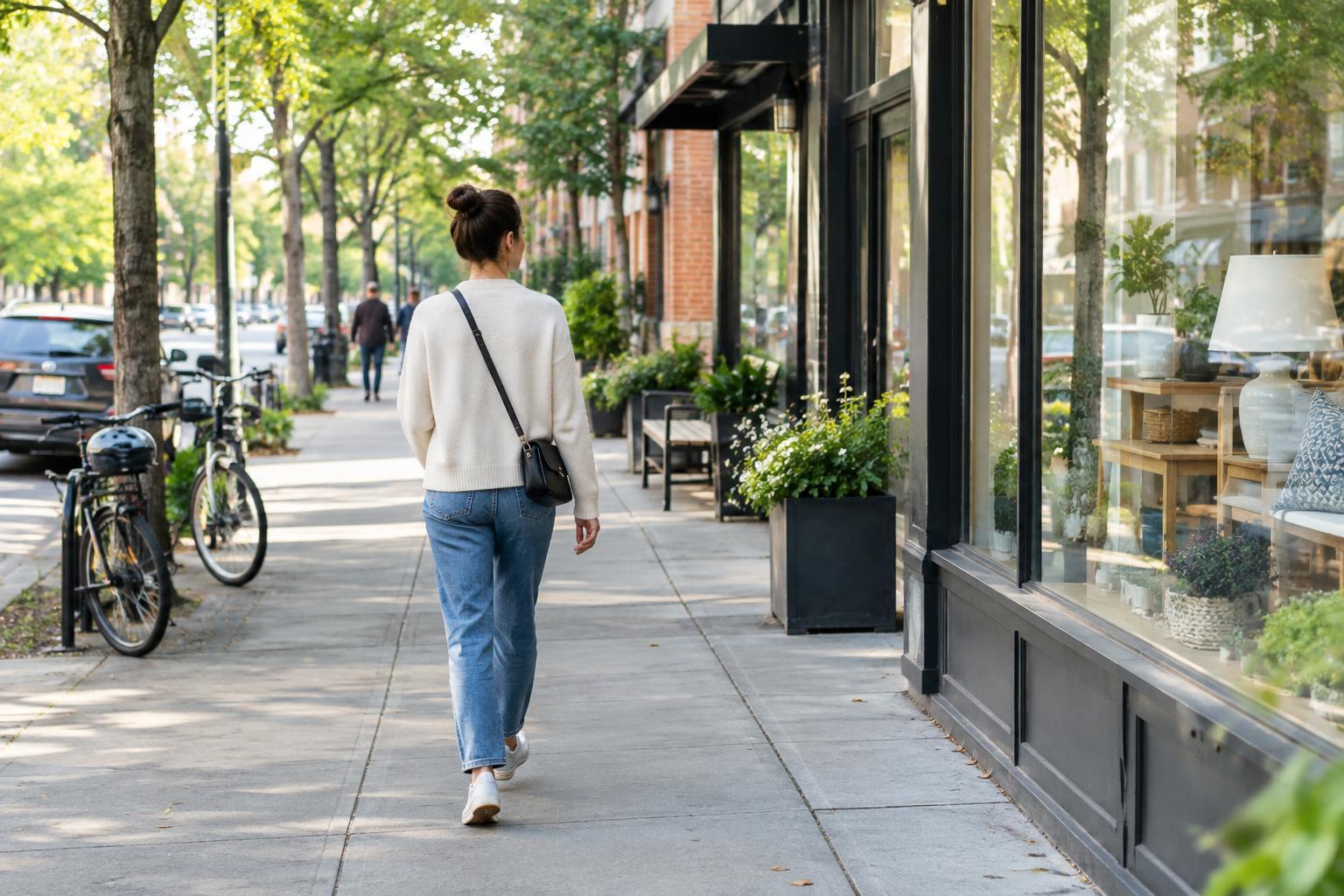
Cities become easier to navigate as you learn their patterns. Try a short daytime walk on a route you might use again. Notice which corners have simple crossings, where you can pause comfortably and which streets feel pleasant at your usual walking time. Conditions can change, so familiarity is a guide rather than a guarantee.
Over time, these small observations give you choices. You may find a quieter alternative to a busy avenue or a dependable place to stop on the way home. The goal is not to perfect every walk. It is to feel able to go out, pay attention, adjust when needed and enjoy the city at a pace that works for you.