Treat the Space as Storage, Not a Hiding Place
In a small bedroom, the space under the bed can hold belongings without taking up another wall or blocking a walkway. Its drawback is that items placed there are easy to forget. The best candidates are things you need occasionally, can identify at a glance and can pull out without moving furniture.
Before buying bins, measure the clearance at several points, including any crossbars or low parts of the frame. Check how far a container can slide out before it meets a nightstand, rug or door. Leave enough room for your fingers to grip it. If your bed is close to the floor, shallow soft-sided bags may fit where rigid boxes will not, but they offer less protection against dust and crushing.
Also consider the conditions beneath the bed. Dust can collect there, airflow may be limited, and a floor near an exterior wall may feel damp at times. If you notice moisture or a musty smell, address that problem before using the space for stored belongings.
Good Candidates: Flat, Infrequently Used Items
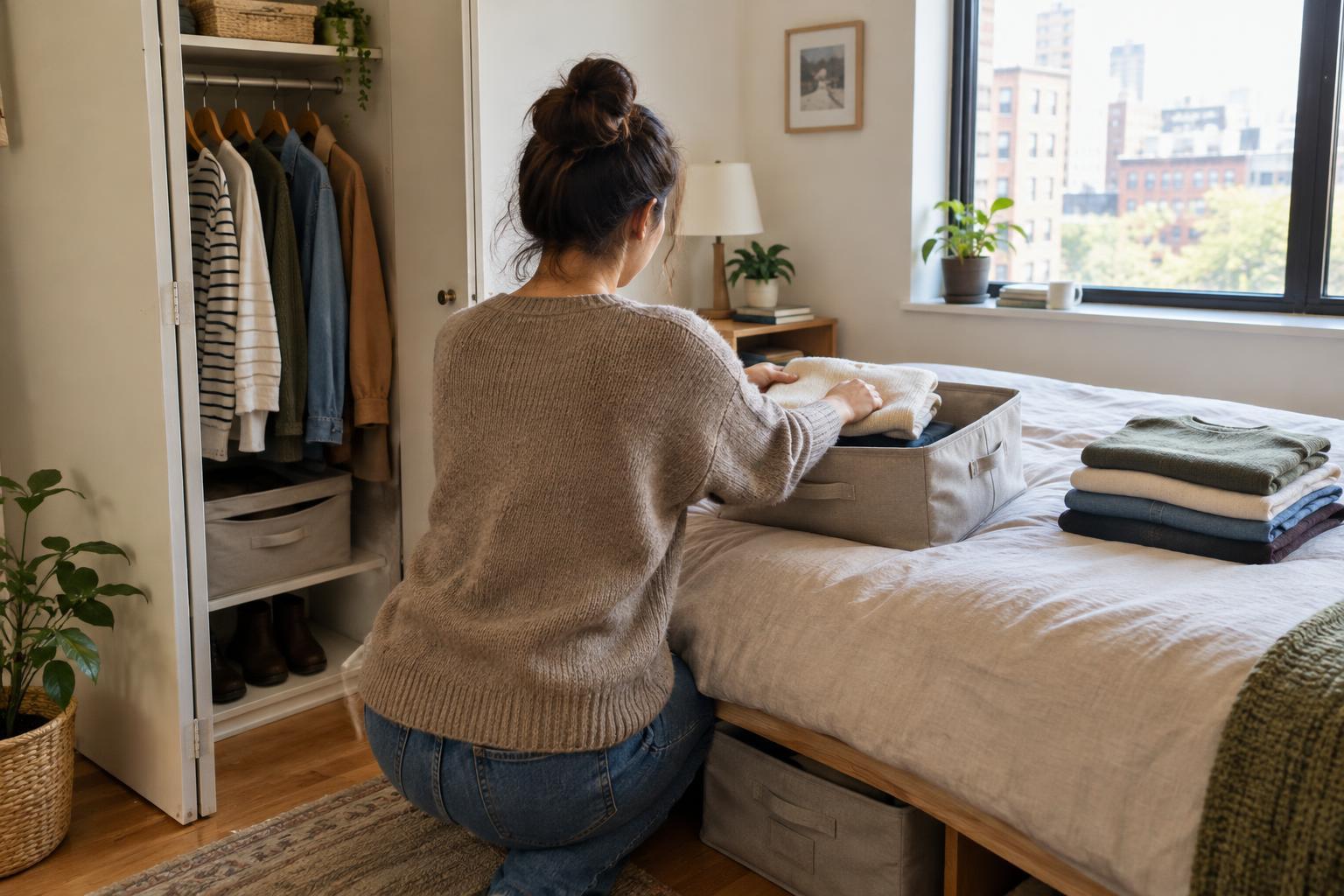
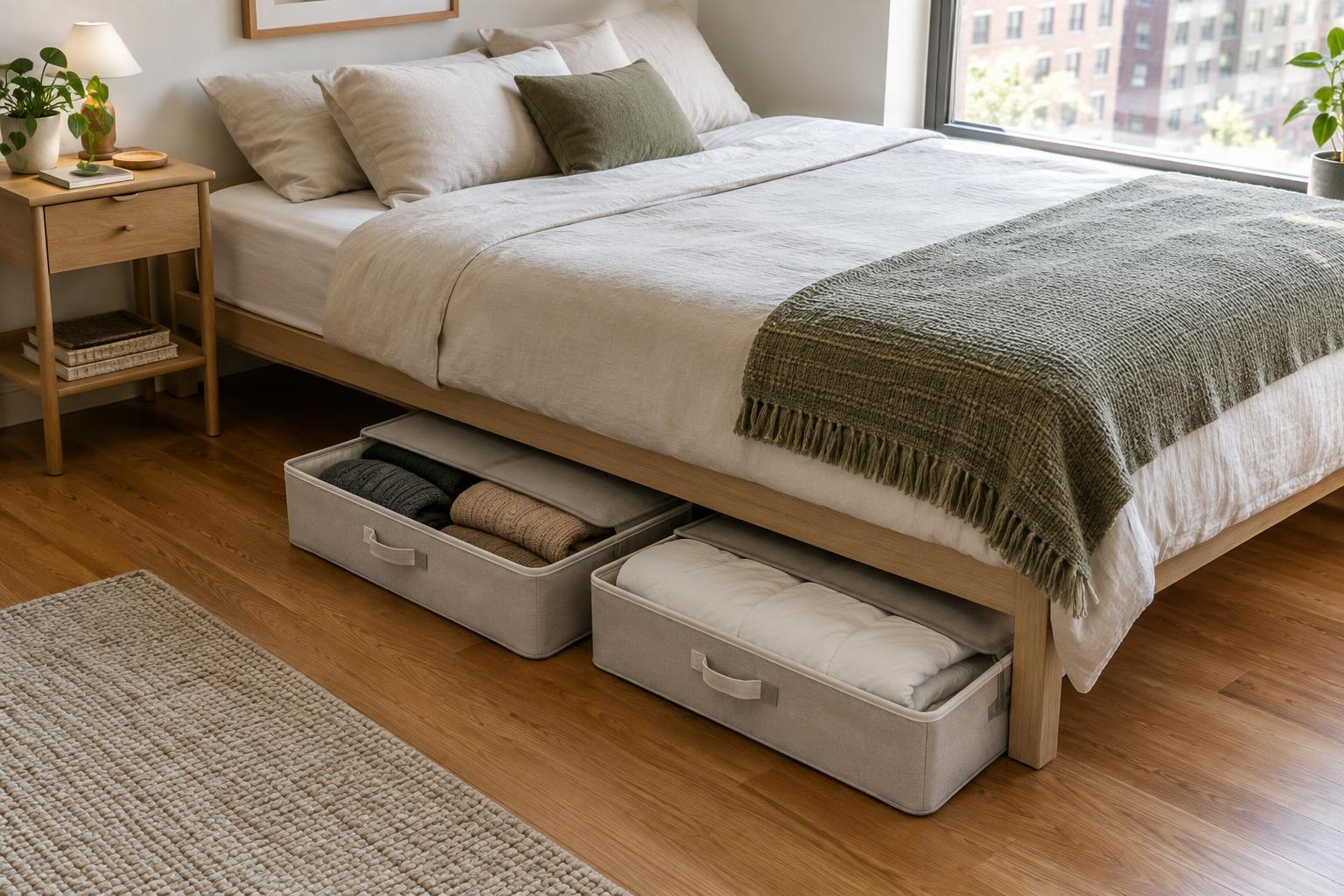
Spare sheets, pillowcases and lightweight blankets often work well under the bed, particularly if each set is kept together in a clean, closed container. Off-season clothing is another reasonable choice when it is clean and completely dry before packing. A labeled bin for winter layers or summer clothes is easier to manage than several mixed bags.
The space can also suit occasional-use items that are fairly flat and sturdy: a spare duvet cover, gift wrap, a small collection of board games or a hobby kit you use once in a while. Group items by purpose rather than filling every gap. One container that slides out easily is more useful than several that must be unloaded to reach the one at the back.
Keep frequently needed items somewhere more convenient. If you use an object weekly, retrieving it from beneath the bed may become a nuisance. The goal is to give less-used belongings a defined home, not to make everyday routines harder.
What Should Stay Somewhere Else
Avoid storing food or anything that might attract pests, including scented products in loosely closed packaging. Liquids, cleaning products and leaky toiletries are also poor choices: a spill can go unnoticed and damage flooring or nearby fabrics. Keep batteries, candles and other items that call for particular storage conditions in a suitable, easy-to-check location instead.
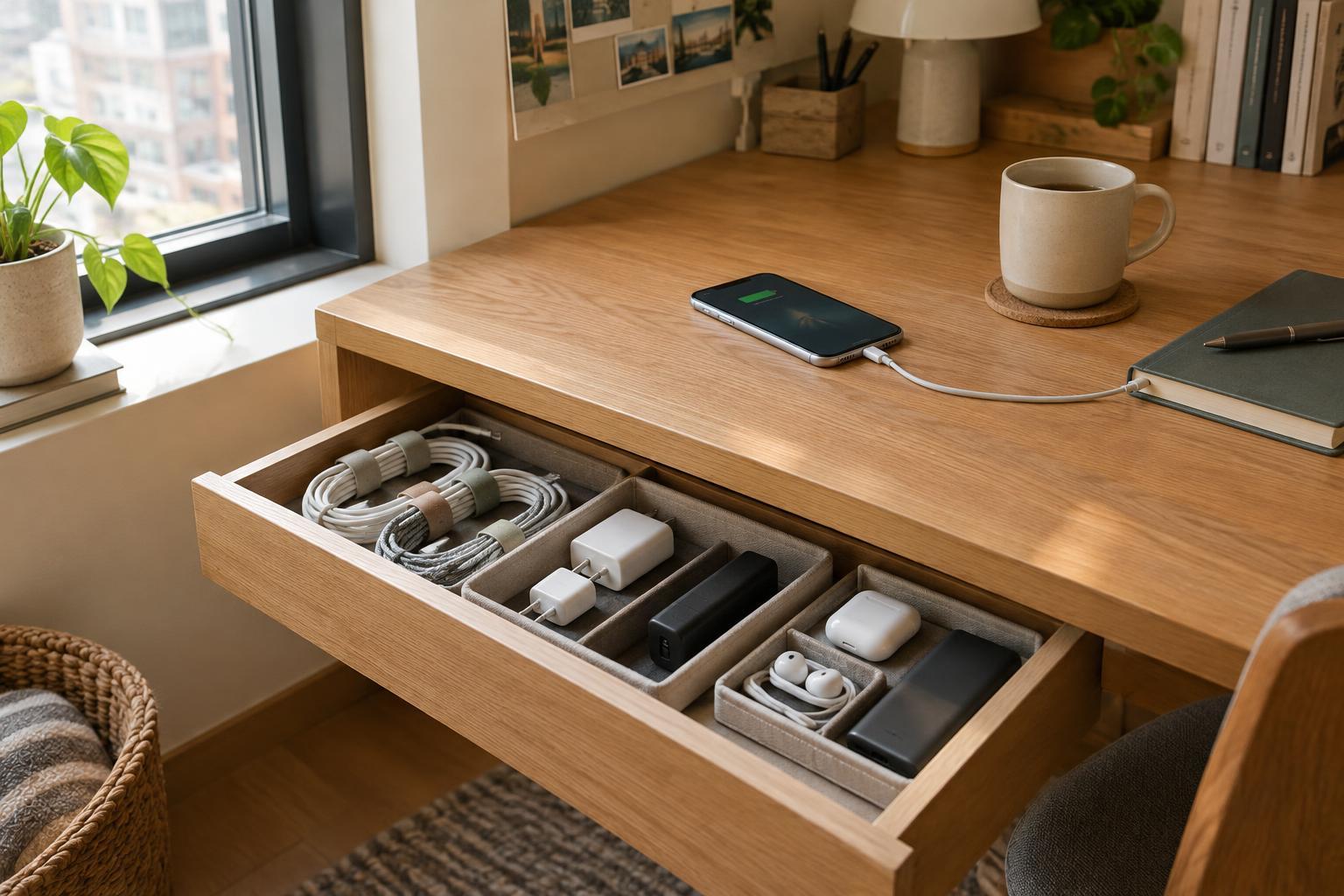
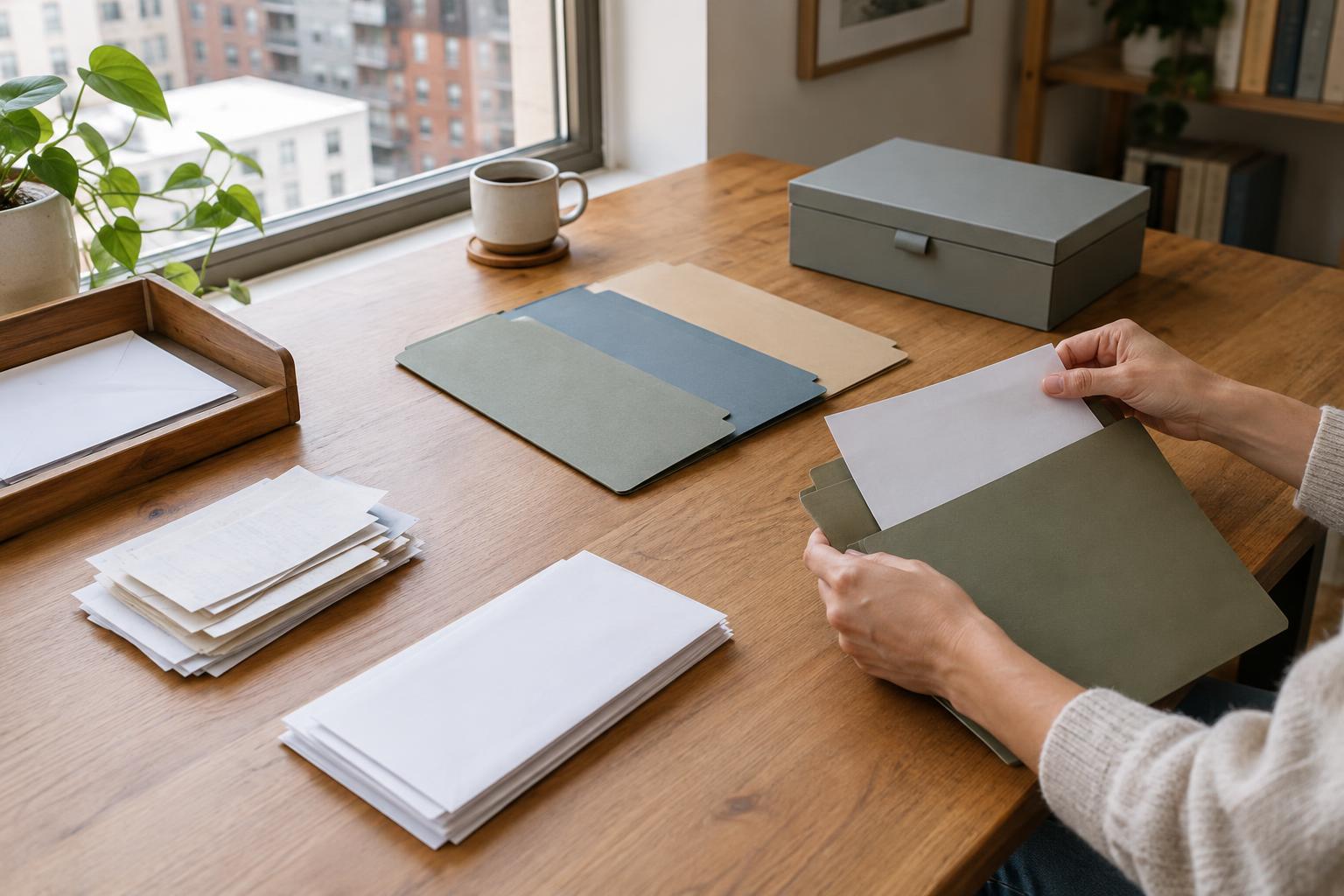
Important papers, photographs, delicate keepsakes and electronics deserve a spot with better protection from dust, moisture and accidental knocks. Shoes can bring grit into the area, while damp workout gear or worn clothing can introduce odors. If you do keep clean shoes under the bed, contain them separately from linens.
Be cautious with heavy items, too. A box that is easy to push into place may be awkward to pull out from a low position. Avoid stacking containers so high that they press against the bed frame, and do not block a floor vent or interfere with parts of an adjustable bed. If access requires straining or lifting the mattress, choose another location.
Choose Containers That Make Retrieval Easy
A good under-bed container fits the available height, protects its contents and is simple to move. Clear bins help you see what is inside; opaque ones work just as well with a label on the end facing out. Lids help keep dust off textiles, though a container should not be used to seal away anything that is still damp. Wheels can be helpful on a smooth floor, while a handle may matter more on carpet.
For fabric storage bags, look for a shape that holds its form when partly empty. Otherwise, the bag may bunch up and catch on the frame. Avoid overfilling any container: it should close without forcing and slide out in one motion. A useful arrangement is one row of containers accessible from the side you normally approach, with a little open space for cleaning.
Build in a Small Maintenance Habit
Label containers with broad, useful descriptions such as “spare bedding” rather than a long inventory that will soon be out of date. When seasons change, pull each container out, check that the contents are still clean and useful, and return only what you want to keep. This is also a chance to vacuum or wipe the floor beneath the bed.
If a container repeatedly stays buried or is difficult to retrieve, reconsider what is inside it. Under-bed storage works best when every item has a reason to be there and enough space to come back out. Leaving part of the area empty can be more practical than filling every inch.