Start with the space you have
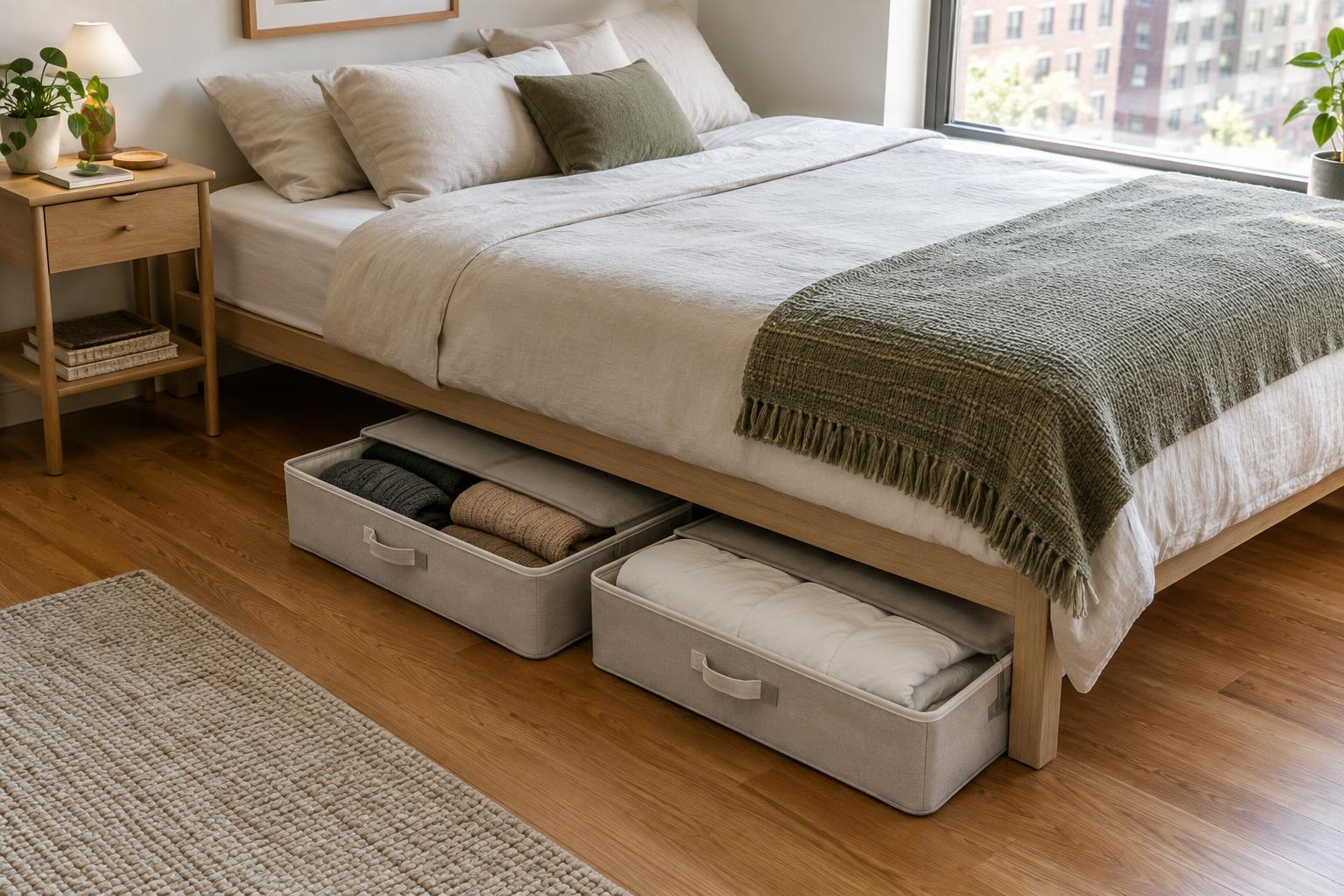
In a small home, rotating clothes is less about packing away half your wardrobe and more about making everyday items easy to reach. Before you pull everything out, identify the space available: perhaps one under-bed container, a high shelf and a few inches at the back of a closet. Set that as your storage limit rather than buying containers first and hoping they fit.
Choose a manageable time to work, and begin with one category, such as coats or sweaters. A full-closet overhaul can leave a compact room unusable for hours. Sorting in smaller batches lets you finish each one before moving on, especially if your bed or floor is your only staging area.
Sort for the season you actually live in
Make three groups: wear now, store for later and let go. The wear-now group should reflect your routine, not an imagined ideal week. If you commute on foot, your most useful layers may deserve prime closet space even when they are not your favorite pieces. Keep a few flexible items, such as a light jacket or an extra warm layer, accessible for changeable weather.
Look closely at the store-for-later group before packing it. If something no longer fits your needs, storing it only postpones the decision and uses space you could give to clothes you enjoy wearing. Put items needing repair in a separate, small pile and decide whether you are likely to fix them. Letting go can mean donating, passing along or recycling where suitable options are available; worn-out items may need a different route from wearable ones.
Try not to sort by calendar alone. A bulky sweater might stay useful in an air-conditioned workplace, while a formal outfit may not need everyday access in any season. The goal is to reduce friction when you get dressed, not to enforce a rigid summer-versus-winter divide.
Pack clean clothes without wasting room
Wash or otherwise clean garments according to their care labels before storing them, and make sure they are fully dry. Dirt and lingering moisture can become harder to deal with after months in a closed container. Fold knits rather than leaving them on hangers for long periods, since hanging can stretch some garments out of shape. Place heavier pieces at the bottom and avoid cramming a container so tightly that you cannot close it easily.
Use the shape of your available space to guide your choice of container. A low, lidded bin may suit the space under a bed; a smaller box may be easier to lift safely from a high shelf. Soft bags can fit irregular gaps, but they offer less protection from dust or accidental spills. Vacuum bags can compress some sturdy items, yet they are not ideal for every fabric or structured garment. If you use them, check garment care guidance and avoid treating maximum compression as the goal.
You may not need to buy anything. A clean suitcase that otherwise sits empty can hold off-season clothes, and a sturdy existing box may work in a dry, protected spot. What matters most is that the storage choice fits the clothes, the location and your ability to retrieve it.
Make stored items easy to find
Label each container with a short description, such as “cold-weather tops” or “summer work clothes.” If a box holds mixed items, write a brief list on a card inside the lid or in a note on your phone. A label saves you from opening every container when you need one outfit for a trip or an unexpected change in temperature.
Store frequently needed items in the most accessible places. Off-season occasion wear may be fine on a high shelf, while rain gear or transitional layers should be easier to reach. Avoid placing containers where they block a doorway, crowd a heat source or have to be moved every day. A storage system that constantly gets in your way is unlikely to stay organized.
Swap gradually and adjust as you go
You do not have to rotate everything in a single weekend. When the weather begins to change, bring out a few useful pieces and put away an equal number you are no longer wearing. This keeps the closet from becoming crowded during the transition. Once the new season settles into your routine, finish the swap and check whether any stored items need cleaning or repair.
At the next rotation, notice what stayed untouched. That information can help you make a better decision than a hurried declutter: perhaps the item belongs in less accessible storage, or perhaps it no longer earns space in your home. With a clear storage limit, simple labels and a little flexibility, even one small closet can remain useful throughout the year.