Make the half hour easy to begin
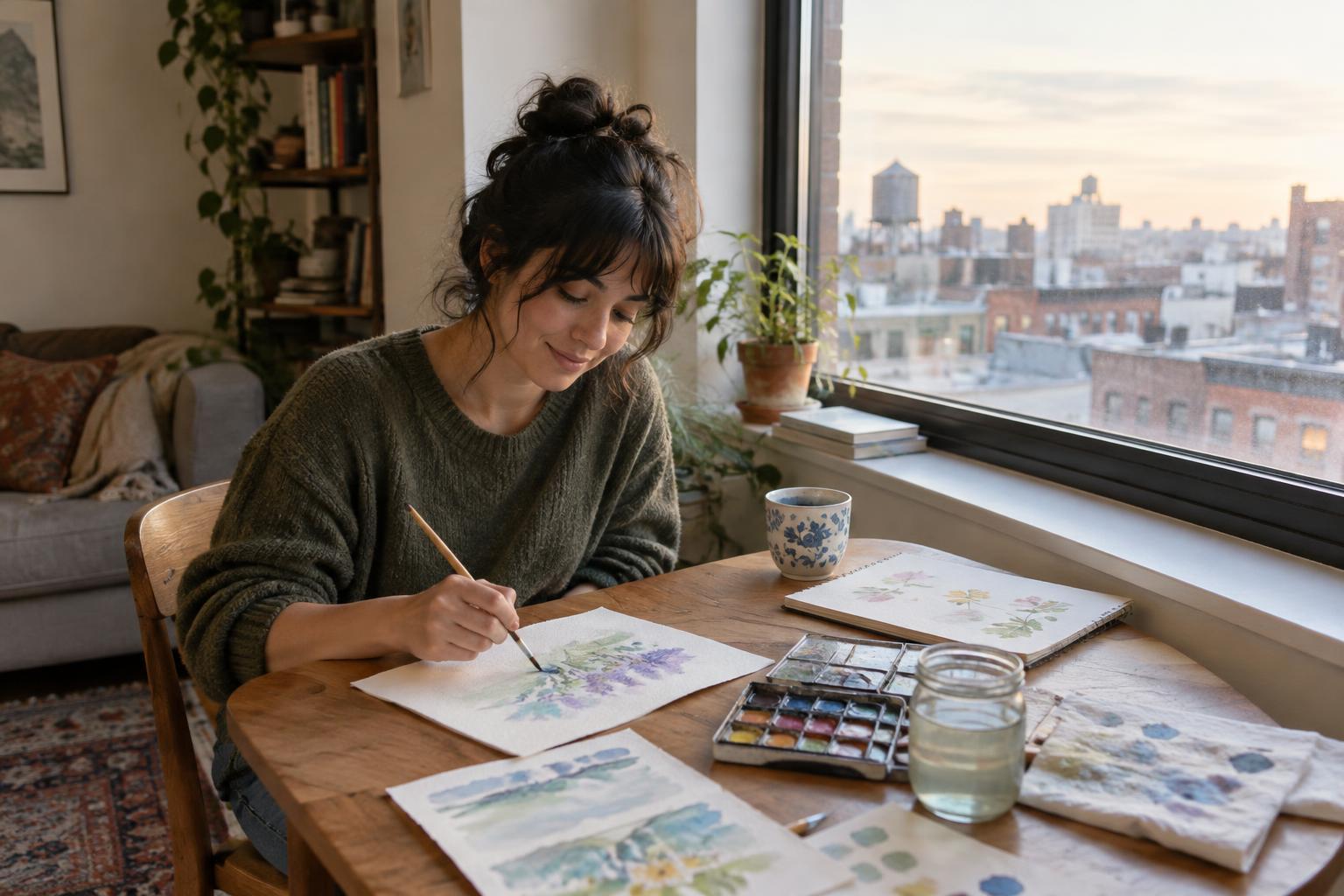
A creative break does not need to produce a finished piece. When time is short, the aim can be to notice something, test an idea, or enjoy making a few choices of your own. Pick an activity with a clear stopping point, set a timer if that helps, and leave a few minutes at the end to put things away.
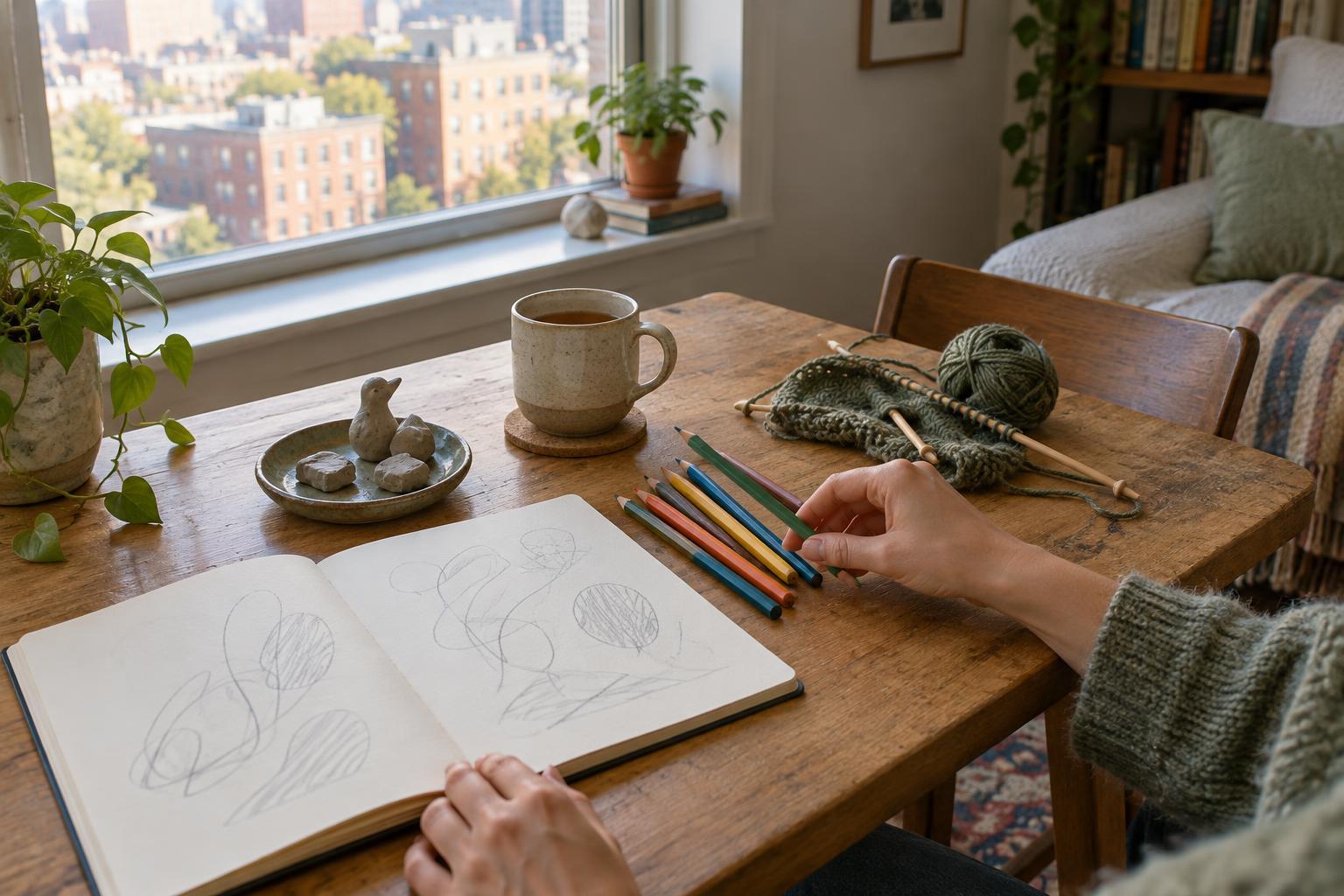
Keep a small kit where you can reach it: a notebook, pen, a few colored pencils, or whatever you already like using. Digital tools can work just as well. The best option is the one you can open without rearranging your room, shopping for supplies, or deciding among too many possibilities.
If choosing feels like the hardest part, use a repeatable prompt. You might draw one object on your desk, write about a sound outside your window, or photograph three examples of the same color. A narrow starting point gives you something to do immediately while leaving room to play.
Draw what is nearby
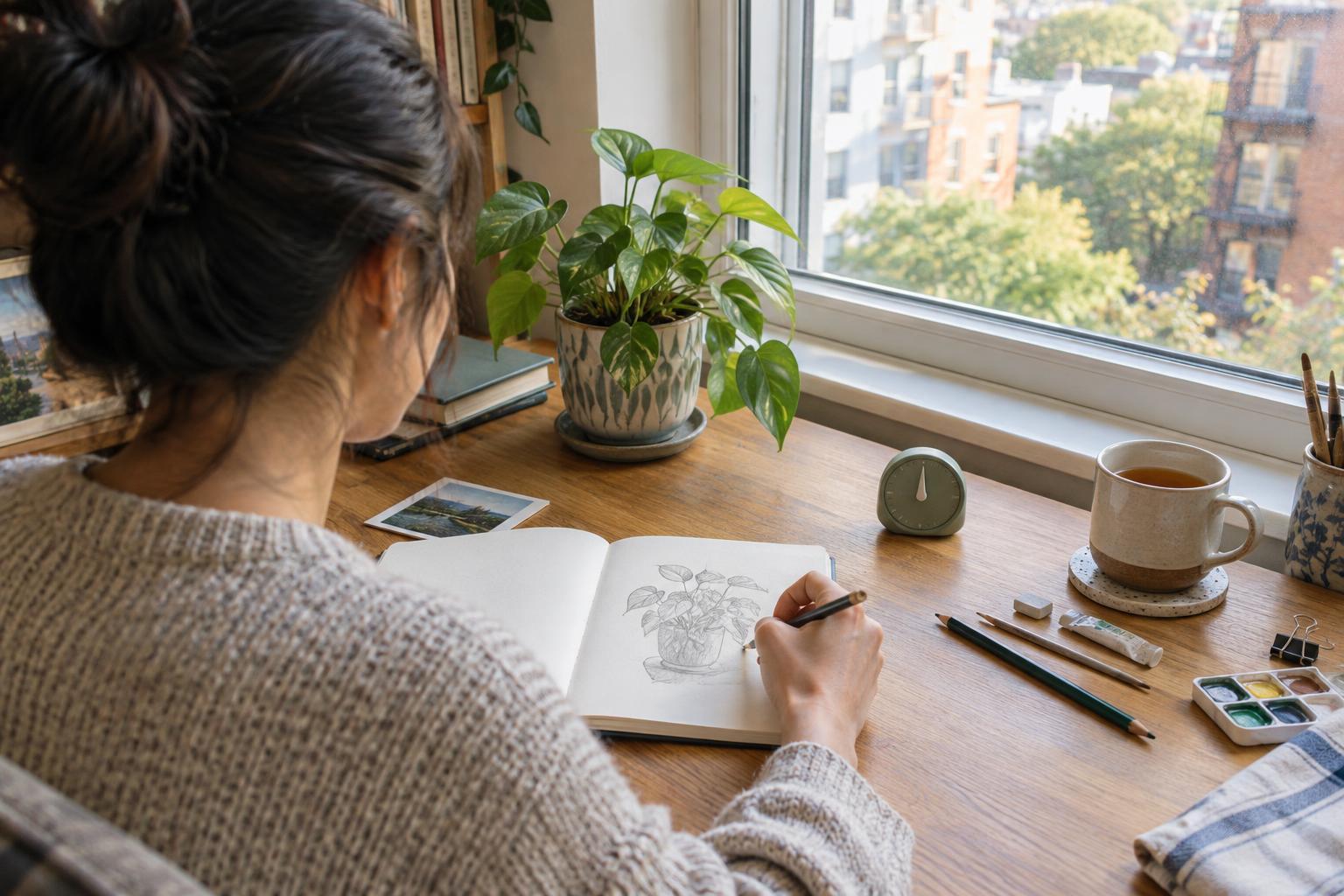
Choose an ordinary object, such as a mug, key ring, shoe, or houseplant. Spend five minutes looking at its outline, then draw it without worrying about accuracy. Try a second version using only straight lines, or draw the spaces around it instead of the object itself. The variations make the exercise interesting even if you have no drawing experience.
For a more structured session, divide a page into six small boxes and give each box three minutes. Sketch the same object from different angles, at different sizes, or in different styles. Use the remaining time to circle one detail you would like to explore later. You have made a page of experiments, not an assignment that needs grading.
If you would rather leave the desk, bring a pocket notebook to a bench or café and sketch shapes you notice in the street. You can focus on windows, signs, or shadows instead of people. A quick sketch records how you saw a place, even when it looks nothing like a photograph.
Write a small piece with a firm boundary
Short writing prompts suit a short break. Give yourself ten minutes to describe a familiar route without naming any streets, ten minutes to write a scene that begins with a found object, and five minutes to read it back. Do not spend the whole session searching for a perfect opening. Start with the first concrete detail that comes to mind.
Lists can also become creative pieces. Write ten possible names for an imaginary neighborhood shop, or make a menu for a meal served on a fictional train. Then choose one item and add a few sentences about it. The list supplies momentum, while the follow-up gives your imagination a direction.
If you enjoy journaling but do not want to recount your day, try a sensory snapshot: one color, one sound, one texture, and one question you noticed recently. Stop when the timer ends, even mid-thought. That unfinished line can be an easy place to begin another day.
Collect images or sounds close to home
A phone camera can turn a short walk into a creative search. Choose a theme before you leave, such as reflections, repeated shapes, or things repaired with care. Spend 20 minutes taking pictures within an easy walking distance, then use the last ten to select three that work together. The constraint gives the walk a purpose without requiring a destination.
You can stay indoors, too. Photograph one corner of your home from several positions, changing only your distance or the available light. Arrange your favorites into a sequence that moves from a wide view to a tiny detail. It is a simple way to look again at a space you pass through every day.
For an audio version, record a short sound you can capture without disturbing anyone, such as rain at your window or a kettle coming to a boil. Listen back and write three words it suggests. Be considerate when recording in shared spaces, and avoid capturing private conversations.
Play with rhythm, then leave yourself a next step
You do not need an instrument to experiment with music. Tap a short pattern on a table, hum a response, and repeat it with one change each time. If you have a keyboard, guitar, or music app, limit yourself to a few notes. The small set of options makes it easier to explore rhythm and mood than to worry about composing a complete song.
Another option is to make a tiny collage. Cut shapes from scrap paper or arrange saved packaging on a sheet, using only two colors or one recurring shape. You can glue the pieces down, photograph the arrangement, or put everything back. Keeping the project temporary can make it easier to try unusual combinations.
At the end of any session, note one idea for next time: a new angle to sketch, a character to revisit, or another street detail to photograph. Then close the notebook or clear the surface. A half-hour activity works best when it fits into the rest of your day rather than demanding the rest of it.