Start with how you want to feel
An empty half hour can disappear while you try to decide how to spend it. Instead of asking which hobby you should take up, ask what you need from the next few minutes. Do you want to settle your thoughts, use your hands, make something playful or feel a small sense of completion? The answer can guide you toward an activity that fits today, rather than a new commitment you may not want tomorrow.
Consider your energy and attention separately. You might feel physically tired but eager to think, or restless while unable to concentrate. A quiet writing prompt may suit the first mood; folding paper or arranging a small collage may suit the second. There is no need to choose the most impressive option. Downtime can be worthwhile even when nothing you make is worth keeping.
If you need calm, choose a gentle rhythm
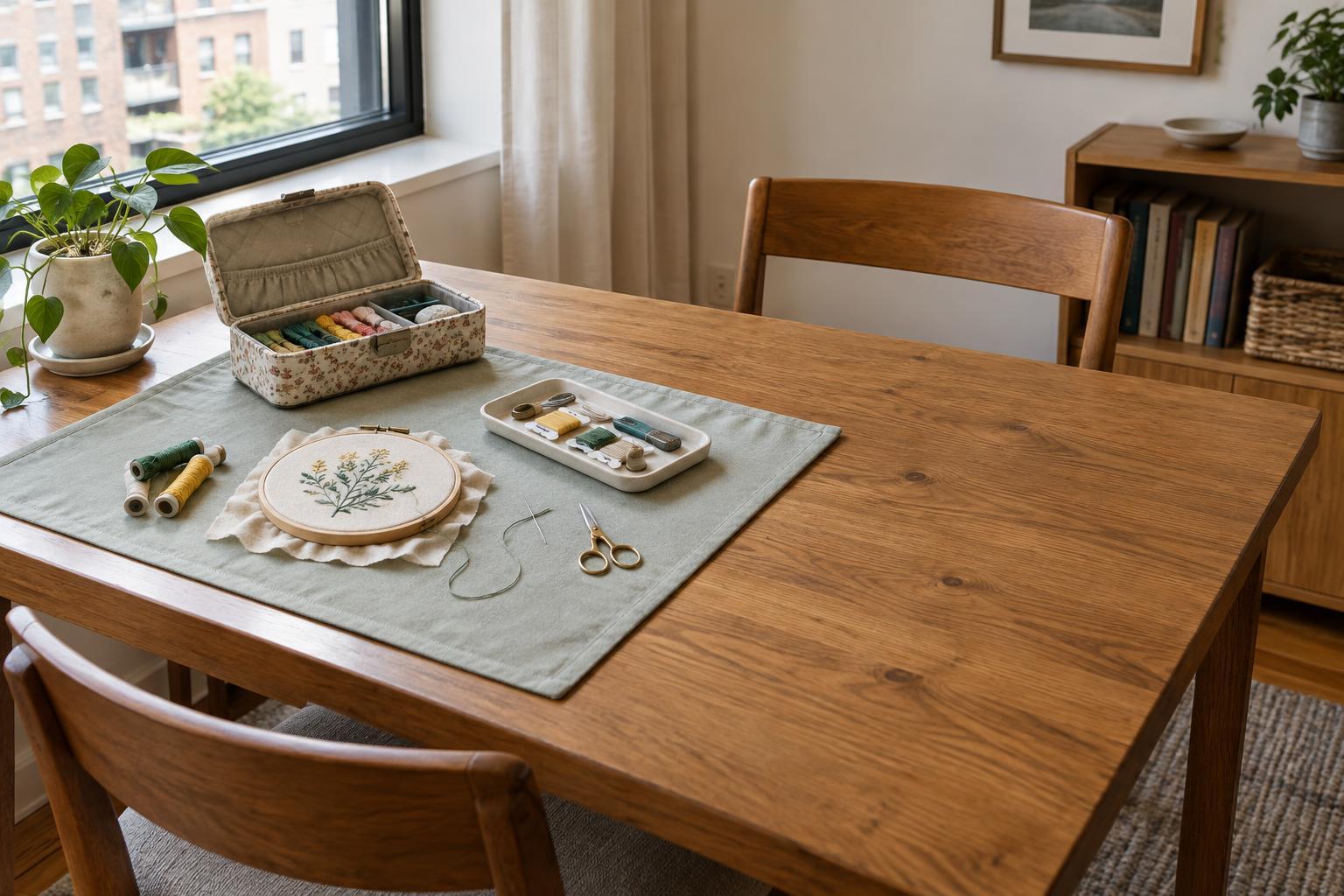
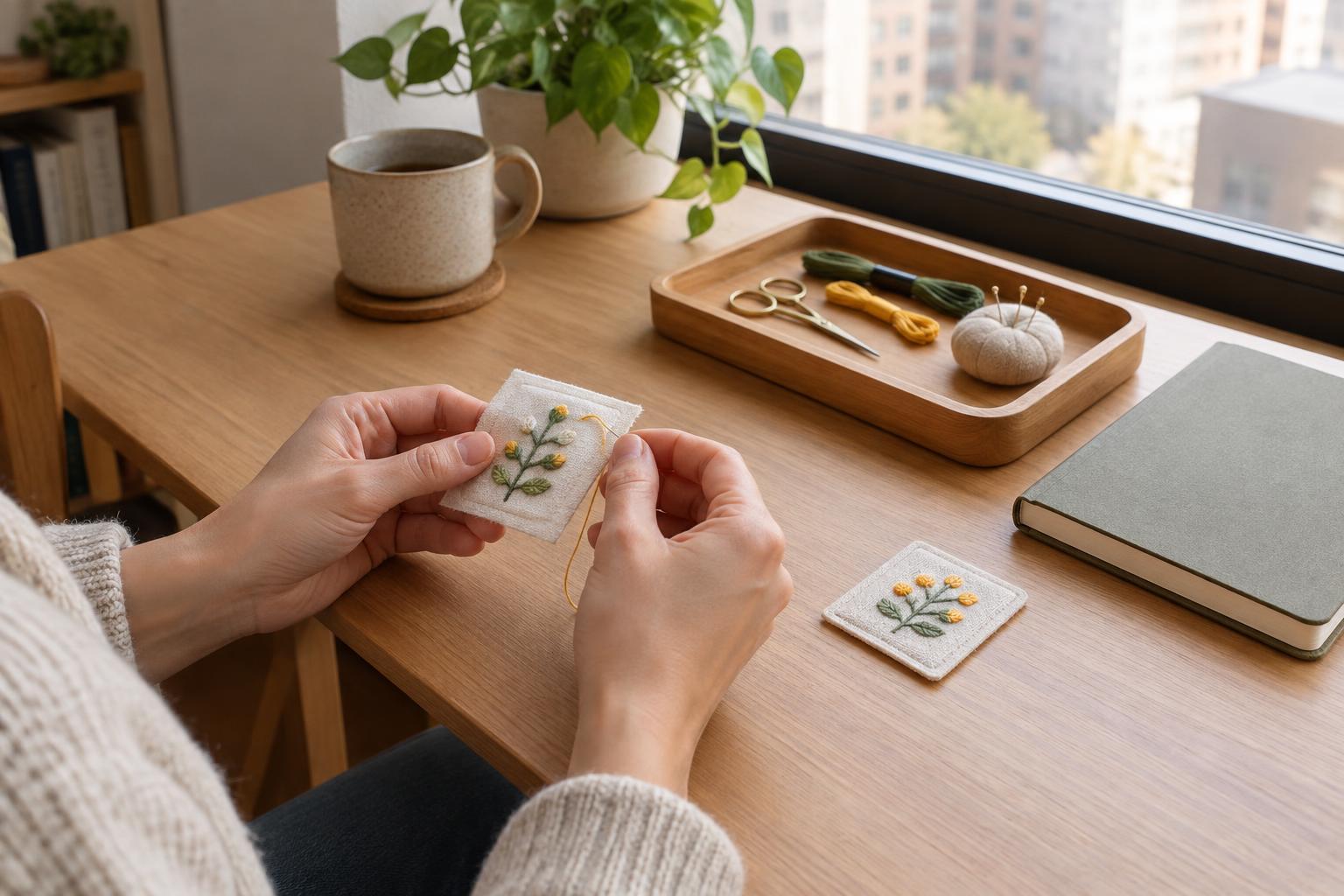
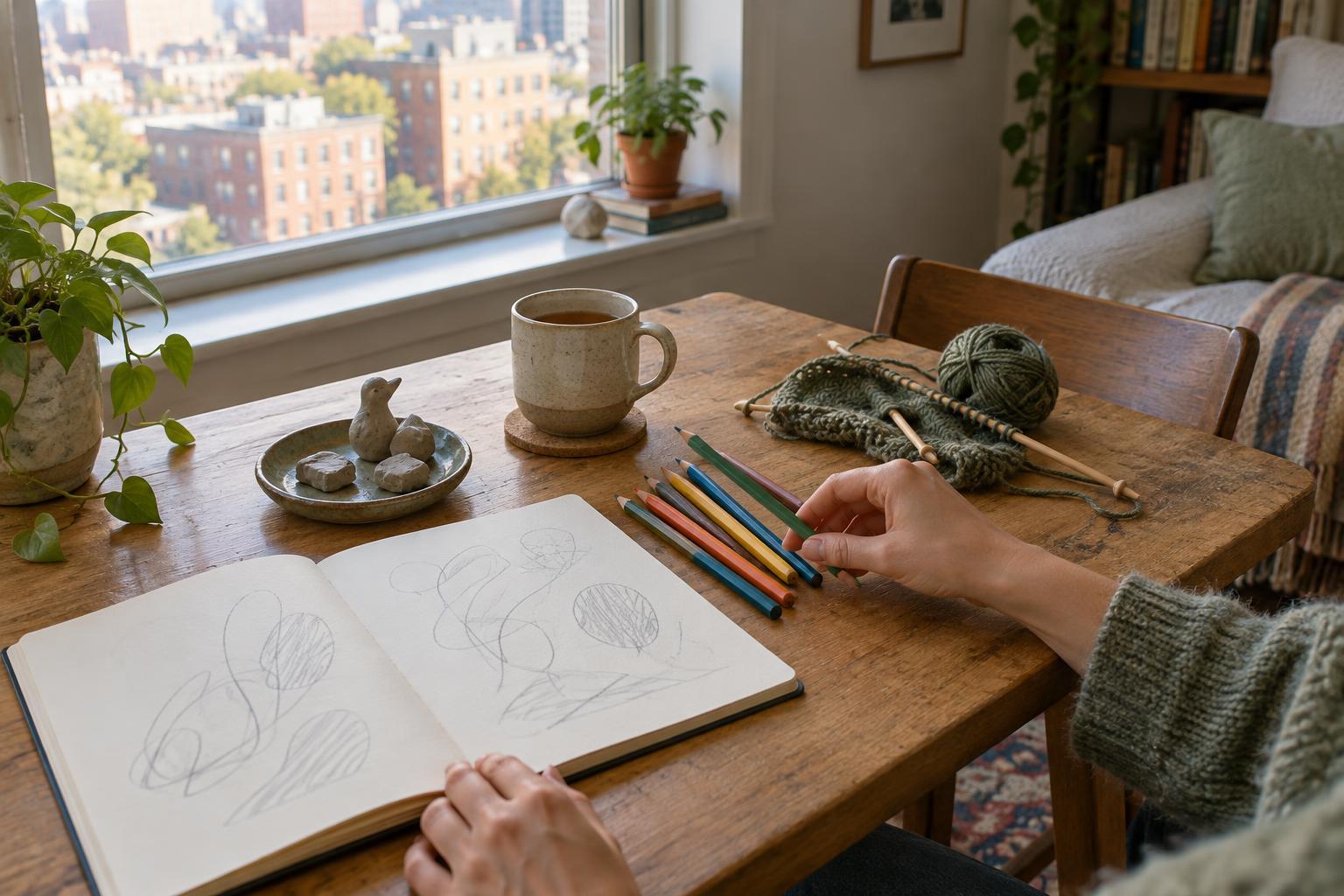
Repetitive activities can give your hands something simple to do without asking you to make many decisions. Try sketching the same everyday object from a few angles, folding scrap paper into shapes, or stitching a basic pattern if you already have the supplies. Keep the task small: one page, one shape or a few rows. A clear stopping point makes it easier to relax when your break is short.
If a quiet room makes it hard to settle, add a little sensory interest. Write a few lines about the sounds coming through your window, sort a small collection of postcards by color, or make a rubbing of textures from objects around your home. These activities invite attention without demanding perfection. If one starts to feel like a chore, you can stop and try something else.
If you feel restless, make something with movement
Restlessness may call for an activity that lets you stand, reach or change position. You could clear a tabletop and rearrange a few objects into a still life, then draw it from where you stand. Or try a short walk with a paper notebook and collect shapes, overheard rhythms or color combinations to use in a poem or sketch later. The walk itself can be the whole activity.
At home, put on music and build a tiny paper sculpture from packaging you were going to recycle. Give yourself a simple rule, such as using only folds or making a structure that stands on its own. Constraints keep the project manageable and leave room for experimentation. You do not need a dedicated craft area; a cleared corner and a way to collect scraps are enough.
If your mind is busy, lower the stakes
When you have many things on your mind, an open-ended creative project may feel like another decision to make. Begin with a prompt instead of a blank page. Describe an ordinary object without naming it, draw ten different lines across a sheet of paper, or invent three uses for a cardboard box. Set a short timer if that helps you begin, but treat it as a boundary for the activity, not a test of productivity.
It can also help to separate making from judging. Use a page of scrap paper, make a rough version or choose materials you are comfortable using up. If you like the result, keep it. If not, you still spent time exploring an idea. Creative downtime does not require a finished piece, and it does not have to improve a skill every time.
Prepare a small menu for next time
Choosing is easier when your options are visible. Write down three screen-free activities: one calming, one active and one that needs almost no preparation. Place the list with a pencil, notebook and a few materials in a drawer or small container. Avoid filling it with supplies for projects you only vaguely intend to start. The aim is to make an ordinary break easy to use, not to build another storage problem.
Before you begin, check how much time, space and cleanup you can comfortably spare. A five-minute sketch might fit between errands; a collage may be better when you can leave materials out a little longer. Your menu can change with the seasons or your interests. The best activity for a particular mood is one you can start easily, enjoy on its own terms and put down when your free time ends.