Give each idea a place to wait
Starting something new feels productive: you get to pick materials, imagine the result, and skip the awkward middle. If you have limited free time, though, several active projects can turn a relaxing hobby into a collection of unfinished decisions. You do not need to stop having ideas. You need a way to keep them without acting on each one immediately.
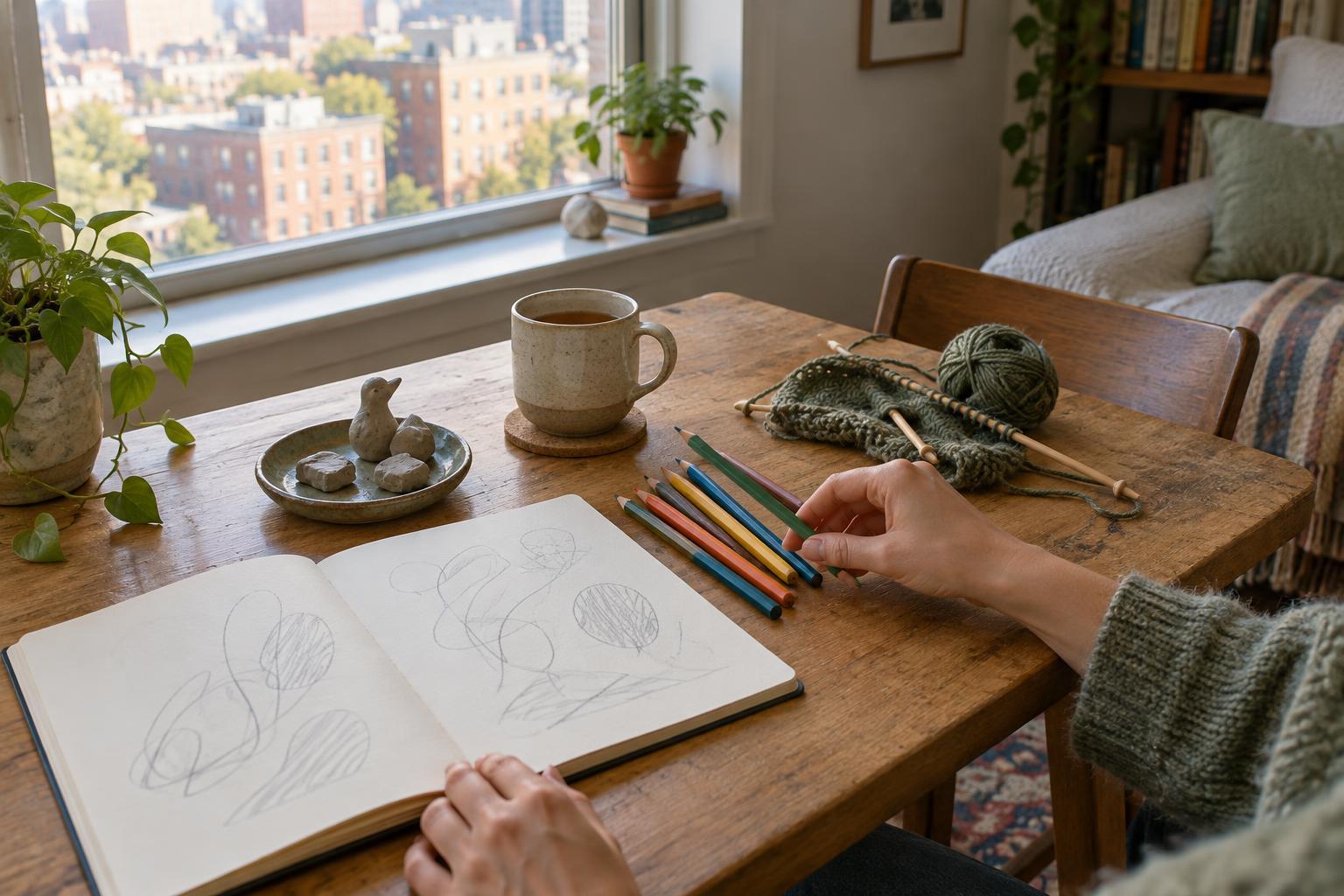
Keep a short idea list in a notebook or on your phone. For each idea, write down the smallest result you would be happy to make, not every possible version of it. “Make a four-page travel sketchbook” is easier to revisit than “learn to draw.” When inspiration strikes during another project, add the idea to the list and return to what is in front of you. The thought is saved; it does not need a workspace yet.
Choose a project that fits your actual week
Before choosing what to make next, look at the time, space, and energy you can realistically offer it. A project that needs a clear table for three days may not suit a compact home or a crowded schedule. A postcard-sized painting, a short piece of writing, or a repaired item might fit into a couple of evenings and leave you with something complete.
Set a limit on projects in progress. One main project and one easy, portable option may be enough: the main project gets your focused sessions, while the portable one works for a commute or a short break. Put other supplies out of sight if you can. This is not a rule against experimenting; it is a way to give your chosen work room to move forward.
Decide what finished means before you begin
A small project can grow indefinitely if its endpoint keeps changing. Before starting, write one sentence describing the deliverable: “A printed photo collage that fits this frame” or “A story of no more than two pages.” Then decide what is outside the scope. Perhaps the collage does not need hand-lettered captions, or the story does not need illustrations.
Make your standard clear as well. Finished does not have to mean flawless; it can mean assembled, readable, usable, or ready to give away. If you discover a better idea halfway through, note it for a future version rather than expanding this one. A defined endpoint makes it easier to notice progress and to spend your limited time on the parts that matter most to you.
Make the next session easy to enter
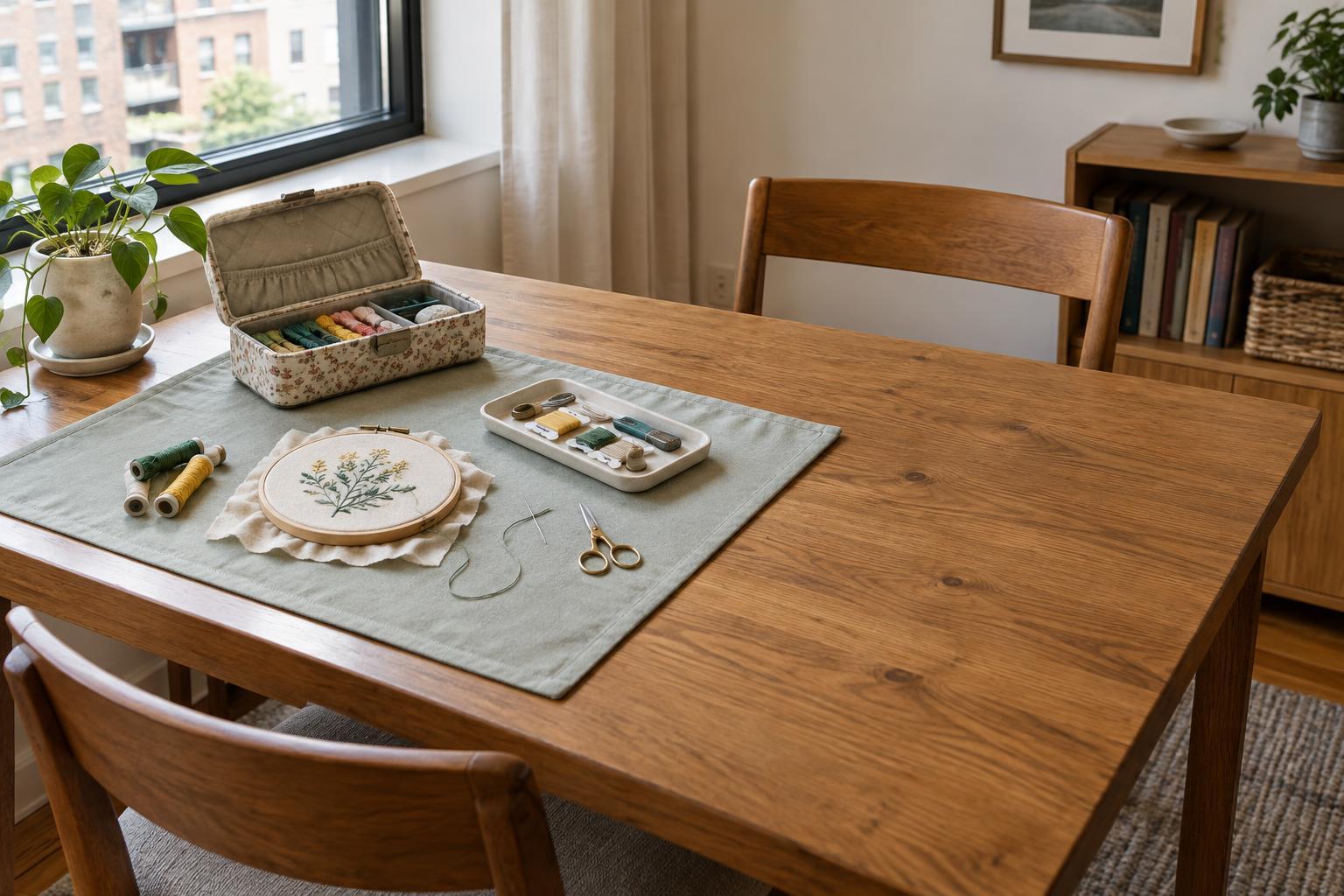
The hardest part of returning to a project is often remembering where you left off. At the end of each session, leave a brief note with one concrete next action: “Cut the blue paper into three strips” is more useful than “work on collage.” If it is practical, keep the materials together in a box or bag so setup does not consume the whole session.
Break the work into steps small enough for the time you tend to have. You might gather references on one evening, make a rough version on another, and tidy the final piece on a third. Some sessions will be short. Completing one visible step still counts, and it gives you a clear starting point next time. If a step feels too large, divide it again rather than waiting for an ideal free afternoon.
Close the project, then choose again
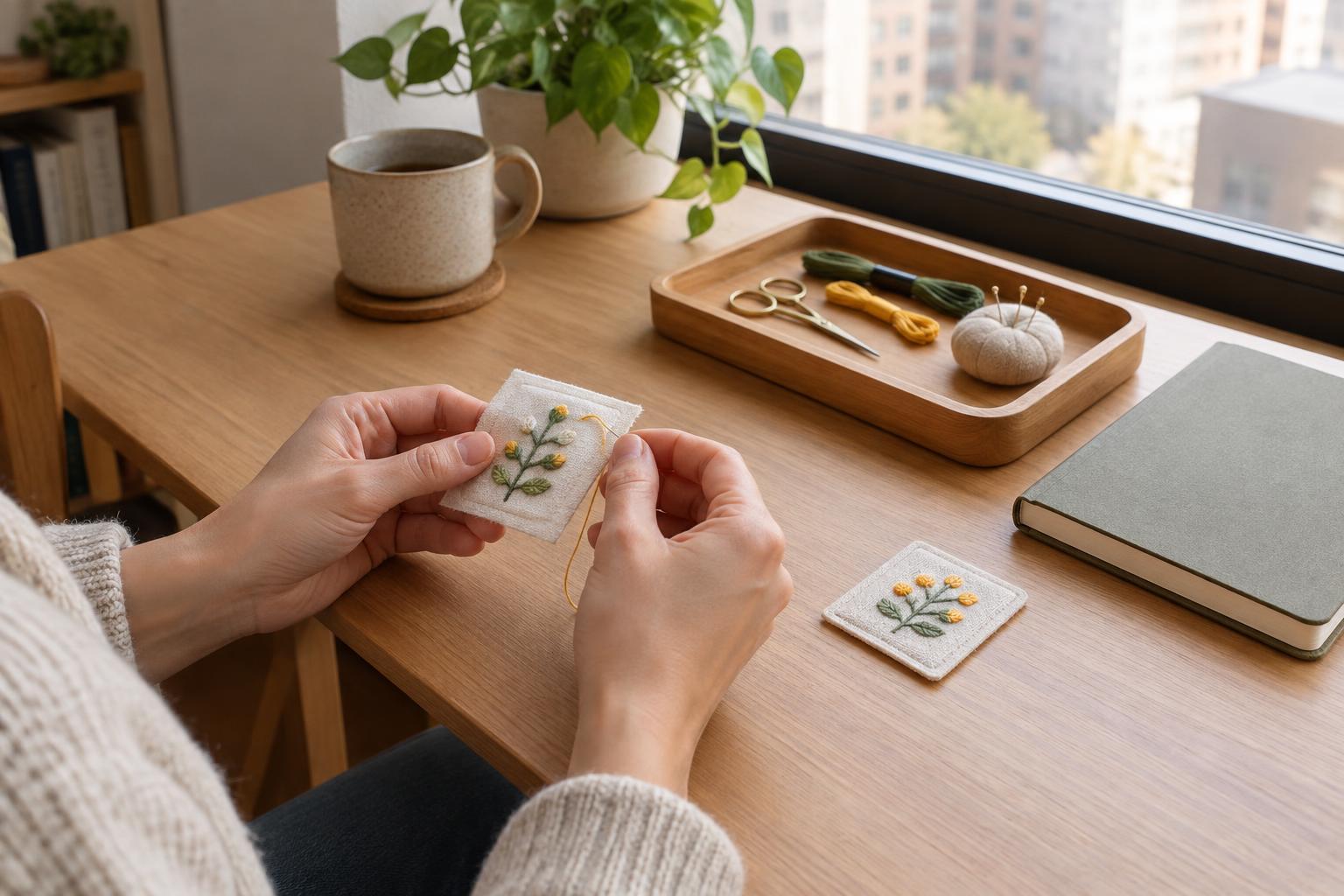
Give the project a final action that marks it as done: hang it, use it, send it to a friend, photograph it for your own record, or place it in a finished folder. This does not require an audience. The point is to stop treating the work as permanently provisional and to free your attention for something else.
If you lose interest before reaching your endpoint, make a deliberate choice. You can shrink the scope, schedule one final session, or retire the project and reuse its materials. An unfinished project is not a failure, but leaving it undecided can make every new idea feel like another obligation. Once you have closed or set aside the current work, return to your idea list and pick the next small thing you genuinely want to make.