Start with the trip, not the bag
A reusable bag that feels effortless for a few items can become awkward when it holds a full grocery run. Before choosing a design, picture the trip home: How far will you walk? Will you need a free hand for a door, phone or transit pass? Are you carrying bulky produce, small heavy items or both? The easiest bag is one that suits the load and the route, rather than the one with the largest advertised capacity.
For short errands, a compact bag that lives in a coat pocket or everyday bag may be the most useful choice. For a longer walk, comfort and balance matter more. If you regularly shop on your way home, consider where an empty bag will go during the rest of your day. A design that is convenient to bring is more likely to be there when you need it.
Compare handles and straps
Short-handled totes are simple to fill and easy to set down, but a heavy one occupies a hand and may bump against your leg. They work well for light loads or for carrying items a short distance. Check whether the handles are long enough to hold comfortably without letting the bottom drag near the ground.
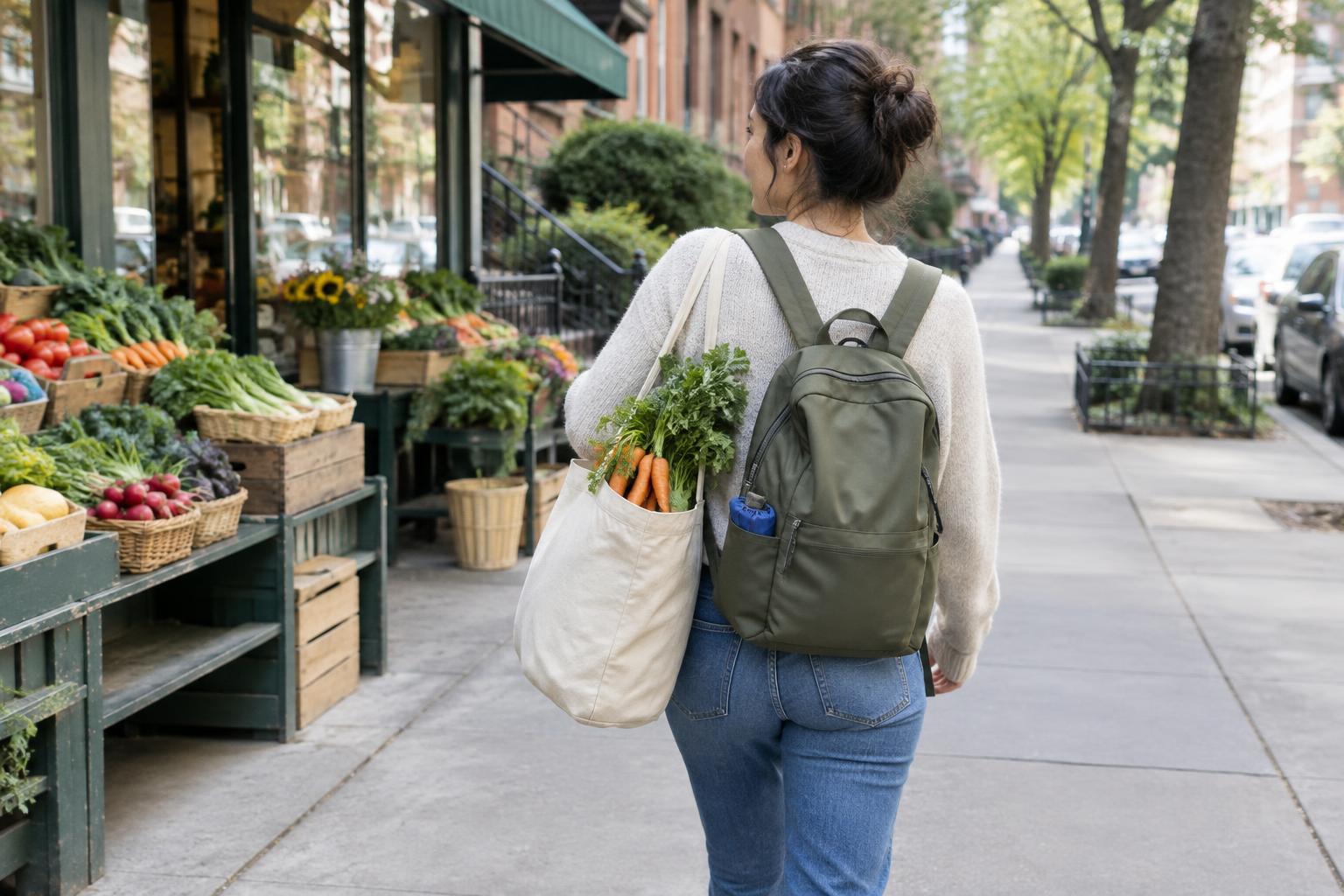
Long-handled totes can go over a shoulder and leave your hands free. Wide straps tend to feel less concentrated on the shoulder than thin ones, especially when the bag is full. Look at where the bag rests, too: one that hangs near your hip may be easier to control than one that swings low. If you wear a bulky coat, test the strap length over it.
A crossbody strap can help keep a smaller shopping bag in place while you walk or use transit. It is less appealing for a large, heavy load, which may pull against one side of the body. Adjustable straps are useful because they let you keep the bag close rather than letting it swing.
Match the shape to what you carry
A backpack-style shopping bag spreads a load across both shoulders and keeps both hands available. It can be a comfortable option for a walk home, particularly if you buy several dense items. Its trade-off is access: you will usually need to take it off to pack or retrieve something. On crowded transit, a backpack also needs more attention so it does not knock into other passengers.
A structured tote with a flat base stands open while you pack and can keep containers upright. That shape helps with bulky groceries, although a stiff bag takes up more room when empty. A soft, foldable bag is easier to keep with you but may sag around oddly shaped purchases. If your shopping varies, one structured bag plus a small foldable spare can be more adaptable than either design alone.
Size matters as much as shape. One enormous bag is tempting, but it can become uncomfortable before it is full. Two modest bags allow you to divide the weight between your hands or shoulders, and they make it easier to separate delicate items from heavy ones.
Check the details before buying
Pick up a bag by its handles and look at the points where they join the body. Reinforced stitching and a material that feels suited to repeated loading are useful features. A smooth, comfortable grip matters if you will carry the bag by hand. If you often shop in damp weather, consider whether the fabric can be wiped clean and whether it dries readily after washing.
Closures are another trade-off. An open top is quick to pack, while a zip or drawstring can help contain loose items during a crowded commute. An inner pocket can hold a receipt or keys, but it should not make the main compartment harder to use. For a foldable bag, try folding and unfolding it: if the process is fussy, you may be less inclined to put it away after an errand.
Pack for a more comfortable walk home
Even a well-designed bag carries better when packed thoughtfully. Put dense items near the bottom and close to the side of the bag that rests against you. Keep fragile purchases above them, and avoid filling one shoulder bag while leaving the other nearly empty. If a load starts to feel unwieldy, split it across bags rather than forcing everything into one.
There is no single best reusable shopping bag for every city errand. A foldable tote makes spontaneous purchases easier, a structured bag simplifies packing, and a backpack may suit a longer walk with a heavier load. Choose for the trips you actually make, then keep the bag clean, accessible and comfortable enough that carrying it becomes an ordinary part of the routine.