Start with what you actually carry
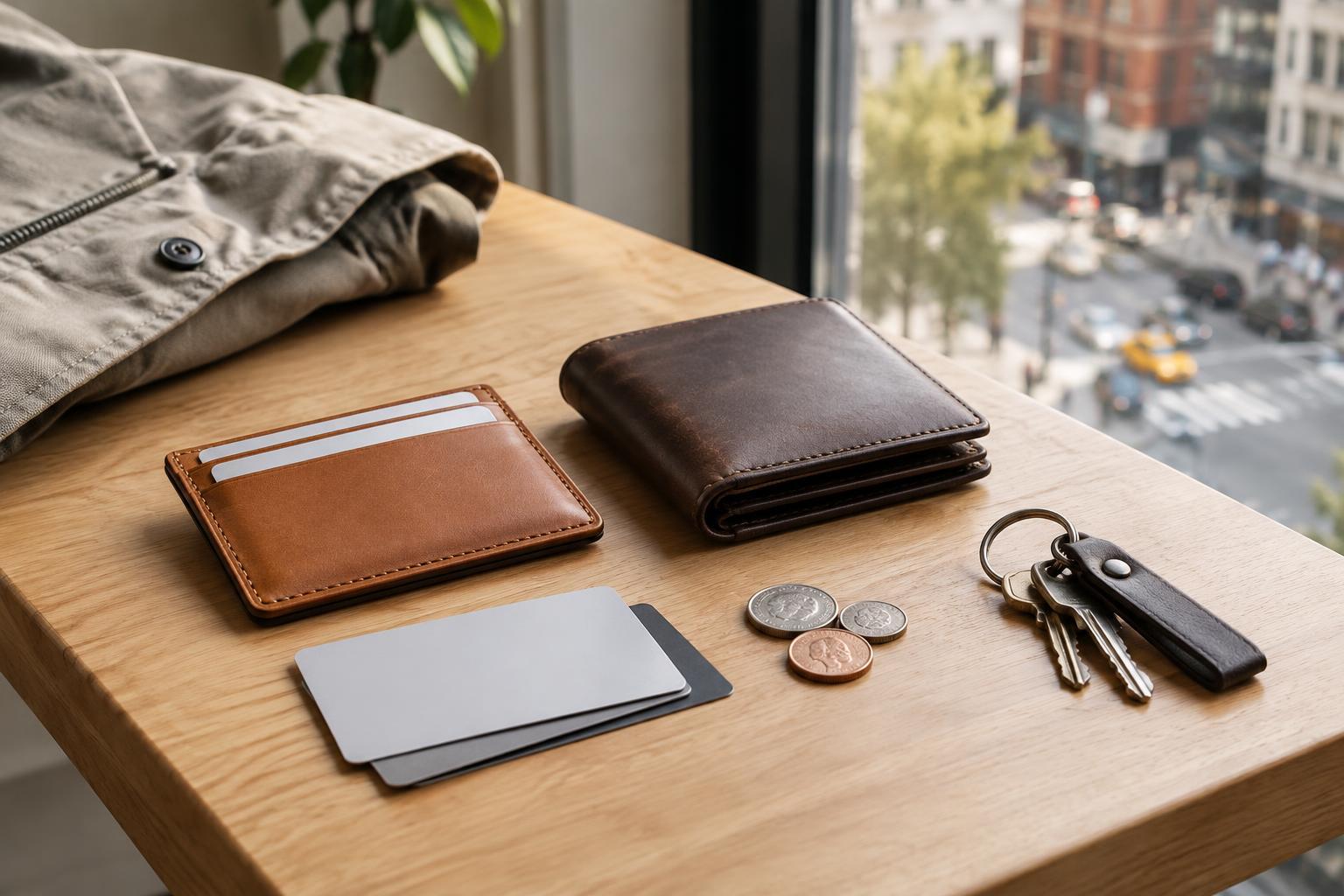
The easiest way to buy the wrong wallet is to shop for an imagined version of your day. Before comparing styles, empty your current wallet onto a table. Separate the things you use most days from those you carry only occasionally: payment cards, identification, a transit card, cash, receipts and anything else that has found a permanent home there. Set aside expired cards and papers you no longer need. The smaller, more accurate pile is your starting point.
Think about access as well as capacity. If you tap a transit card several times a day, it should be easy to reach without unpacking everything else. If you rarely use cash but like to keep a little on hand, a slim pocket for folded notes may be enough. Leave room for one or two temporary items, such as a receipt, but avoid choosing a larger wallet solely to store things you could keep at home.
Match the shape to your routine
A card holder suits a short list of cards and a preference for light pockets. A bifold gives cards, notes and small papers more distinct places without requiring a large bag. A zip-around wallet can contain loose items more securely, though it may take longer to open and may feel bulky in a trouser pocket. None is automatically the practical choice; the best shape depends on where you carry it and what you need to retrieve quickly.
Consider your commute and the moments when your hands are full. Can you get a card out while holding a coffee or carrying groceries? Will the wallet fit comfortably in the pocket or bag compartment you use most? Check its dimensions against that space rather than judging it in an empty shop display. A wallet that looks slim without cards may change shape once loaded, so allow for its filled thickness.
Check the details you will handle every day
The opening matters as much as the exterior. Card slots should hold cards firmly without making them a struggle to remove. A deep pocket can conceal a spare note, but it can also make small items hard to find. If you carry coins, look for a closure that keeps them contained; if you do not, a coin compartment may add bulk for little benefit. Pay attention to seams, zipper movement and whether the edges feel comfortable in your hand.
Materials involve trade-offs. Leather may soften with use and develop visible wear, while fabric can be lightweight and available in many constructions. Coated materials may be easier to wipe clean, depending on their finish. Whatever you choose, examine stitching, folds and high-contact corners. A simple design made with care may serve you better than extra pockets that are difficult to use. If a product advertises a protective feature, consider whether you need it and read what the feature is claimed to do rather than treating the label as a substitute for a usable layout.
Try a realistic carry test
When possible, put the cards and notes you normally carry into a candidate wallet before deciding. Open it, take out your most-used card and put it back several times. Notice whether other cards shift, whether you can see what you need and whether the closure still works without force. If you are ordering online, compare stated dimensions with your current wallet and check the return terms before removing any tags.
Then test the wallet in its intended place. Sit down with it in a pocket, or place it in the bag compartment where it will live. A corner that catches on fabric or a shape that disappears at the bottom of a bag can become more irritating than a minor cosmetic flaw. Color and appearance still matter: a wallet you can spot easily among your belongings may be more convenient than one that blends into every lining.
Keep the setup useful after you buy
A good wallet can become cluttered if every receipt and spare card stays inside it. Give temporary papers a regular exit point, such as a small tray at home, and review the contents now and then. Keep frequently used items in consistent slots so reaching for them becomes straightforward. If you switch between bags or jackets, make a quick check part of that change rather than assuming your essentials moved with you.
The aim is not to carry as little as possible. It is to carry what supports your day in a form that is comfortable, accessible and easy to keep organized. Choose for your ordinary Tuesday, not for every unlikely situation. When your routine changes, you can adjust what goes inside before deciding that you need another wallet.