Start with the shoes and the day ahead
Insoles can make a long day of errands, commuting or standing at work feel more manageable, but the thickest pair is not automatically the most comfortable. An insole has to fit inside a particular shoe while leaving enough room for your foot. Before shopping, note which shoes you wear most often, whether their existing liners can be removed and when discomfort tends to appear.
Think about the surfaces and movements in your routine, too. A day spent walking between neighborhoods may call for a different feel from a day spent mostly standing in one place. Your goal is not to find the most technical-sounding insert. It is to identify what your current shoes lack without creating a new problem, such as a cramped toe box or a heel that slips.
Compare cushioning and support separately
Cushioning softens the feel of each step. Support refers to how an insole holds its shape and contacts the underside of your foot. A very soft insert can feel pleasant at first but may flatten or feel unstable during extended wear. A firmer one may feel less plush in your hand yet more consistent underfoot. Neither approach is right for everyone.
Pay attention to where an insole makes contact. An arch shape should feel comfortable rather than like a hard ridge pressing into one spot. A heel cup may help the back of your foot sit securely, but it should not force your heel upward so much that it rubs against the shoe. If you are unsure what you prefer, try modest cushioning and support before moving to a more pronounced design.
Check the fit inside your actual shoes
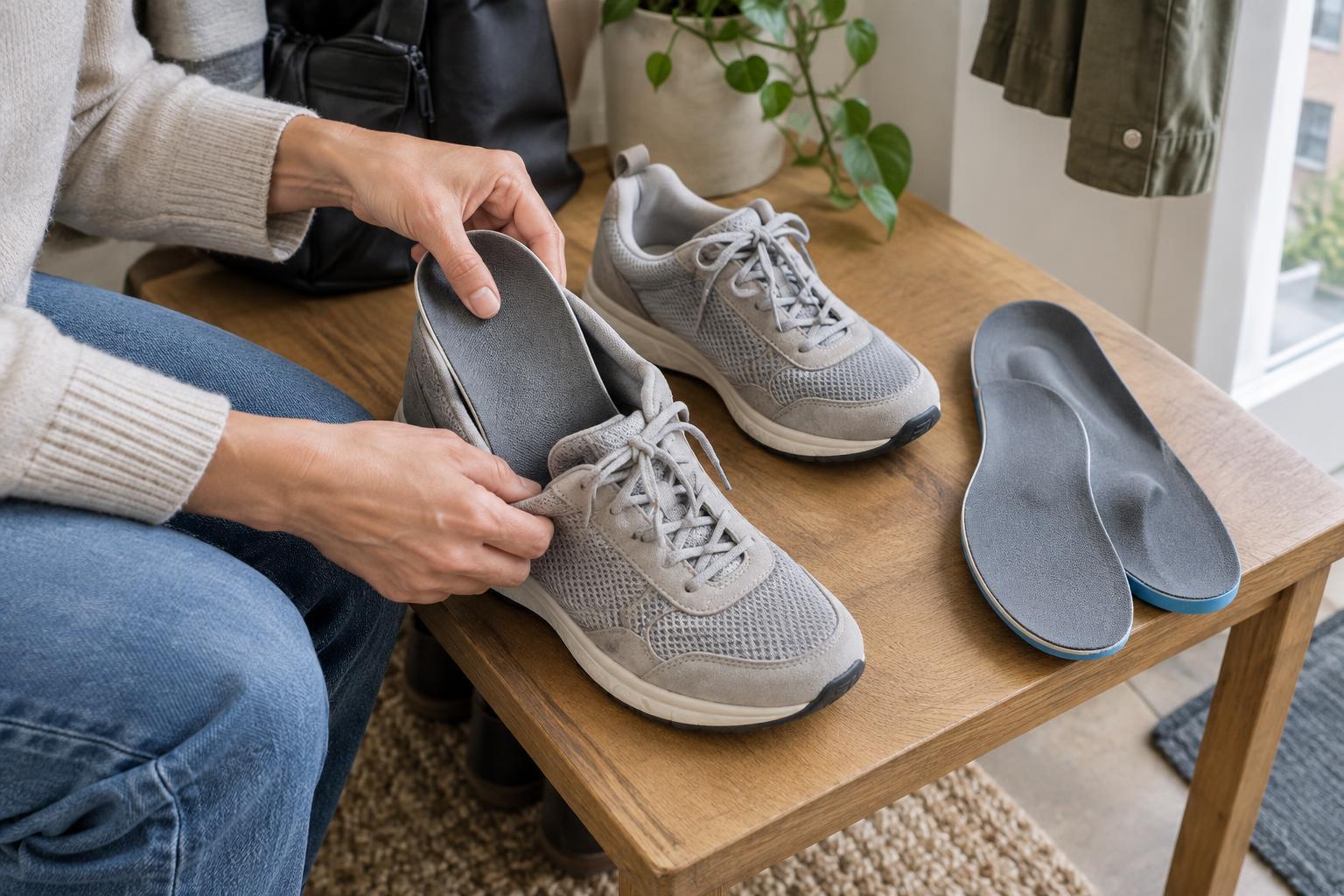
If the shoe has a removable liner, take it out before trying a full-length replacement insole. Stacking a new insert on top of the old one can consume valuable space. Use the original liner as a guide if the new insole is designed to be trimmed, and cut a little at a time. You can remove more material, but you cannot put it back.
Put the shoes on with your usual socks and walk around indoors. Your toes should have room to move, your heel should stay in place and the insole should lie flat without curling at the edges. Notice whether its arch and heel features line up with your foot rather than simply matching the shoe size printed on the package. An insert that feels fine while sitting may reveal pressure or movement once you walk.
Different shoes may need different solutions. A slim insert might work in a close-fitting city sneaker, while a roomier boot may accommodate more cushioning. If a shoe is already tight, an insole is unlikely to fix that fit problem.
Look for practical materials and easy care
Materials affect how an insole feels over time. Foam can offer a soft initial feel; denser materials may hold their shape differently. A fabric top layer can change the feel against socks, while a smooth surface may be easier to wipe down. Rather than relying on material labels alone, consider whether the insert bends or compresses in a way that suits your shoes and walking style.
Check the care instructions before buying. Some insoles can be wiped clean, while others need gentler handling. Letting shoes and removable inserts dry out between wears, when possible, can help keep them pleasant to use. Replace an insole when it no longer lies flat, has lost the feel you bought it for or begins causing rubbing.
Give comfort a realistic trial
Try new insoles on a shorter outing before relying on them for a full day across town. Pay attention to the whole shoe, not just the sole of your foot: tighter laces, rubbing at the heel or pressure over the toes may signal that the insert takes up too much room. Comfort should remain acceptable as you move, not depend on holding your foot in an unnatural position.
Keep the packaging and check the return policy if you are comparing options. A thoughtful fit test is more useful than a long list of promised features. If foot pain is persistent, worsening or affecting how you walk, an insole may not be the right solution on its own; consider speaking with a qualified healthcare professional.