Start with the job, not the look
In a small home, storage affects how a room feels as much as how much it holds. Open shelves can make frequently used things easy to grab and put away. Closed cabinets can quiet a busy wall by keeping mismatched items out of sight. Neither choice is automatically more spacious: the better option depends on what you need to store, how often you use it, and how much upkeep you want.
Before buying anything, list the items competing for space. Group them by use rather than by room: daily essentials, occasional supplies, bulky objects, and things you want to display. Notice what currently piles up on counters or floors. That pile is a clue that your storage may be too far away, too full, or too awkward to use. The goal is not to conceal every possession. It is to give each group a place that supports your routine.
When open shelves earn their space
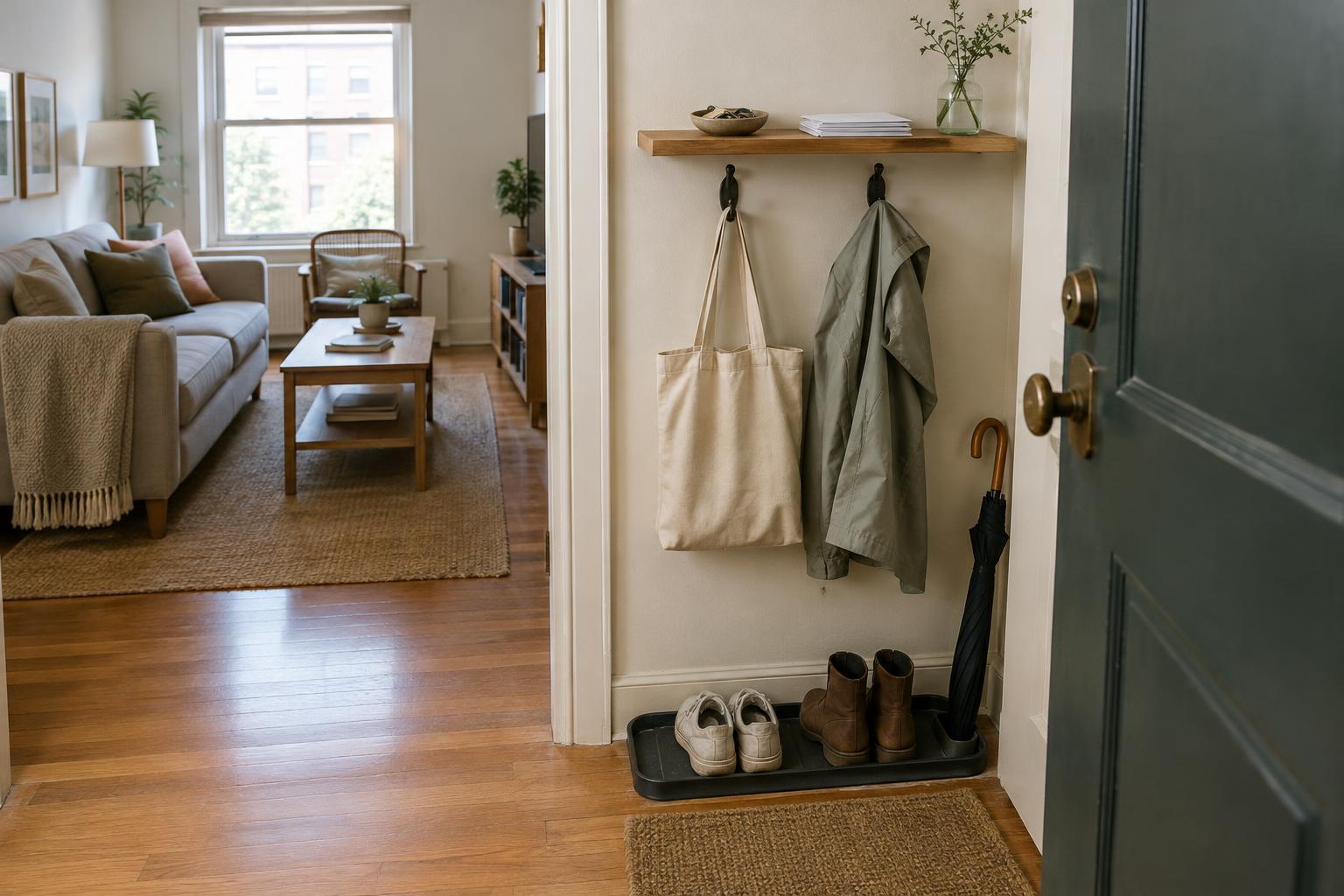
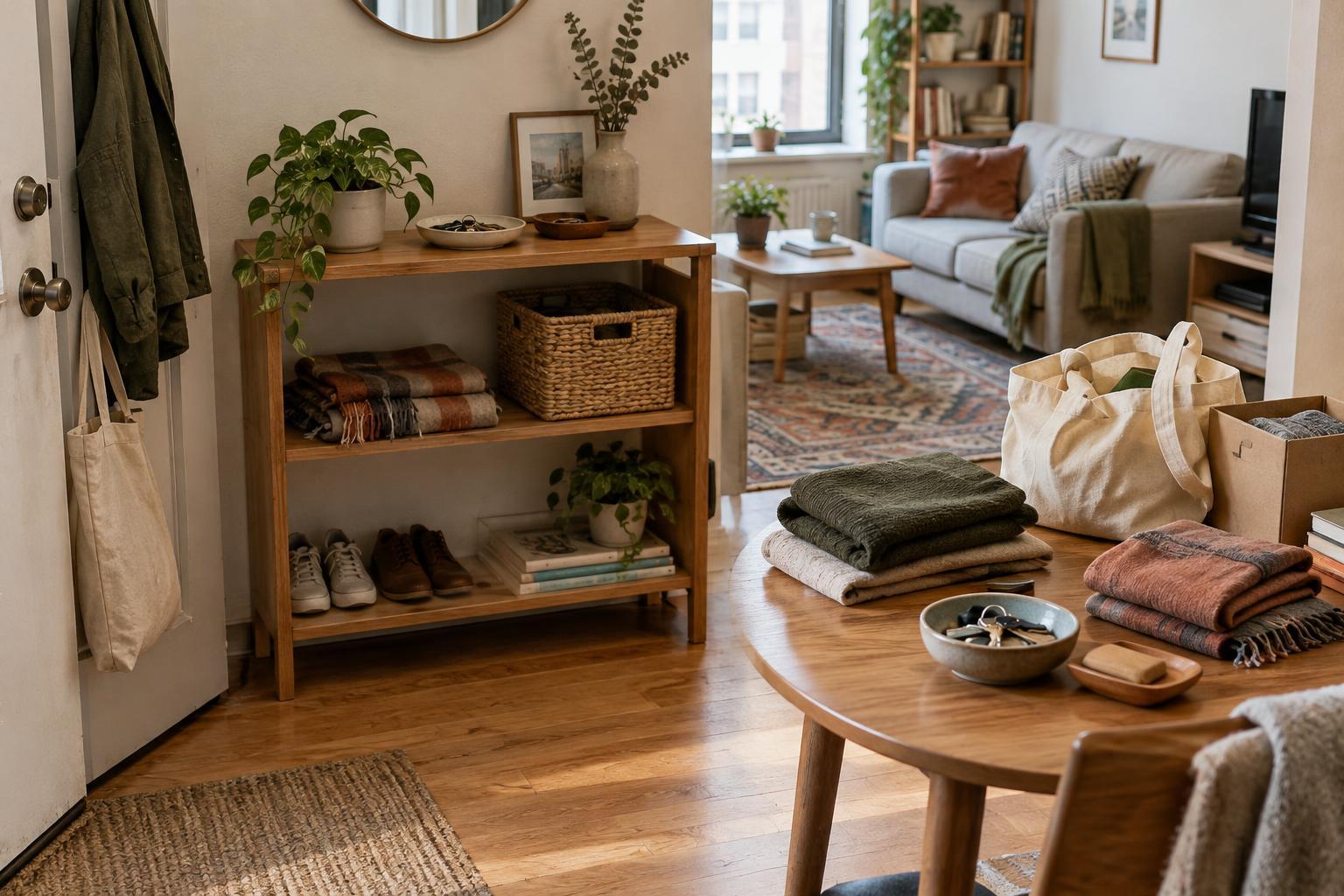
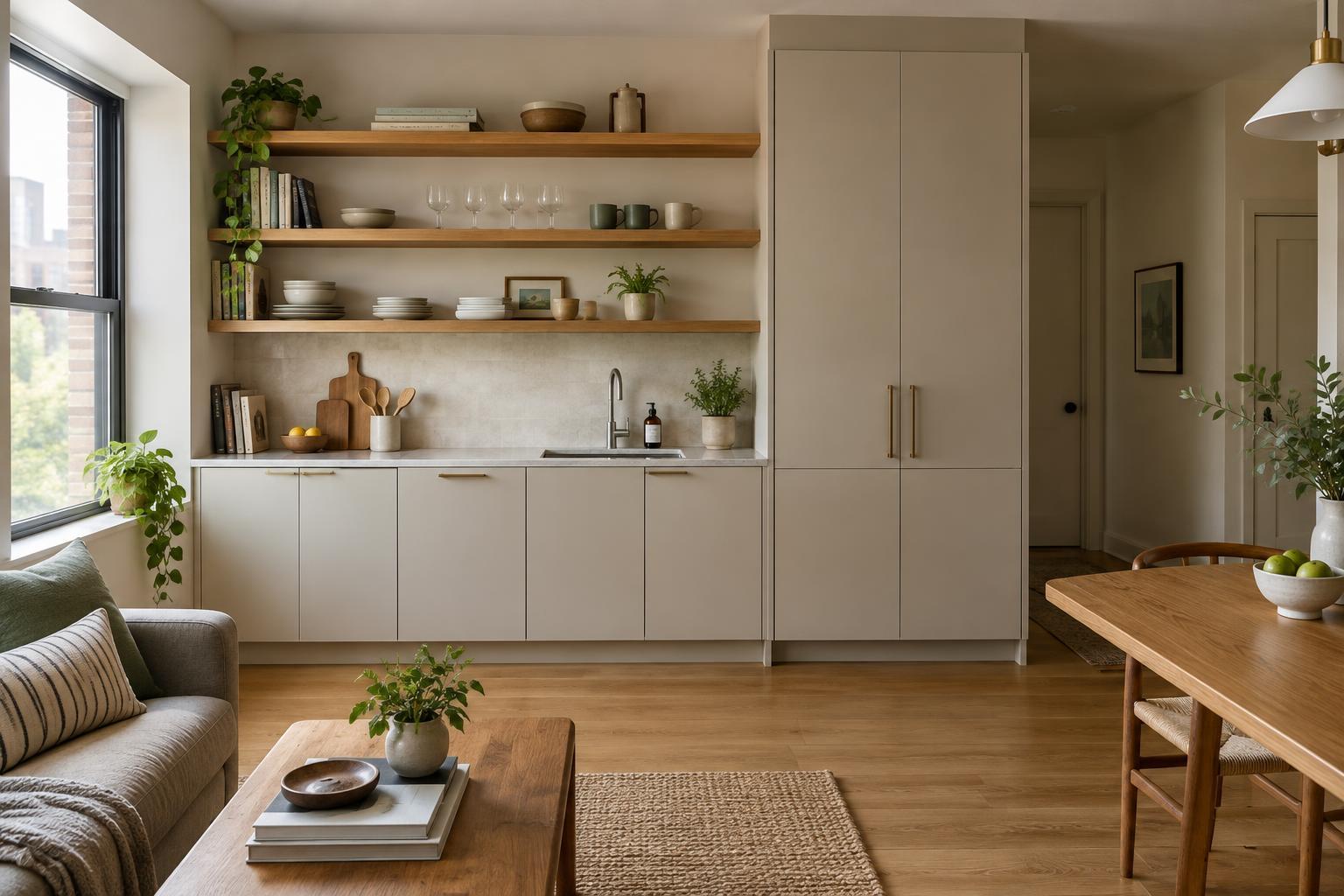
Open shelves work well for items you reach for regularly and can return without much effort. In a kitchen, that might mean a small set of everyday dishes; near an entry, it could mean a tray for keys and a shelf for bags. A visible spot can also help you remember to use a hobby kit or finish a book. Keep the selection narrow, though. If every shelf becomes a landing zone, the convenience can turn into visual noise.
Think about cleaning before choosing open storage. Exposed surfaces and objects may need more frequent dusting, especially in areas where cooking leaves residue. Shelves beside a walkway also need enough clearance that shoulders and carried bags will not catch on them. If you are a renter or unsure about a wall, check what it can safely support before mounting heavy items. Light, frequently used belongings are often easier to manage on open shelves than stacks of dense supplies.
What closed cabinets do better
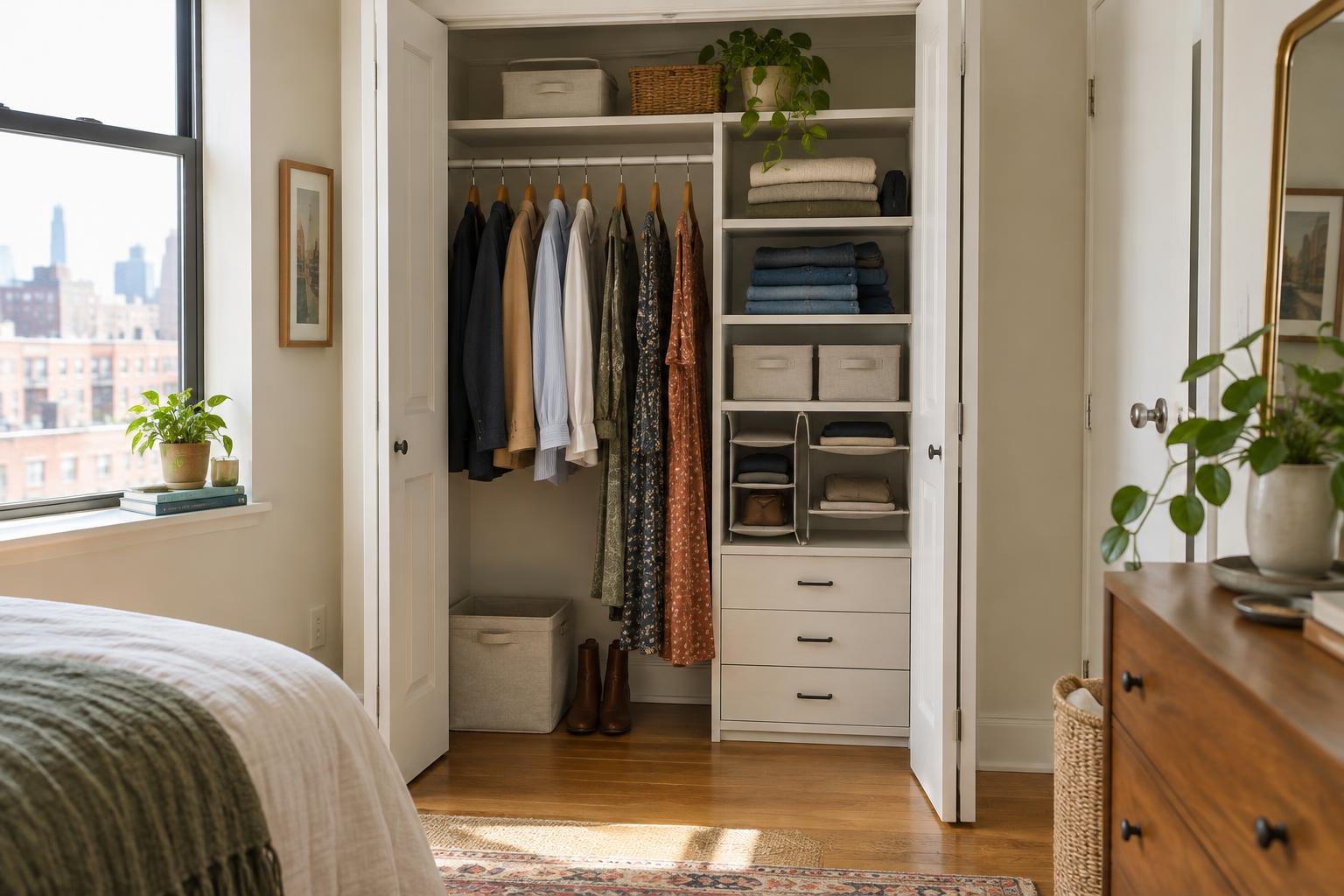
Closed cabinets are useful for items that are irregular, colorful, or hard to arrange neatly: cleaning supplies, spare cables, paperwork, and backup toiletries. A door can make a multipurpose room feel calmer without requiring the contents to look curated. Cabinets can also offer a more protected place for things you do not use every day, although the right location and conditions still matter for anything delicate.
The trade-off is access. A deep cabinet can swallow small objects, and a door that opens into a narrow passage may be frustrating. Measure the space with the door or drawer fully open, not just the cabinet footprint. Inside, use simple divisions that match the contents: a bin for loose supplies, a vertical file for papers, or a shallow tray for small items. Leave enough room to see and remove what is stored at the back. Hidden storage only helps when you can find things again.
Use a mix to balance access and calm
Most small homes benefit from a mix. Put the items you use daily at comfortable reach, then place less attractive or less frequently used supplies behind doors. One open shelf above a closed cabinet can create a useful station without putting an entire collection on display. In a compact kitchen, for example, open space might hold daily mugs while the cabinet below holds food containers and spare equipment.
Try assigning each visible area a purpose before filling it. A shelf for reading materials is easier to maintain than a shelf for anything that has no other home. If several people share the space, make frequently used storage easy for everyone to reach; otherwise, objects may migrate back to the nearest counter. You can also test a layout with furniture you already own before adding permanent shelves. A short trial reveals whether easy access actually improves your routine or simply invites more clutter.
Make the final choice in your room
Look at the room from its usual entry point. If many objects are already visible, closed storage may bring more relief than another set of shelves. If the room feels orderly but daily essentials are buried, a modest open area may help. Consider lighting, outlets, traffic paths, and the height you can comfortably reach. Storage that looks efficient in a photo may not work beside your door swing or above the place where you prepare meals.
You do not need to settle the whole room at once. Clear one problem area, decide which items truly belong there, and choose the simplest storage that will hold them. Keep a little unfilled space so the arrangement can absorb normal changes in daily life. Open shelves are strongest when they make useful things easy to use; closed cabinets are strongest when they keep necessary things from dominating the view. A small home works best when each does a specific job.