Start smaller than a room
In a small apartment, a crowded shelf can make an entire room feel busy. That does not mean you need to tackle the entire room at once. Choose a zone you can finish in one session: a kitchen drawer, the space beside the front door, one bathroom shelf, or the top of a dresser. A clear stopping point makes it easier to begin and leaves you with a visible result.
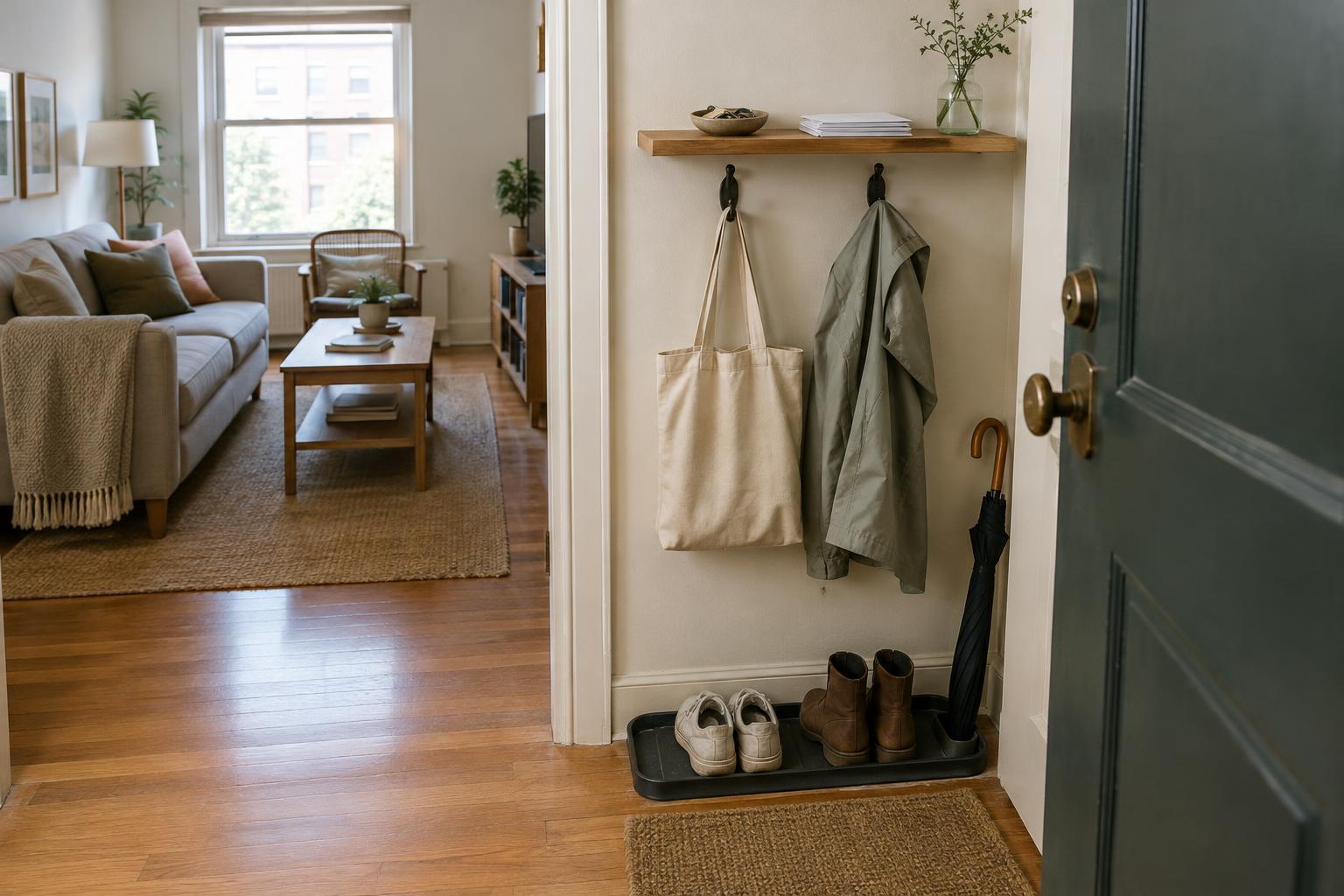
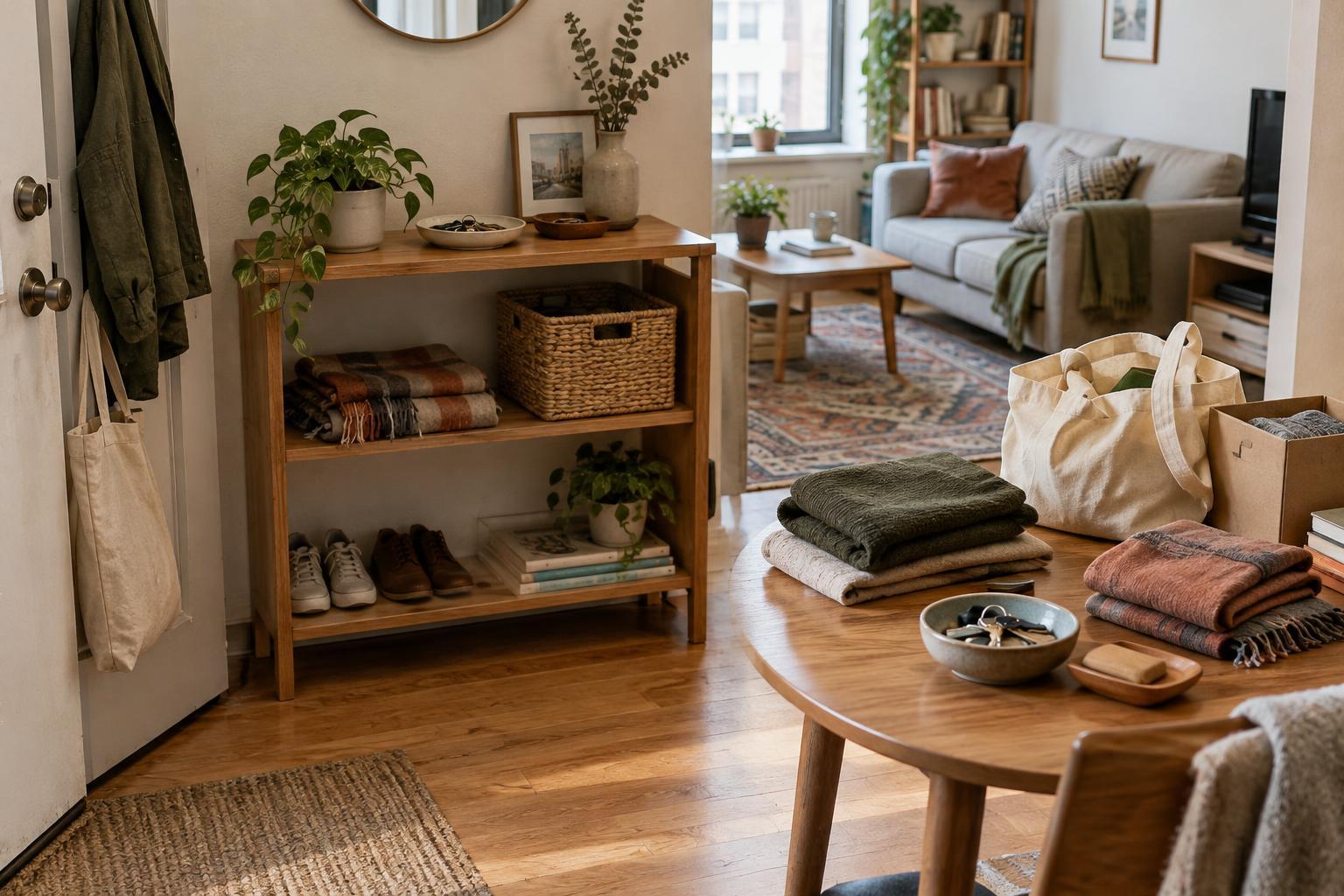
Before you move anything, decide what the zone needs to do. The entryway might need to hold keys, shoes you wear often, and a bag ready for the next day. It does not also need to store spare cables and unopened mail. Set out a rubbish bag, a recycling bag where appropriate, and a box for items that belong elsewhere. Then remove everything from the chosen zone so you can assess both the objects and the space.
Make decisions before buying storage
Sort what you removed into four groups: keep here, keep elsewhere, pass along, and discard. Handle one item at a time and ask whether you use it, need it, or genuinely want to give it space. A duplicate may be useful if you regularly use both; it may be clutter if you forgot the second one existed. For things you are unsure about, set aside a small, dated review box rather than allowing an unlimited maybe pile to spread.
Try not to shop for organizers yet. Baskets and dividers can help, but they cannot create more room if every item goes back. First return only what belongs in the zone, placing the most frequently used items within easy reach. Measure any remaining gap before considering a container. In a compact home, an organizer earns its place when it makes items easier to find or put away, not simply when it hides them.
Follow the paths of your day
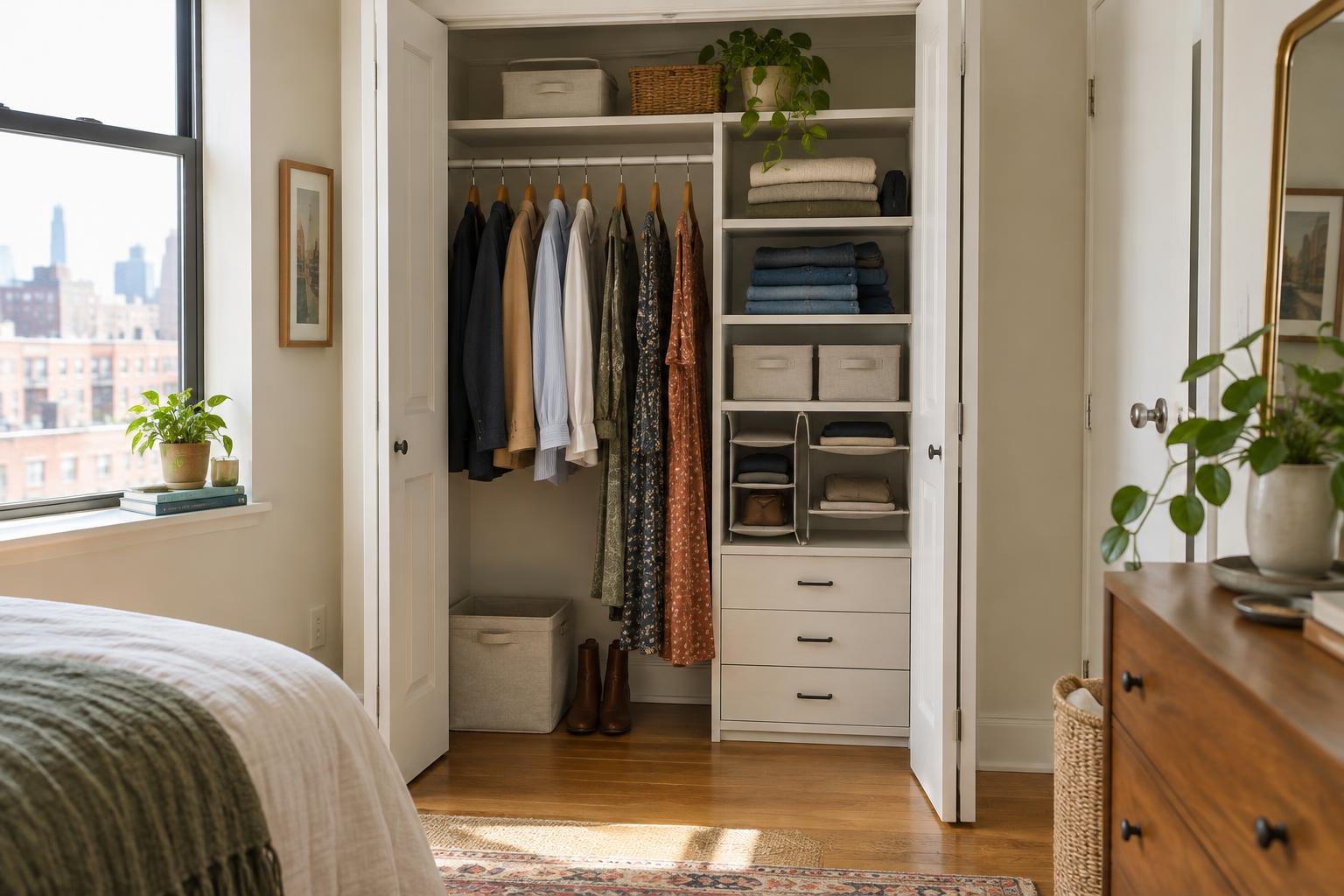
Once your first zone is complete, choose the next one by noticing where daily routines slow down. If you search for a clean mug each morning, work on the cupboard that holds cups and dishes. If getting dressed means shifting piles, start with one clothing drawer or a short section of the wardrobe. Clearing these friction points can feel more useful than organizing a cupboard you rarely open.
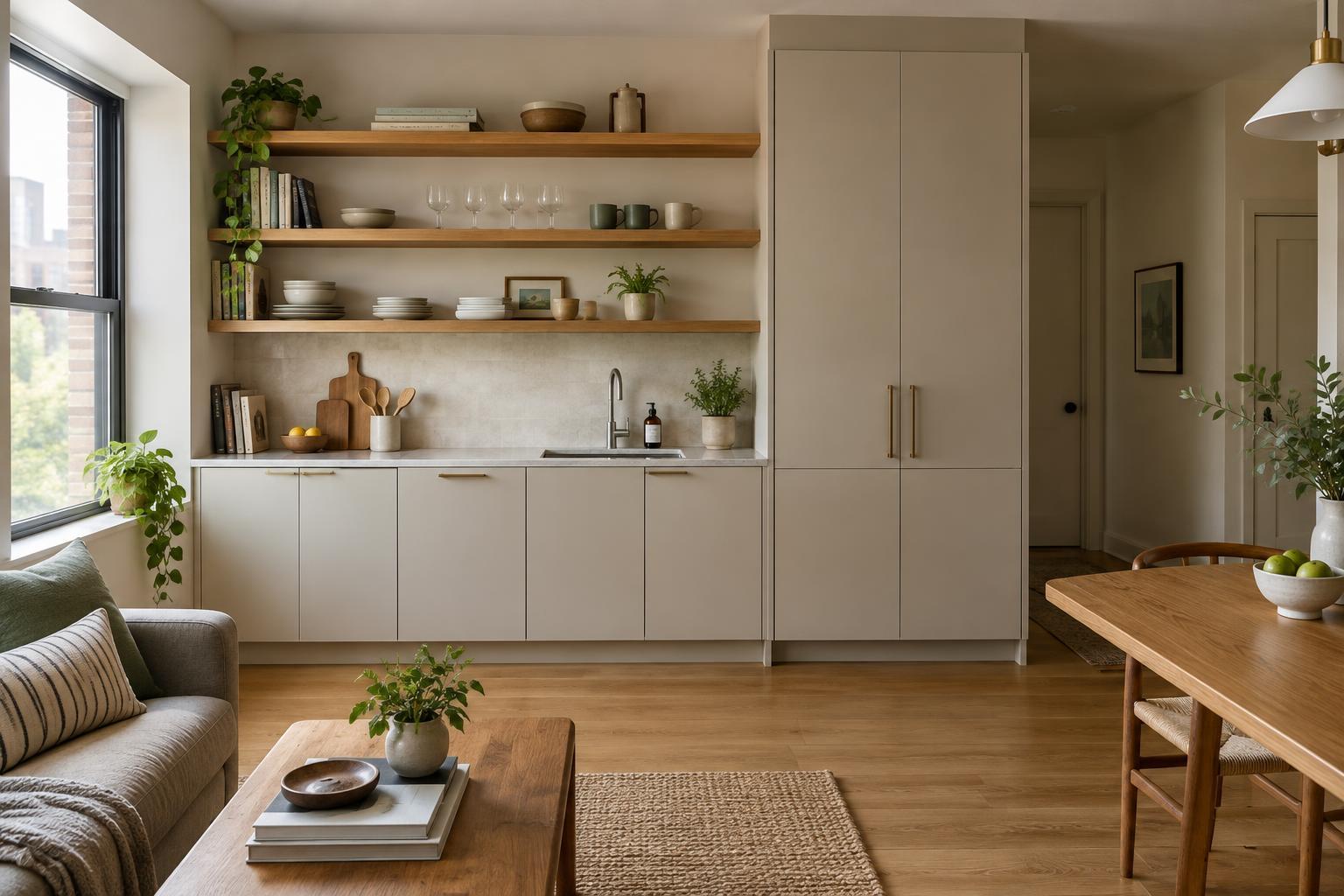
Give each zone a simple rule based on its job. Keep current cooking tools near the place you prepare food; move occasional equipment to a less convenient spot. Leave enough clear surface near the door to set down what you are carrying, then put it away. These rules need not be strict or attractive to anyone else. They should make your ordinary movements through the apartment easier.
Use the space you have, not the space you wish you had
Small apartments often ask one area to serve several purposes. A dining table may also be a desk, while a bedroom corner may hold laundry supplies. In shared-use spaces, make it easy to reset between activities. A tray can gather the few items needed for one task and move them off the table when it is time to eat. A designated shelf can keep current projects together without letting them occupy every surface.
Look for accessible space before filling hard-to-reach corners. Hooks may help with frequently used coats or bags if they do not block a walkway. Vertical shelving can hold lighter items while leaving floor space open. Store seldom-used belongings higher up or farther back, provided you can retrieve them safely. Avoid packing shelves so tightly that taking out one object requires unloading several others.
Build a gentle maintenance routine
Decluttering is easier to sustain when each item has a place it can return to without effort. At the end of a day, spend a few minutes putting things back in their zones and clearing one surface you use regularly. Keep a small spot for outgoing donations or returns, and empty it when convenient. If an area repeatedly overflows, treat that as information: the zone may be too small, the category may contain too much, or its storage spot may be awkward.
You do not have to finish the apartment in a fixed number of days. Complete one zone, use it for a while, and adjust what does not work before moving on. Progress in a small home is not measured by how empty it looks. It is the growing ease of finding what you need, using your space, and putting things away again.