Start with the space you actually have
A crowded closet can make it seem as though you need another rail. First, look at what is occupying the one you have. Take everything out, or work through the closet in small batches if you do not have room to spread it all out. Set aside items you no longer wear, pieces that need repair, and clothes that belong elsewhere. Put the remaining clothes into groups such as everyday outfits, workwear, outerwear and occasion wear. This gives you a clearer picture of which groups need quick access.
Before buying organizers, check the usable dimensions of the closet. Notice how much clearance there is above and below the rail, whether the door swings freely, and which corners are awkward to reach. A narrow shelf, for example, may be useful for folded shirts but frustrating for a deep storage bin. Plan around the space you can comfortably use, not just the space you can see.
Reserve hangers for clothes that need them
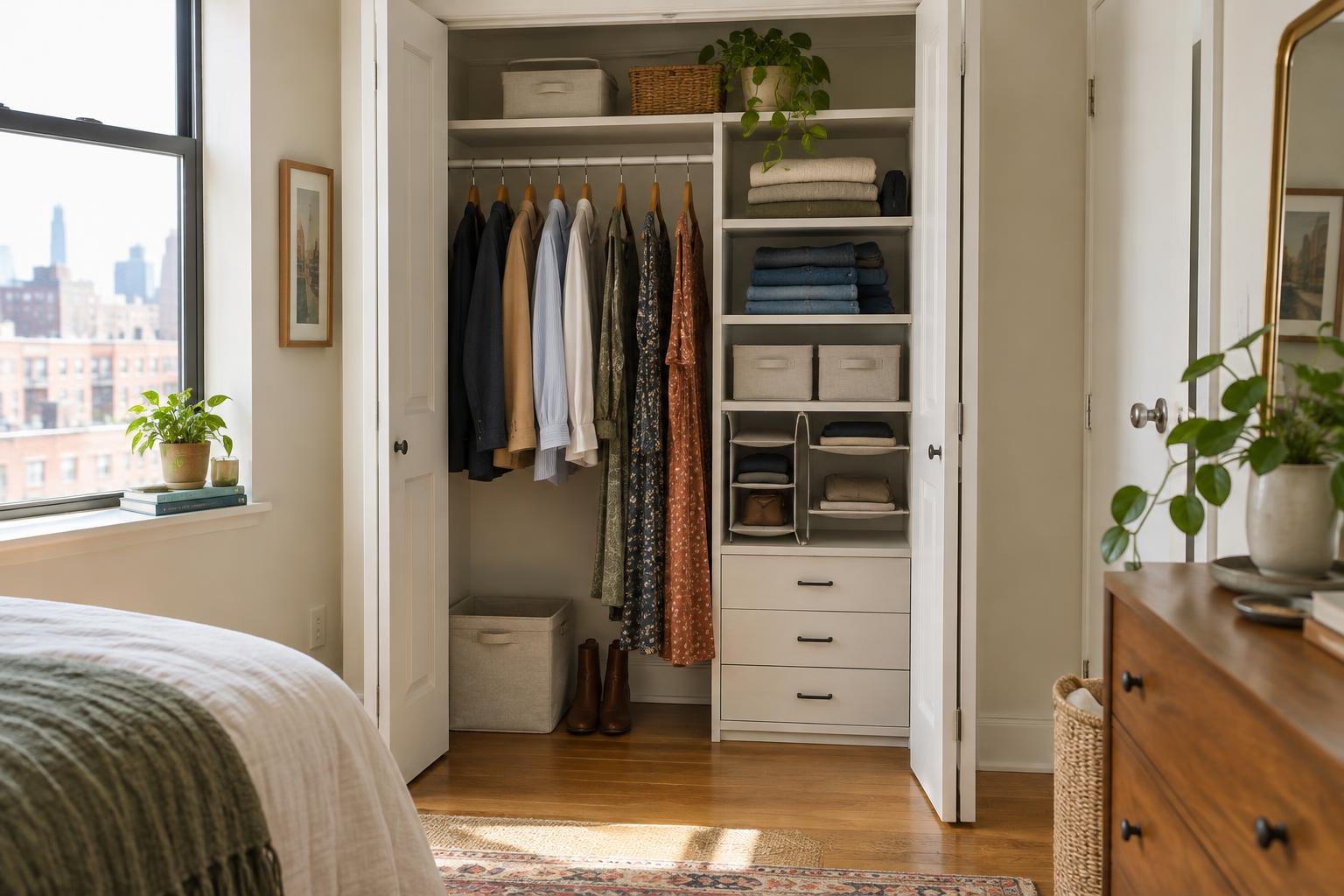
Hanging is convenient, but it is not the best use of limited rail space for every garment. Jackets, structured shirts, dresses and items that wrinkle easily are good candidates. T-shirts, jeans, workout clothes and many sweaters can usually be folded. In fact, folding heavy knitwear may help it keep its shape. Let the care needs of each garment guide you rather than trying to follow one rule for your whole wardrobe.
Give the rail a simple order that matches how you get dressed. You might group clothes by type, then place the most frequently worn items near the easiest end to reach. Leave a little room to slide hangers along the rail; tightly packed clothes are harder to find and put away. Using hangers of a similar shape can keep the row tidy, but replacing serviceable hangers is not necessary. Remove empty hangers from the rail and keep them together in one spot.
Make shelves and drawers do more work
Move foldable clothes into drawers, shelves or sturdy bins. Rather than stacking every item in a tall pile, make smaller groups that can be lifted out without disturbing everything above them. Drawer dividers or small boxes can separate socks, underwear and accessories; existing containers may work just as well as new ones. On an open shelf, place frequently used items at eye level and reserve higher shelves for things you need less often.
The floor and upper shelf can also support the closet, provided they remain easy to access. A low shoe rack may prevent shoes from spreading across the floor. A labeled bin on an upper shelf can hold off-season accessories or occasional-use items. Avoid piling so much beneath hanging clothes that hems rest on the contents. If reaching a high shelf requires a step stool, keep daily essentials somewhere lower.
Use vertical space carefully
If the closet has enough height, a second rail below a short-hanging section can create room for shirts or trousers. Check the length of your clothes and the clearance needed for shoes or storage before installing one. Hooks on a side wall or the back of a door can hold a bag, belt or robe, but they should not block the door or catch on nearby clothing. Where permanent changes are not possible, removable organizers may be an option if they suit the surface and weight of the items.
Choose additions based on a specific problem. A slim shelf divider helps if folded stacks topple; a hanging organizer helps if you lack shelves but have a little rail space to spare. The latter also takes up hanging room, so it is not automatically an improvement. Test a layout with what you already own before committing to extra hardware.
Keep the system easy to maintain
An organized closet should make both getting dressed and putting laundry away straightforward. Give each group a clear home, and avoid categories so precise that you have to think hard about where an item belongs. Keep a small, accessible place for clothes that have been worn but can be worn again, rather than letting them collect on a chair. A hook or basket can work if you empty it regularly.
After living with the setup for a week or two, notice where clutter returns. If folded tops keep ending up on the rail, their shelf may be too hard to reach. If shoes drift toward the doorway, their storage spot may be inconvenient. Adjust the layout to fit your habits. Limited hanging space is easier to manage when every hanger has a purpose and the rest of the closet supports the way you use your clothes.