Start with the cookware you actually use
Before buying an organizer, take every pot, pan, and lid out of its hiding place. Match lids to their pots and set aside pieces that are damaged, duplicated, or rarely used. You do not have to get rid of a specialty pan you enjoy, but it does not need the easiest-to-reach shelf if you use it twice a year. This quick inventory shows how much space your everyday cookware really needs.
Choose a home for each piece based on how often you reach for it. Keep a daily frying pan and saucepan near the stove if possible; put occasional cookware higher up or farther away. Store heavier pieces on low shelves or in sturdy drawers so you do not have to lift them down from above your head. Check that shelves, drawers, and any added organizers can safely support what you place on them.
Make cabinets easier to reach into
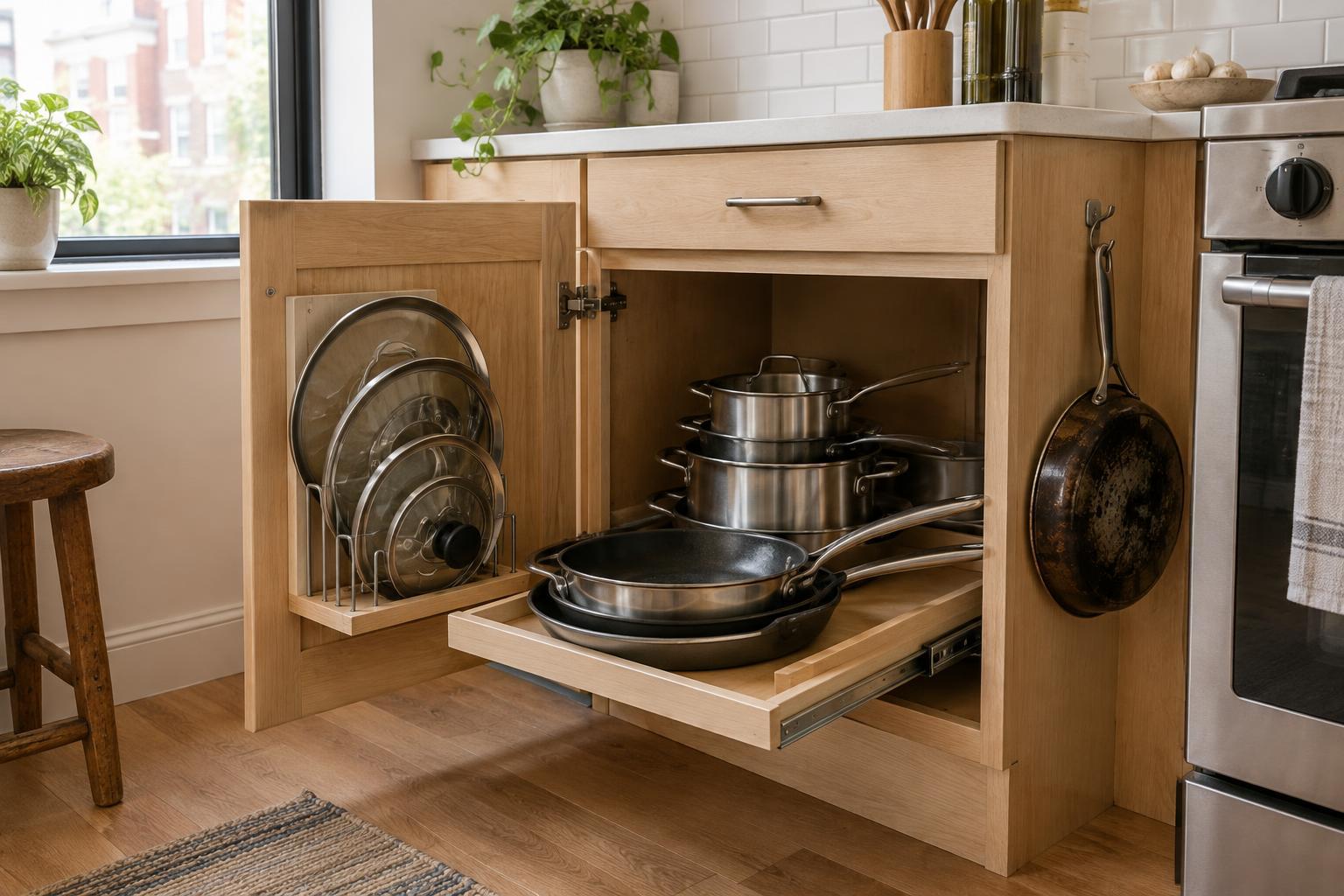
A deep cabinet often has enough room but poor access. If you stack every pan inside the largest pot, retrieving one item can mean unloading the whole pile. Try grouping pieces by shape and size instead: nest two or three compatible pots, then keep frying pans in a separate stack. Place a soft cloth or pan protector between surfaces that may scratch. Avoid nesting cookware so tightly that handles catch or a smaller piece becomes difficult to remove.
If the cabinet has a tall open space, a freestanding shelf riser can create a second level for lighter items. An adjustable vertical rack may let pans stand on edge, provided the cabinet is tall enough for their handles and the rack stays stable when you pull one out. Measure the cabinet’s usable width, depth, and height first, including hinges and pipes. A modest organizer that fits the space is more useful than a clever one that blocks the door.
Give lids their own system
Lids are awkward because their knobs prevent neat stacking. One simple option is to stand them upright in a cabinet rack, arranging them from small to large so you can identify the right one at a glance. You can also keep a lid beside its pot when there is enough room, turning the lid upside down to make the pair easier to stack. Use a protective layer if the lid or pot has a finish you want to avoid scratching.
The inside of a cabinet door can hold lightweight lids, but check clearance before attaching a holder: the door still needs to close without hitting shelves or cookware. In a rental, a removable or freestanding rack may be preferable to drilling. Whatever method you choose, make sure lids cannot slide out when the door opens. Keep glass lids where they are unlikely to be knocked against other pieces.
Use walls and open space selectively
When cabinets are crowded, a wall rail, pegboard, or sturdy pot rack can free up valuable shelf space. Hang only cookware that you can comfortably lift on and off, and follow the mounting instructions for the wall and hardware. A rack above a narrow walkway or where swinging handles could be bumped may create more trouble than it solves. Open storage also puts cookware on display, so it works best for pieces you use and clean regularly.
A slim rolling cart can be another option if it has a convenient parking spot and does not obstruct movement through the kitchen. Keep heavier pots on its lowest level and lighter lids or accessories above. Before adding any visible storage, try living with the proposed location for a few days: place a box of similar size there and see whether cabinet doors, chairs, or your usual cooking routine run into it.
Keep the arrangement easy to maintain
The best system is one you can reset after washing up. Leave enough space to return each pan without rearranging its neighbors, and avoid balancing lids on top of unstable stacks. If a piece routinely lands on the counter because its assigned spot is inconvenient, change the spot rather than relying on a stricter routine. A small kitchen benefits from clear, forgiving storage more than from packing every available inch.
Revisit the setup when your cooking habits change. You may find that one versatile pot has replaced several rarely used pieces, or that a new pan needs the prime position. Keeping everyday cookware accessible, occasional cookware out of the way, and lids easy to match can make a compact kitchen feel calmer without requiring a complete renovation.