Start with what the meeting needs
Before suggesting a place, decide what you will do once everyone arrives. A quick handoff needs a different setting from an hour-long conversation. If you plan to talk, look for somewhere you can hear each other without blocking a walkway. If the meeting is the start of an outing, choose a spot that puts the next stop within a comfortable walk.
Ask about practical constraints early. Someone may need a step-free entrance, a place to sit, room for a stroller, or a location near a convenient transit stop. An indoor café may work well for one group but be awkward for people who do not want to buy anything. A useful meeting place should not require anyone to explain a personal need in detail; a simple question about access, budget, and travel time is usually enough to narrow the options.
Choose a precise, recognizable arrival point
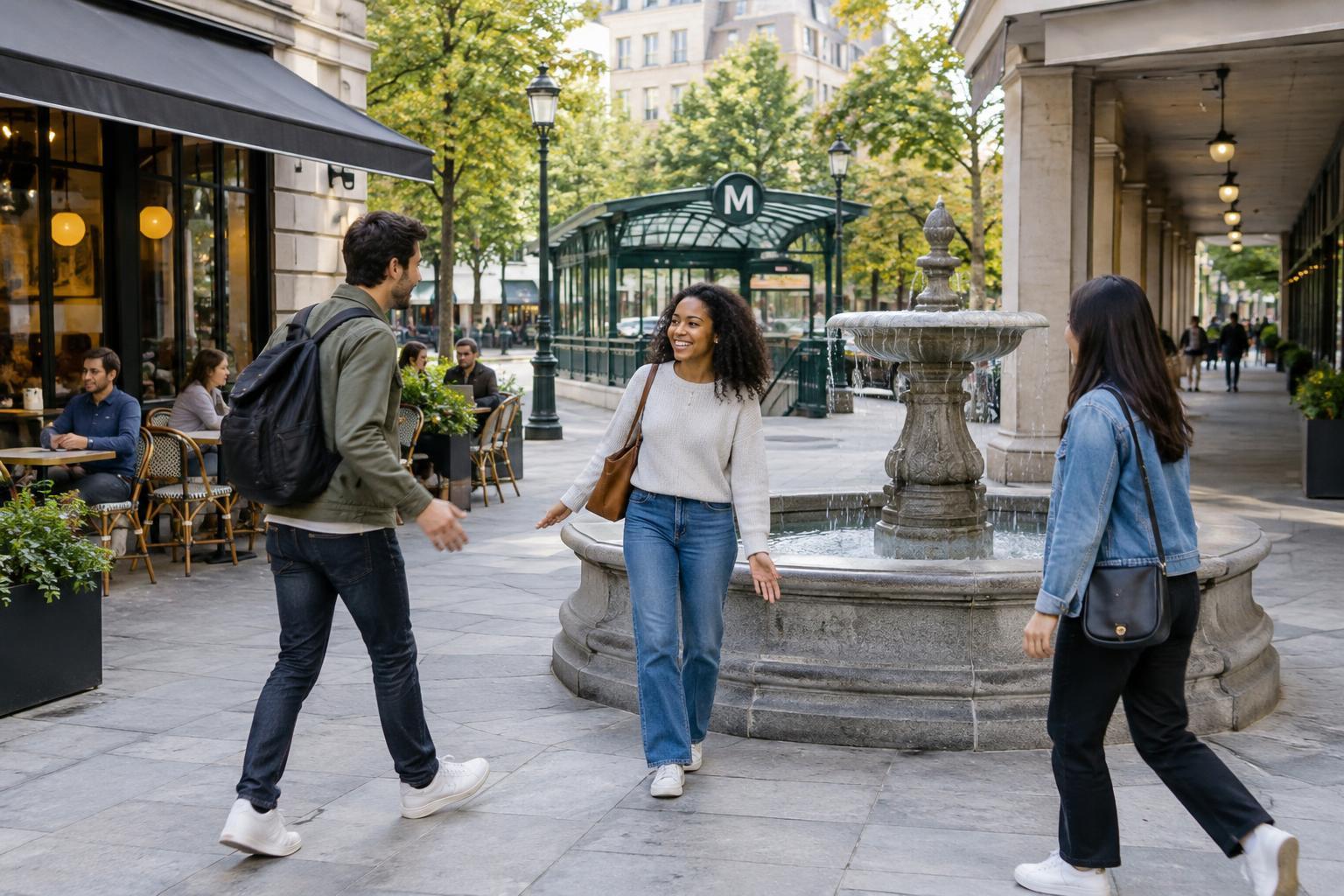
A building name or transit station may still leave people looking for one another across several entrances. Name a specific point, such as the main entrance on a particular street or a clearly marked information desk. Avoid relying on a temporary landmark, like a food cart or a parked vehicle, that could disappear before everyone arrives.
Think about what the spot feels like while someone waits. A narrow doorway, busy bike path, or crowded station exit can make standing still uncomfortable and obstruct others. Look for a place with room to step aside while remaining visible. If you are meeting outside, check whether the proposed point offers any shelter or whether there is a nearby indoor alternative.
Send the location in ordinary words as well as through any map tool you use. Street names, the entrance to use, and a short description of where to stand can clear up confusion if a map pin lands in the middle of a large building. If the group is unfamiliar with the area, agreeing on one arrival point is easier than offering several choices at the last minute.
Match comfort and cost to the length of the visit
For a longer meeting, the nearest place is not always the best one. Consider whether there is seating, enough space to talk, and a reasonable chance of finding a spot at the time you plan to arrive. A busy venue can be lively, but it can also make it hard to hold a conversation or accommodate a group. If you are considering a business, check its hours and any seating expectations before making it the plan.
Keep spending optional when possible. You might meet at an easy-to-find public point and decide together whether to go into a café or continue walking. If buying something is part of the plan, say so in advance. That small detail helps everyone judge whether the suggestion fits their budget and the amount of time they have.
The route after the meeting matters, too. A pleasant spot that sends everyone well out of the way may not be convenient. If people are coming from different directions, compare the full trip rather than only the distance from one station. Sometimes a slightly less central meeting point makes the rest of the day simpler.
Build in a simple backup plan
City plans can change because of weather, crowds, delays, or a closed venue. Pick a backup that is close enough to reach without starting the trip over. For example, agree that if the outdoor entrance is uncomfortable, everyone will move to a specified indoor lobby or another clearly identified public spot where waiting is permitted.
Share when you expect to arrive and how long you can wait before moving on. If someone is delayed, a brief message saying whether to stay put or head to the next stop prevents the group from splitting up. For a larger group, one person can send the final location and any change of plan so that everyone receives the same directions.
A good meeting spot does not need to be memorable or elaborate. It needs to help people find each other, feel reasonably comfortable, and begin what they came to do. When those basics are settled ahead of time, the meeting itself can take more of your attention than the logistics.