Buying for an Imagined Day Instead of Your Usual One
It is easy to shop for the person you hope to be on your most organized day. A notebook suggests you will capture every idea; a large multitool suggests you will handle every small repair. But an accessory earns its place only if it helps with something you actually do. Start by thinking through a normal weekday: where you go, what you carry already and which small inconveniences keep coming up.
Keep a short list of those inconveniences before buying anything. Perhaps your keys scratch your phone, your transit card is difficult to reach or you often need a way to carry a reusable bag. Buy for one repeated problem at a time. That approach is less exciting than assembling a complete kit at once, but it gives each purchase a clear purpose.
Ignoring Size, Weight and the Way You Carry Things
An accessory can be compact on a product page and awkward in a pocket. A thick wallet, heavy key organizer or rigid case may change how comfortably you sit, walk or fit everything into a small bag. Check dimensions against the pocket or compartment it will use, and consider the combined bulk of everything you carry rather than judging each item alone.
Before shopping, lay out your current essentials and try carrying them on an ordinary outing. Notice what shifts, catches or takes too long to retrieve. If an item must be available quickly, its location matters as much as its size. A slim accessory buried at the bottom of a bag may be less useful than a slightly larger one kept in a consistent, easy-to-reach place.
Paying for Features You Will Not Use
Feature lists make accessories sound versatile, but extra functions can add weight, complexity and cost. A charger with more capacity than you need may be a nuisance to carry; a wallet with many slots can encourage you to keep cards you rarely use. Identify the main job first, then compare products on how well they perform that job. Treat secondary features as bonuses, not reasons to buy.
Also watch for overlap. If your phone already handles a task reliably, a separate device needs to offer a meaningful advantage before it takes up space. The same applies to buying several pouches to organize a small number of objects. A simple setup is often easier to maintain because you know where things belong and can tell when something is missing.
Overlooking Everyday Friction and Durability
A purchase can look sturdy yet be frustrating to use. Consider whether a zipper opens easily with one hand, whether a clip attaches securely to the strap you own and whether a bottle is comfortable to clean and refill. Small sources of friction matter when you repeat an action every day. If possible, test the accessory with the objects it is meant to hold rather than relying on appearance alone.
Look closely at the parts most likely to see wear: seams, hinges, fasteners and charging ports. A replaceable cable or washable pouch may be easier to live with than a design that is difficult to clean or repair. Durability is not just about choosing the toughest material; it is about choosing an item that can handle your routine without demanding more care than you are willing to give it.
Forgetting About Security, Maintenance and a Trial Run
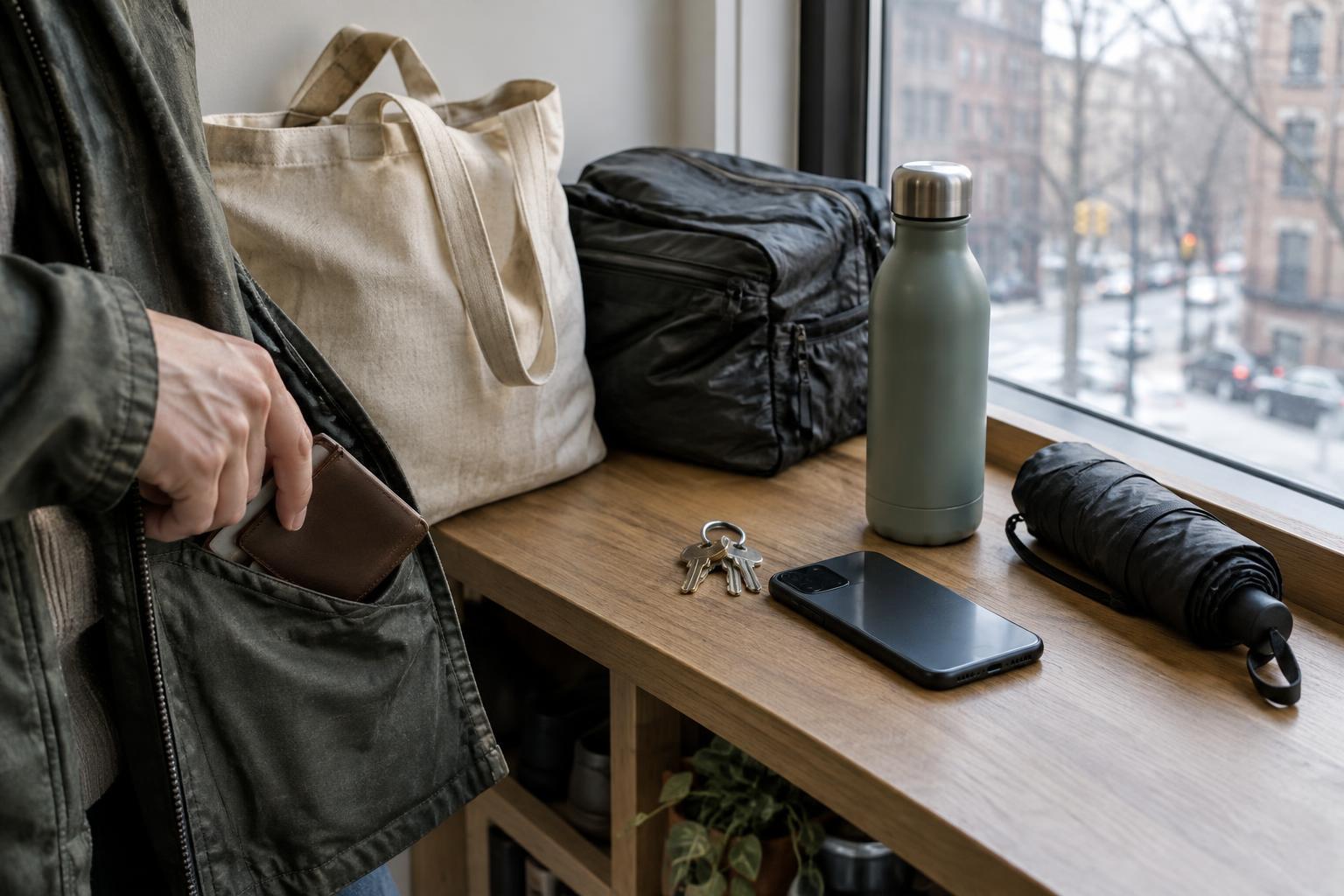
Convenience should not mean making important belongings easier to lose. Avoid placing keys, identification and payment cards together in a way that could leave you without all three at once. Check whether clips and closures stay shut during movement, and think about where you set items down when you stop for coffee or change bags. A consistent place for essentials is often more helpful than another organizer.
Give a new accessory a trial period before adding more gear. Carry it on several ordinary trips and notice whether you reach for it, forget it or find it in the way. Remove anything that does not justify its space, and check reusable items periodically for wear, charge or cleanliness. The goal is not a perfect collection; it is a small, dependable set of things that makes leaving home simpler.