Start with your clothes and your routine
The best compact clothes-care kit solves the problems you regularly encounter, not every wardrobe emergency you can imagine. Think about where you change clothes, how long you are away from home and which fabrics you wear most. A daily work bag might need only a lint tool and a way to handle a small mark. An overnight bag may also benefit from repair supplies and a place to separate worn clothes.
Before buying anything, lay out a pouch about the size you are willing to carry. If an item will not fit, ask whether it earns its space. Keeping the kit small makes it easier to bring along, check for missing supplies and use when you need it.
Choose a few tools that do different jobs
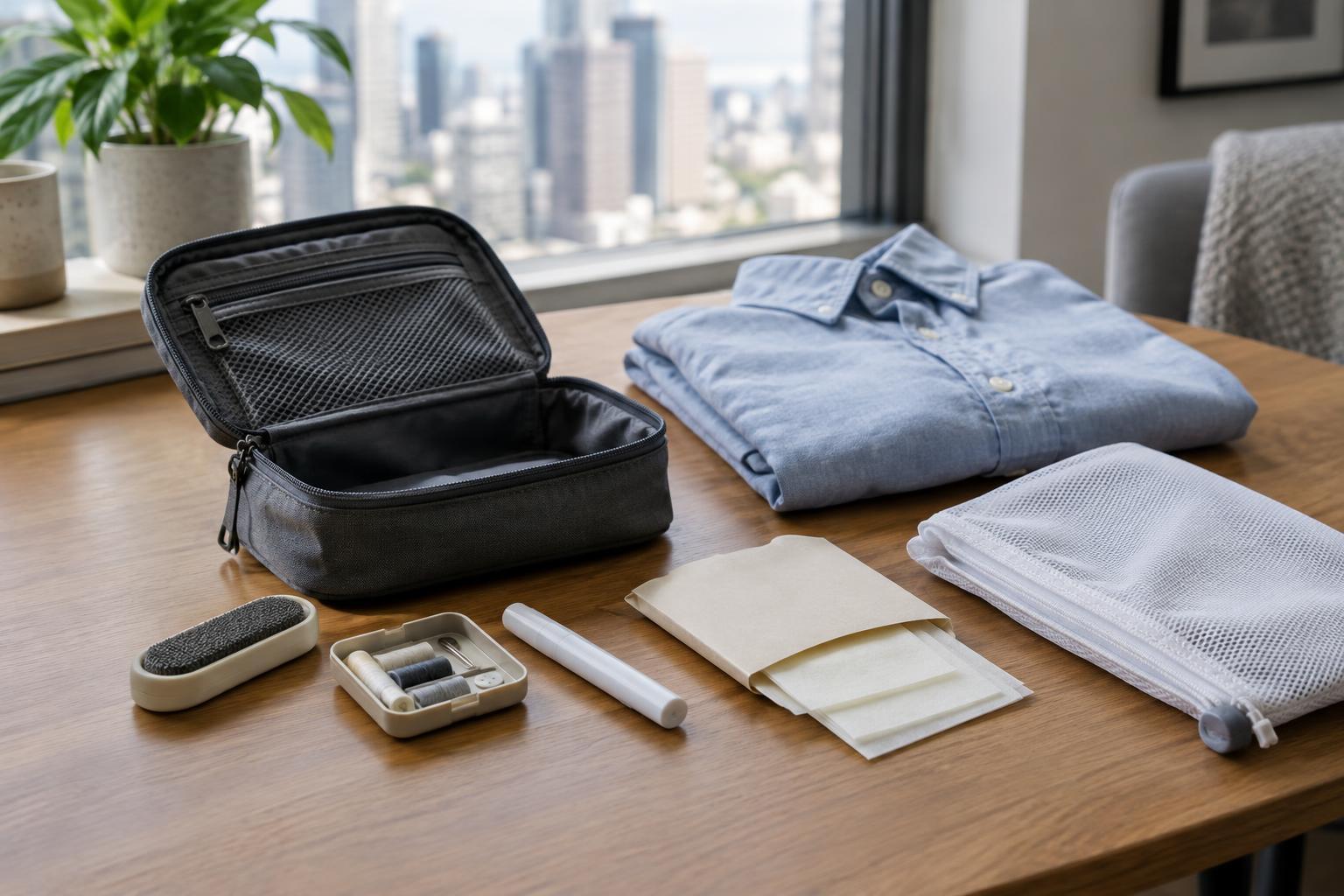
For surface care, consider a small reusable lint brush or a few sheets from a compact lint roller. A brush avoids refills; adhesive sheets may be easier to use on some stubborn lint. Pick whichever works better on your usual clothes, especially dark items that show dust and pet hair.
For quick repairs, pack a needle, a short length of thread in a versatile color, one or two spare buttons and a few safety pins in a secure case. These can help with a loose hem or missing button until you have time for a lasting repair. A small pair of scissors can be handy, but only if it is appropriate for the places you plan to carry the kit. Do not leave loose sharp objects in a pouch you reach into quickly.
A clean, soft cloth is another useful addition. It can help you blot a spill or gently wipe a suitable fabric without relying on tissues that may leave fibers behind. Together, these basics cover several common problems without filling an entire bag.
Be cautious with stain products
A stain-removal pen or individually packed wipe may seem essential, but it is worth choosing with your clothing in mind. Some fabrics and dyes react poorly to moisture or cleaning products. Read care labels, follow the product directions and test an unfamiliar product on an inconspicuous area when possible. For delicate or dry-clean-only pieces, a quick treatment may do more harm than leaving the mark for proper care later.
When a spill happens, avoid scrubbing. Gently blotting excess liquid with a clean cloth is often a better first step, though the right treatment depends on the fabric and the substance spilled. Keep any liquids in a sealed bag inside your pouch so a leaking container does not create a bigger laundry problem. If you rarely use stain products, a cloth and a plan to deal with marks at home may be enough.
Make room for laundry between stops
If you spend nights away, a lightweight washable bag can keep worn clothes apart from clean ones. Choose one that closes securely and can be cleaned after carrying damp or heavily soiled items. For hand-washable basics, a small amount of detergent in a well-sealed container may be useful, provided you follow garment care instructions and have a suitable place to wash and dry the item.
Drying matters as much as washing. Packing a damp garment back into a closed bag can leave it unpleasant to wear and may affect other items. A compact hanger or a short travel clothesline earns its place only if you use it and have somewhere appropriate to hang clothes. Otherwise, leave it out. Your kit should match your real accommodations and schedule, not an idealized travel routine.
Pack it so you will use it
Choose a pouch that opens wide enough to see its contents and is easy to wipe clean. Keep sharp repair tools contained, and separate liquids from thread, cloth and other dry supplies. If you carry the kit while traveling, check the rules for your mode of transport and destination before packing scissors, needles or liquids.
Try the kit on an ordinary week. Notice what you reach for, what stays untouched and what problem you still cannot solve. Remove unused extras and replace supplies as needed. A compact clothes-care kit is not a miniature laundry room; it is a reliable way to handle small setbacks and keep moving until you can give your clothes proper attention.