Start with the lunch you actually pack
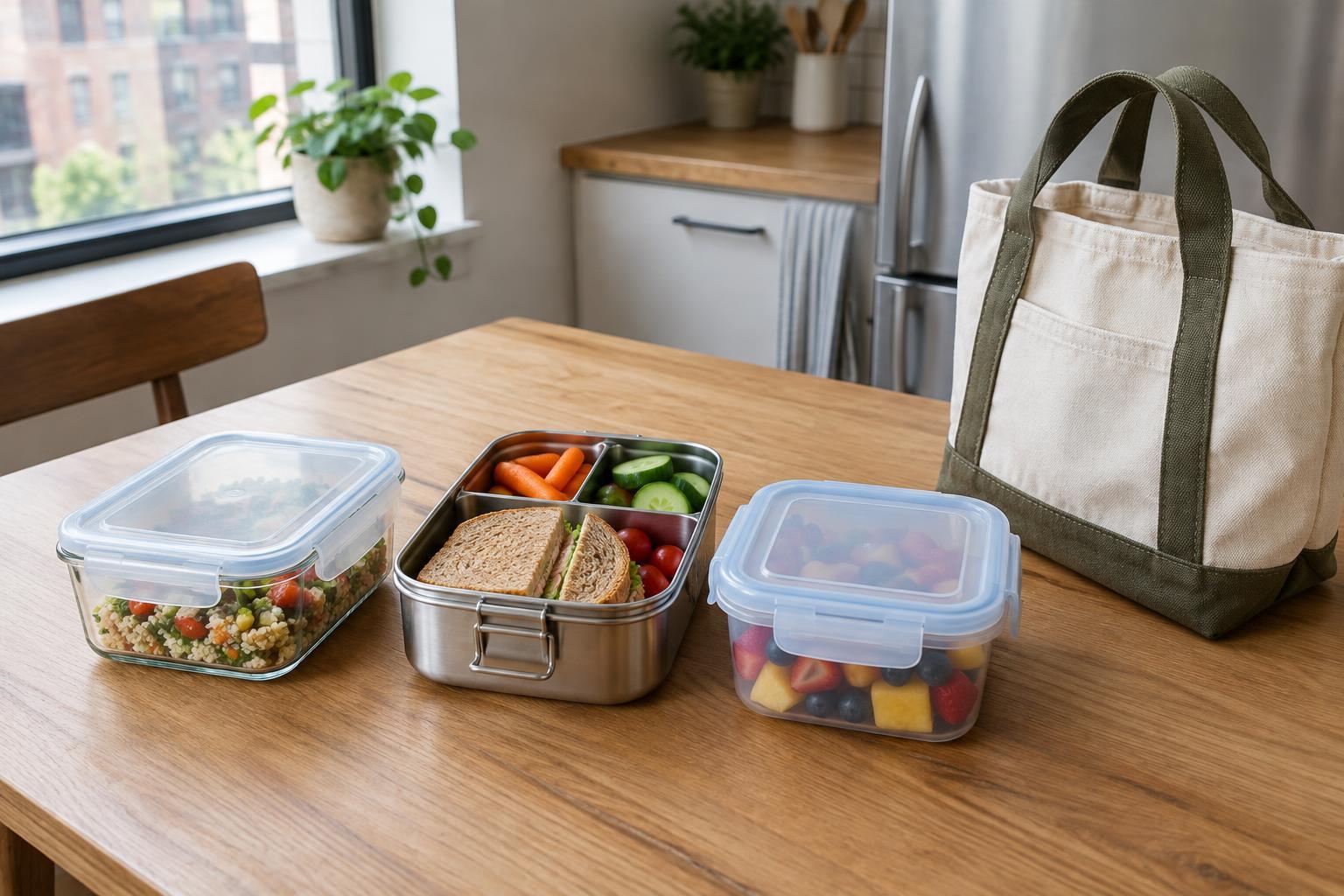
A container that works for a sandwich may be awkward for soup, and a roomy salad box may take up more bag space than you can spare. Before comparing products, list two or three lunches you pack often. Note whether they contain liquids, foods you want to keep separate, or items you plan to reheat. Then consider where the container will travel: upright in a backpack, sideways in a tote, or inside an insulated lunch bag.
Think about your routine at both ends of the trip. If you assemble lunch the night before, you may want a container that stacks neatly in the refrigerator. If you wash dishes by hand after a long day, a simple shape may matter more than extra compartments. These details help you choose for repeated use rather than for an appealing display photo.
Compare materials by how you will use them
Plastic containers are often light and easy to carry. When choosing one, check the maker’s directions for food contact, reheating and dishwasher use rather than assuming every plastic container can handle the same conditions. Glass is useful when you want one vessel for storage and, if permitted by its instructions, reheating. Its trade-offs are weight and the possibility of breakage during a crowded commute.
Stainless steel can be a durable choice for foods you plan to eat cold, though an ordinary steel container is not suitable for a microwave. Silicone options may fold or compress to save space, but their flexibility can make them less convenient for foods that need a rigid base. You do not need one material for every meal. A small set chosen for different uses may be more practical than several identical containers.
Look closely at lids, seals and compartments
For a lunch carried through a city, the lid deserves as much attention as the base. Check how it closes and whether you can open it comfortably without spilling the contents. A gasket may help contain moist foods, but a product described as leak-resistant is not necessarily suitable for soup in a bag that tips over. For liquids, check the maker’s guidance and test the closed container at home before trusting it beside a laptop or notebook.
Compartments can keep ingredients apart until lunchtime, but they are not always sealed from one another. If dressing, sauce or juicy fruit must stay separate, a small dedicated container may work better. Removable dividers give you more flexibility for different meals; fixed dividers can make packing straightforward but limit the size and shape of what fits. Consider whether every corner is easy to reach when washing up.
Choose a size that fits both the meal and the bag
A useful container has enough room for your typical portion without forcing you to carry a mostly empty box. Compare its dimensions with your lunch bag, refrigerator shelf and the space available at your workplace. A wide, shallow shape may help keep a sandwich or salad intact, while a taller shape may suit a grain bowl. Check external measurements as well as stated capacity: thick walls and large lid clasps take up room.
If you are buying more than one, see whether the empty containers nest and the filled ones stack securely. Matching lids can simplify storage, but only if the sizes are ones you will use. It can be sensible to begin with one versatile container and one small sauce pot, then notice which meals still feel difficult to pack.
Make cleaning and replacement part of the decision
Reusable containers earn their place by being easy enough to use again. Look for smooth interiors, accessible lid edges and parts you can remove for cleaning according to the maker’s instructions. If a lid has a gasket, check whether it comes out and goes back in without a struggle. Let washed parts dry fully before storing them, especially where moisture can sit beneath a seal.
Finally, consider the cost of keeping the container in service. A lid that can be replaced separately may be more useful than a set you must discard when one piece is lost. The strongest choice is not necessarily the heaviest or most elaborate: it is the container you can pack, carry, clean and store without turning lunch into another chore.