Start with what your refrigerator actually holds
Before moving shelves or buying containers, take everything out and check what is still usable. Wipe up spills, discard anything spoiled, and group the remaining food by how you use it: meal ingredients, ready-to-eat food, leftovers, produce and condiments. This gives you a clearer picture of the space each group needs.
Notice which items repeatedly get pushed to the back. A tall bottle might be forcing smaller containers out of sight, or several nearly empty jars might be taking up a whole shelf. Adjust the layout around your usual groceries rather than trying to copy a picture of a perfectly stocked refrigerator. The aim is to find food easily, not to keep every shelf full.
Give the easiest-to-reach space a job
Reserve a visible, accessible spot for food that needs your attention soon, such as opened ingredients and leftovers. You can use a small tray or simply keep part of a shelf clear. Either way, you should be able to see what is there without moving several other items. Check package instructions and use your judgment about whether food is still suitable to eat; organization is not a substitute for safe storage.
Keep foods you reach for together when doing so makes a task easier. Breakfast items might share one area, while ingredients for planned dinners occupy another. These groups do not need permanent labels. If your routine changes, change the zones too. A useful system should make putting groceries away straightforward, even after a busy day.
Use drawers, shelves and the door deliberately
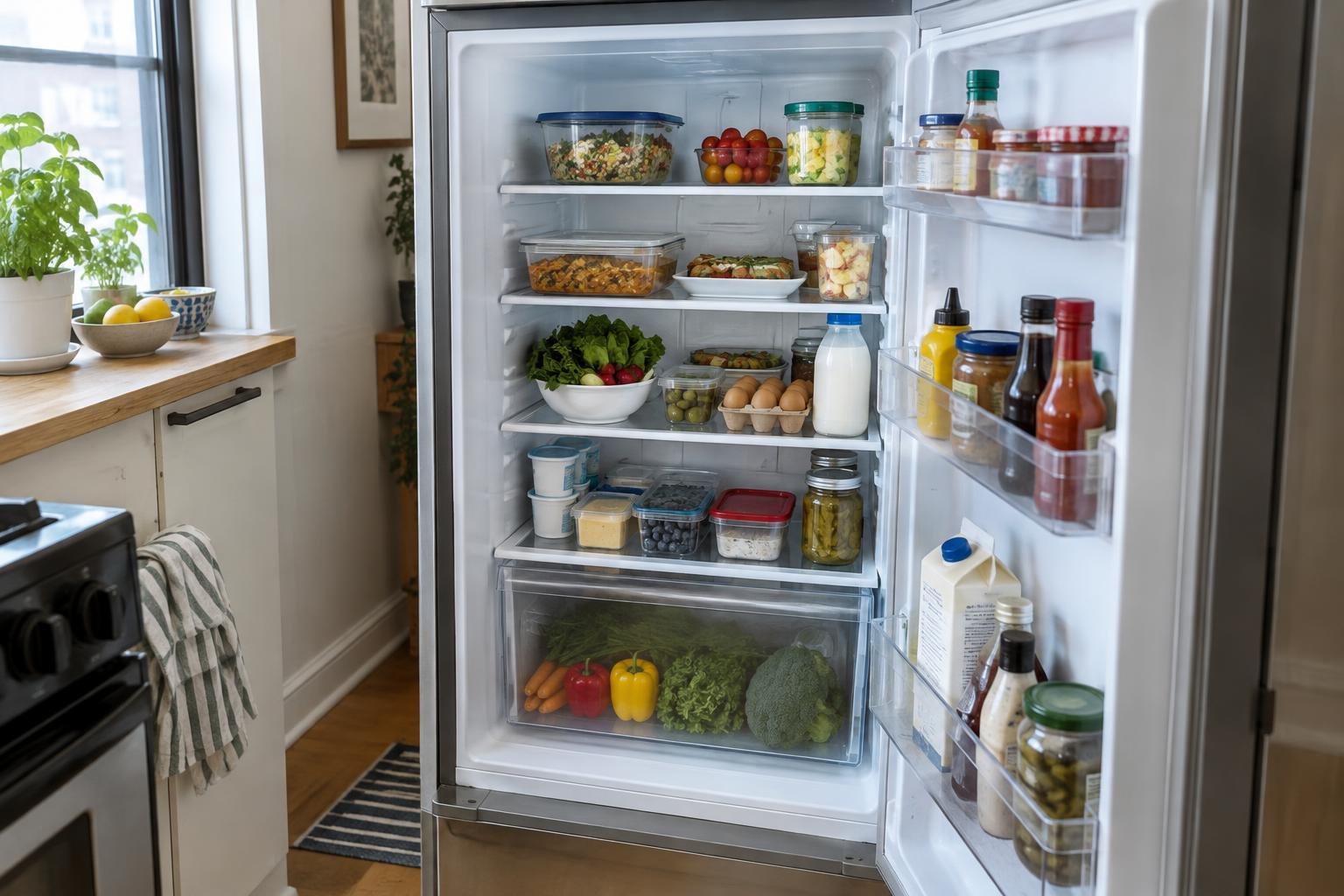
Drawers can keep loose produce from spreading across a shelf. If yours have adjustable settings, use the appliance instructions to decide how to set them for what you store. Keep produce visible enough that you remember to use it, and avoid packing a drawer so tightly that you must empty it to find one item.
Shelves work best when there is enough room to remove a container without tipping its neighbors. Place raw meat or seafood in secure, leakproof packaging on a low shelf or in a contained area so it cannot drip onto other food. Follow the refrigerator’s guidance for storage conditions, and avoid blocking its vents. The door is handy for frequently used items that fit securely, though its suitability for particular foods depends on the appliance and the food’s storage instructions.
Choose containers only where they solve a problem
Matching bins can look tidy, but they may waste space in a compact refrigerator. Try organizing with what you already own before adding anything. A shallow tray may help gather small jars; a clear container may keep opened packets from disappearing. Leave bulky produce and tall bottles unboxed if a bin would make them harder to fit or reach.
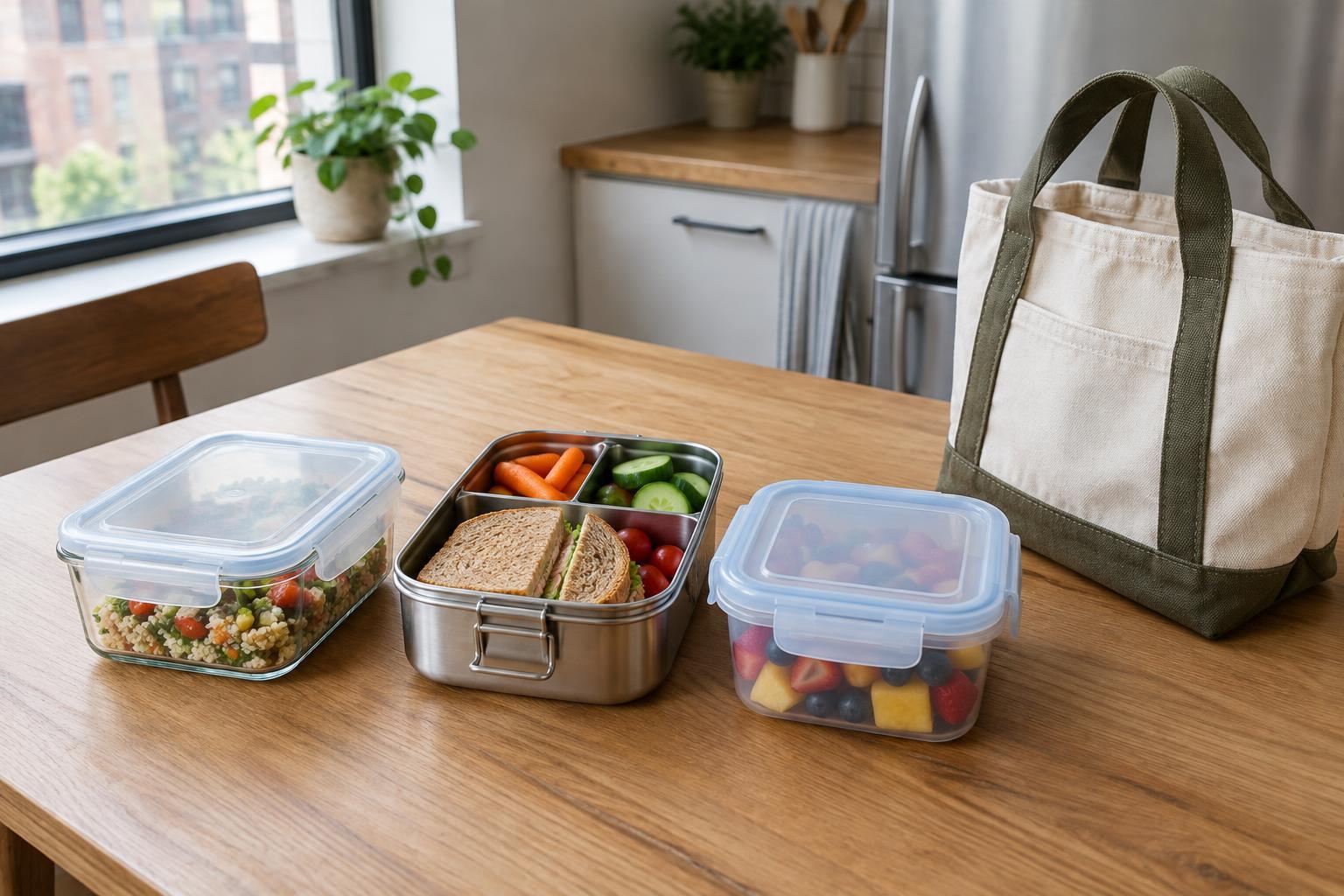
For leftovers, use containers that close securely and stack without wobbling. Marking them with their contents and the day you stored them can help when several dishes look alike. Keep labels simple enough that you will actually use them. If a container routinely hides food until it is forgotten, move it to a more visible place or use a clear one.
Reset the space before it gets crowded
A brief check before shopping can prevent new groceries from burying older ones. Look at the visible leftovers, inspect produce, and note any opened ingredients you could use in an upcoming meal. Move those items toward the front if needed, then decide what the refrigerator has room for. This can be more useful than creating a rigid inventory you have to maintain.
After putting groceries away, make sure the door closes easily and that you can still reach everyday items. Clean spills when you notice them, and revisit your zones when a season or routine changes what you buy. A well-organized small refrigerator is not one that stays picture-perfect; it is one that helps you see, use and safely store the food you have.