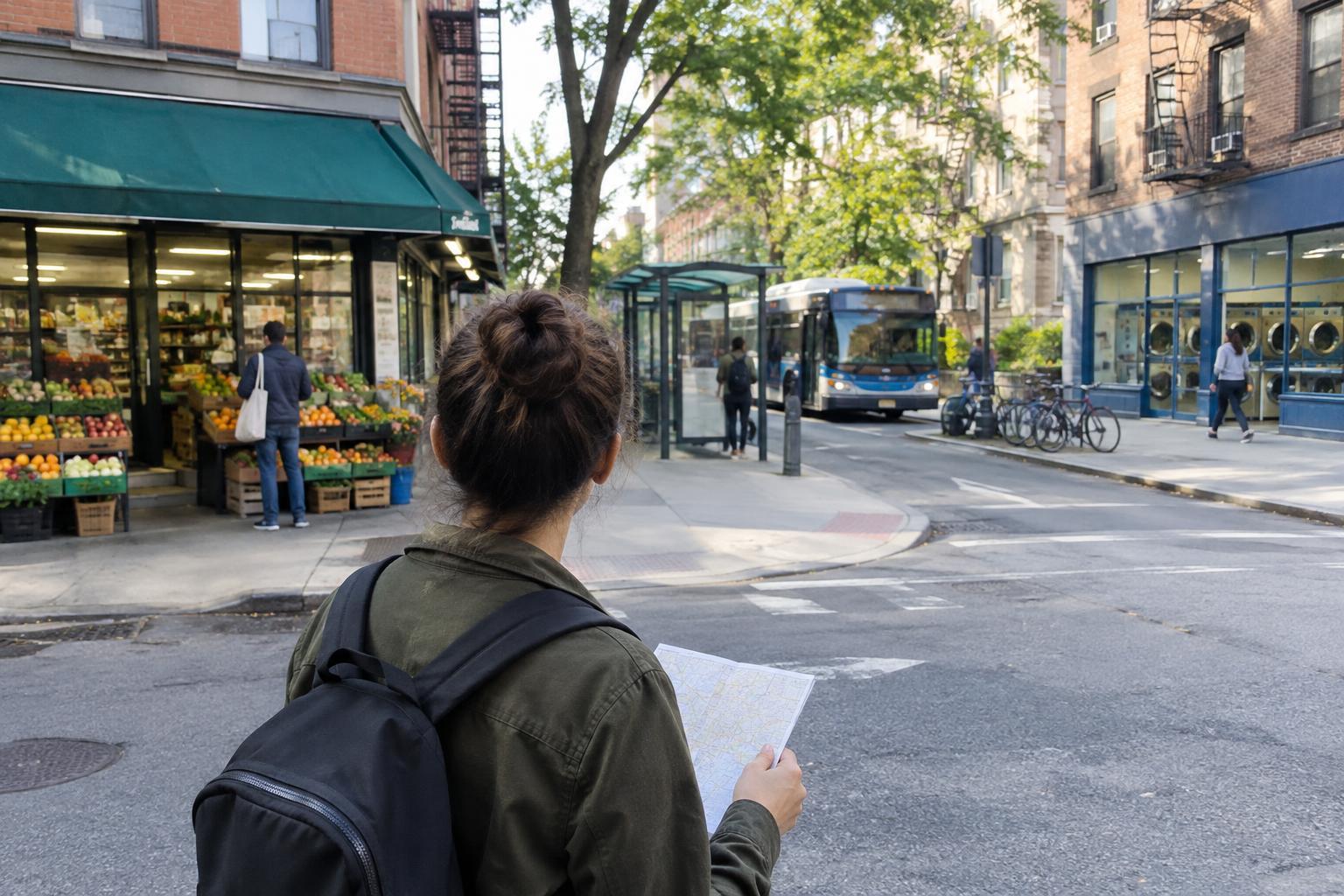
Start with a small mental map
Before you set off, identify three things: where you are starting, where you want to go, and one recognizable place near each end of the trip. A train station, park entrance, library, or major intersection is easier to remember than a string of street names. If you are visiting several places, decide which one you will reach first rather than trying to memorize the entire route at once.
Look at the broader layout for a minute. Is there a main road running through the area? Does a river, rail line, or large park divide it? These features can help you understand which direction you are heading. Notice where you could rejoin a familiar street if you take a detour. The aim is not to know every turn in advance; it is to have enough context to recognize when a turn no longer makes sense.
Use landmarks and street signs together
As you walk, pay attention to permanent-looking features you can spot from more than one angle: a distinctive building, a bridge, a public square, or the edge of a park. Think of them as checkpoints. When you pass one, take a quick look back. A corner that is obvious on the way out can look quite different on the return trip, especially if several streets have similar storefronts.
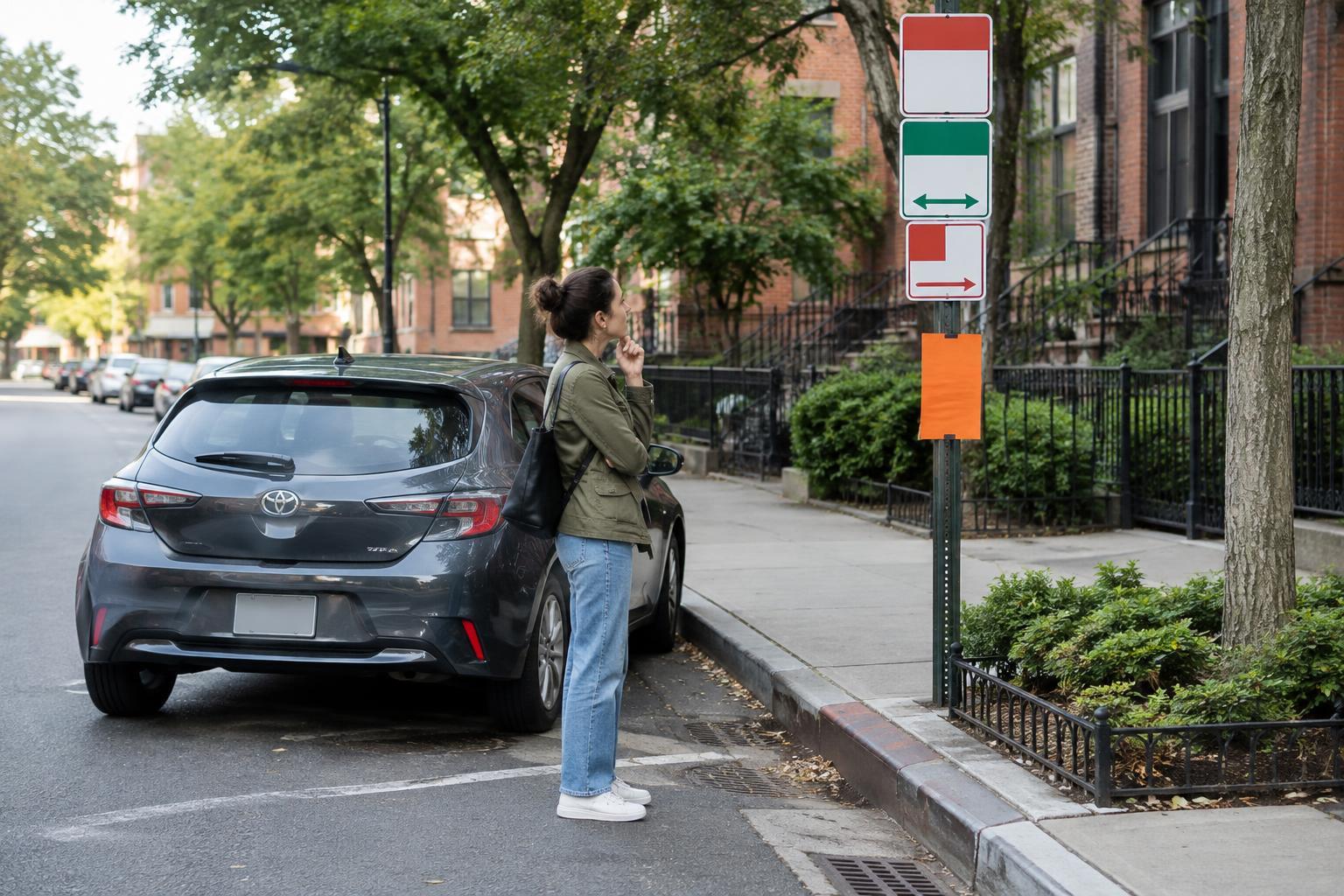
Check street signs at turns instead of relying only on how far you think you have walked. An address number can also tell you whether you are moving toward or away from your destination, though numbering patterns vary. If a route calls for a particular cross street and you reach a different one, pause and confirm your position. Catching a small mistake early is much simpler than continuing in the hope that the route will sort itself out.
Let your phone help without following it blindly
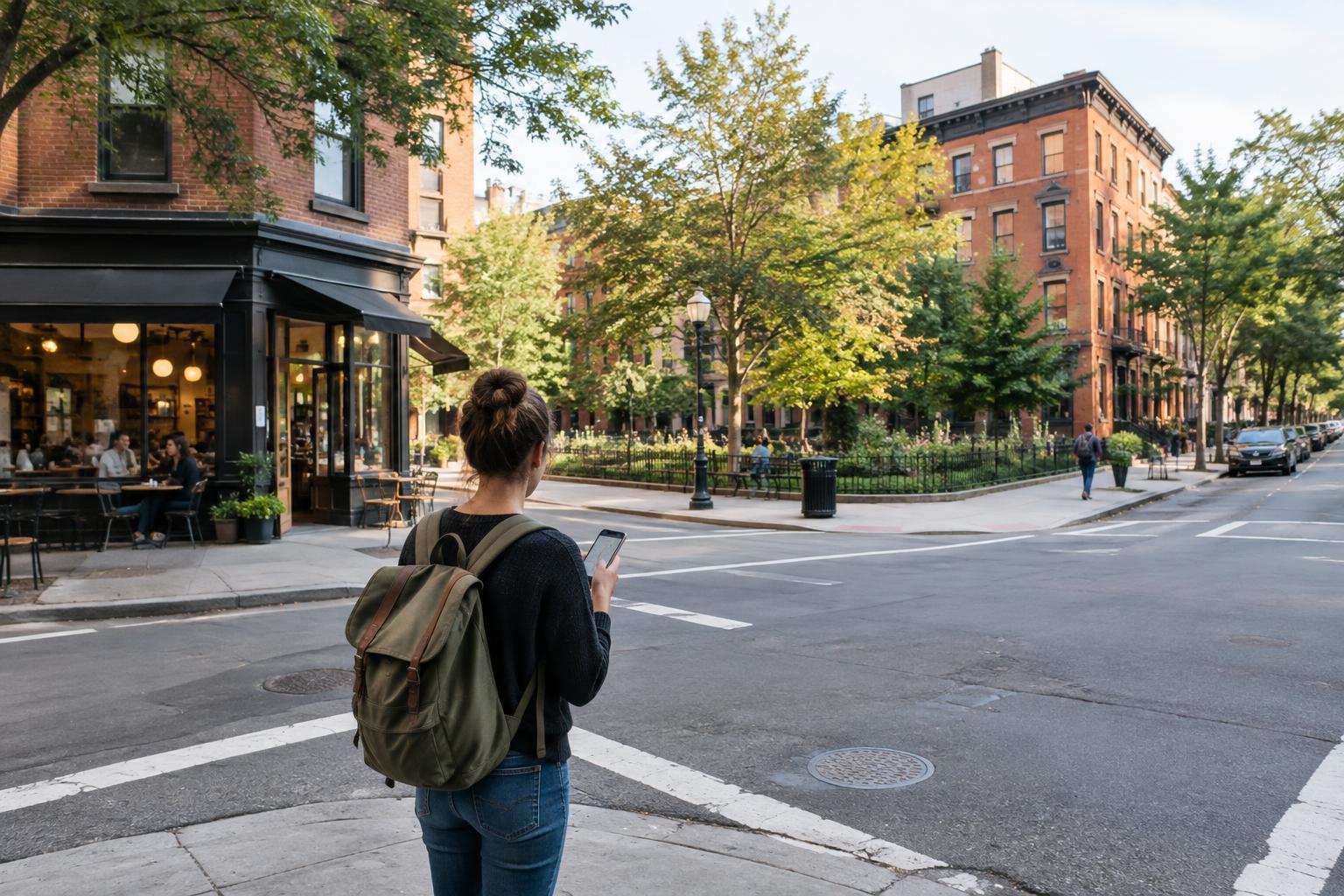
A map app is useful for checking your position, but the blue dot may be imprecise, particularly around tall buildings or inside a station. Before following a suggested turn, match the map to something you can see: a street sign, entrance, or intersection. If the map appears to point one way while the street signs indicate another, stop somewhere out of the flow of foot traffic and take another look.
For a trip that matters, save the destination address and a nearby landmark before leaving. If your connection drops or your battery runs low, you will still have something specific to ask about or look for on posted maps. Keep the phone accessible, but glance up often enough to notice crossings, cyclists, building entrances, and changes in the street layout. Navigation works best when the screen supports your awareness rather than replacing it.
Make transitions your checkpoints
The most confusing moments are often transitions: leaving a station, crossing a wide road, or emerging from a passage onto an unfamiliar block. At a station, check the exit name or number before you go outside; two exits can place you on opposite sides of a busy street. Once outdoors, find a street sign and orient yourself again rather than immediately walking in the direction you happened to face.
If you are using transit, note the stop where you plan to get off and a nearby cross street. For a longer walk, break the route into short legs between clear checkpoints. Reaching the next park corner or main intersection is a manageable goal. After each leg, confirm where you are before starting the next one.
Recover calmly from a wrong turn
Getting briefly turned around is normal. When something looks wrong, stop in a well-lit, comfortable place where you are not blocking others. Locate the last checkpoint you are certain you passed, then check a street sign or map to determine what changed. You may only need to walk back one block. Avoid making several speculative turns in a row, because each one makes your starting point harder to identify.
If you need help, ask a person working at a staffed shop, information desk, or transit station for a known street or landmark rather than vague directions to an entire neighborhood. If it is late or you feel uncomfortable, choose a straightforward route along busier streets instead of a shortcut you cannot verify. Exploring is more enjoyable when you allow time to pause, correct course, and take the route that feels clear.