Start with what you actually use
In a small home, cleaning supplies can end up wherever there is an empty corner: a spray bottle under the sink, a cloth in a drawer, a broom behind a door. That may save space at first, but it makes quick cleanups harder when you have to search for each item. A better system starts with a short inventory. Gather your supplies in one place, check what you already have, and set aside empty containers or tools that no longer work.
Sort the remaining items by task and frequency. Everyday items might include dish soap, a surface cleaner, cloths and a small brush. A mop, bucket or specialty cleaner may only be needed occasionally. This distinction helps you reserve the easiest-to-reach spots for supplies you use often, rather than letting rarely used bottles take up prime space.
Create convenient zones without scattering chemicals
Store basic tools near the work they support. A few washable cloths in a kitchen drawer and a toilet brush beside the toilet can make routine cleaning easier. If you prefer a portable setup, place compatible, frequently used supplies in a handled caddy that can be put away after each use. Keep the caddy small enough to lift comfortably and check that bottles stand upright.
Convenience does not require keeping a cleaner in every room. If storage is tight, choose one secure home for chemical products and bring out only what you need for a task. This is especially important where children or pets may be able to reach low cabinets, open carts or bags left on the floor. The right location is one you can get to without hassle but others in the household cannot access unsupervised.
Give chemical products a secure, sensible home
Keep cleaning products in their original, clearly labeled containers, with caps and triggers closed as directed on the packaging. Avoid transferring them into drink bottles or unmarked jars, even temporarily. Store them away from food, dishes and personal-care items, and follow any storage directions on each label. A shelf in a utility closet or a properly secured cabinet may work better than a crowded space beneath a leaky sink.
If children may be present, use storage they cannot access, such as a locked cabinet, and do not rely on a high shelf alone. Keep products out of pets’ reach as well. Never combine cleaners unless their labels explicitly direct you to do so; some mixtures can release harmful fumes. When cleaning, use products according to their instructions and allow for ventilation where directed. If a container leaks or a label becomes unreadable, set it aside safely and check the product’s disposal guidance rather than guessing what is inside.
Use small-space storage that is easy to maintain
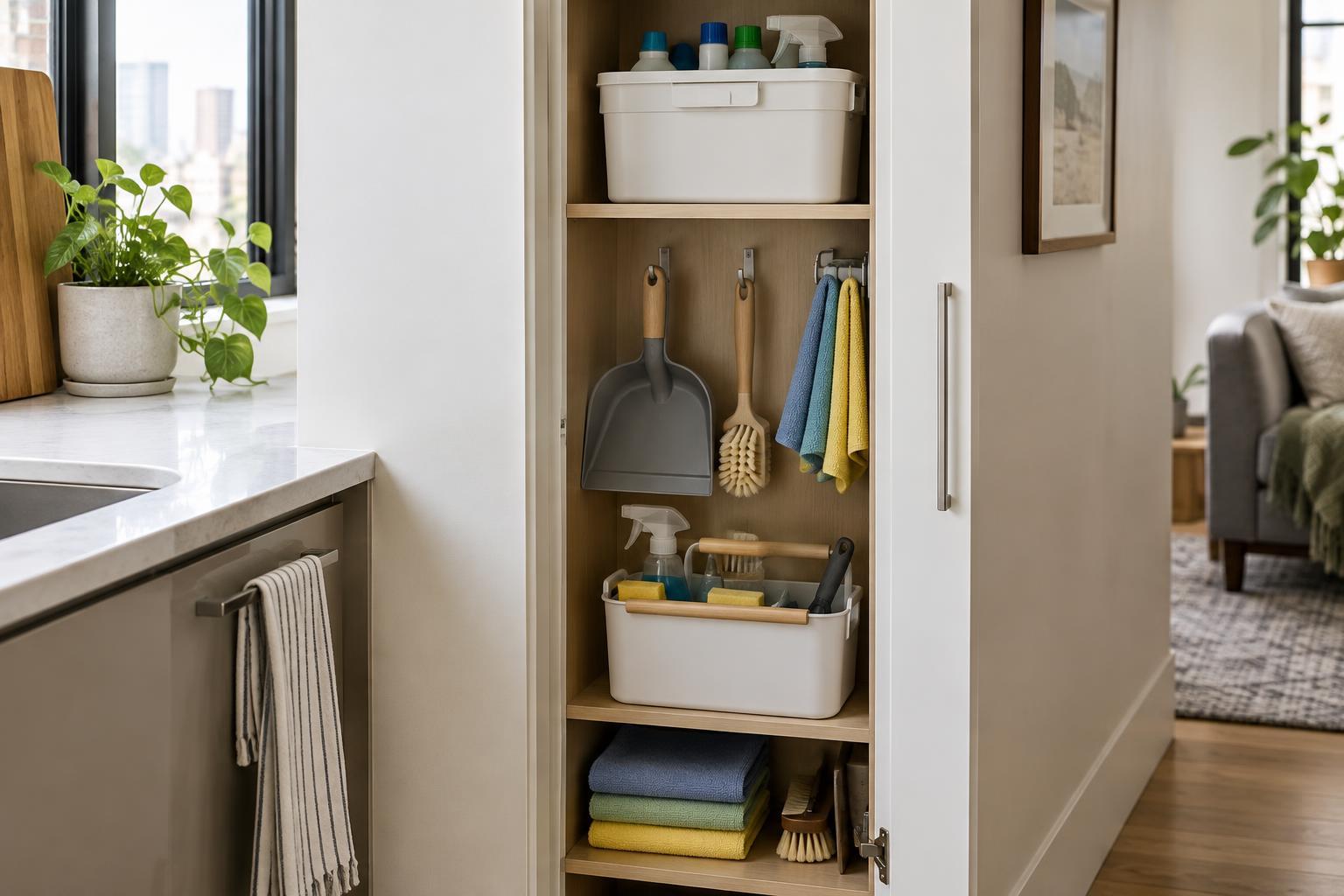
Simple organizers can make an awkward cabinet more useful. A shallow bin contains small bottles and makes it easier to pull everything forward. A tray beneath upright containers can help you notice drips, though it is no substitute for fixing a leak. Hooks can hold a dustpan or brush, while a wall clip can keep a broom from falling over. Measure the space and check that cabinet doors close freely before buying an organizer.
Keep clean cloths and sponges separate from chemical products and used cleaning tools. Give damp items a place to dry before putting them away, so they are not shut inside a bin while wet. If a caddy or cabinet becomes so full that you have to move several things to reach one bottle, remove duplicates or relocate occasional-use tools. An accessible system should be simple to put back together, not just tidy in a photograph.
Make a brief reset part of the routine
Once your supplies have assigned places, a quick check can keep the system working. After cleaning, return products to secure storage, rinse or wash reusable tools as appropriate, and let them dry. Every so often, look for loose caps, damaged containers and supplies you no longer use. Follow product labels and local disposal rules when getting rid of unwanted cleaners; do not assume they all belong in the drain or household trash.
The aim is not to build a perfect cleaning closet. It is to make common tasks straightforward while keeping potentially hazardous products controlled. When every item has a practical home, a small apartment can support both faster cleanups and a safer daily routine.