Give the sketchbook a smaller job
A blank sketchbook can feel strangely demanding. Its clean pages seem to ask for finished drawings, consistent practice and a good reason to begin. But a sketchbook does not need to be a portfolio or a record of daily achievement. It can simply be a place to pay attention for a few minutes.
Before you start, choose a modest purpose for the book. You might use it to collect interesting shapes, test color combinations, draw objects on your desk or record details you notice on walks. The purpose can change later. For now, having a small job makes the book easier to open: you are gathering observations, not proving that you can draw.
Make the first mark easy
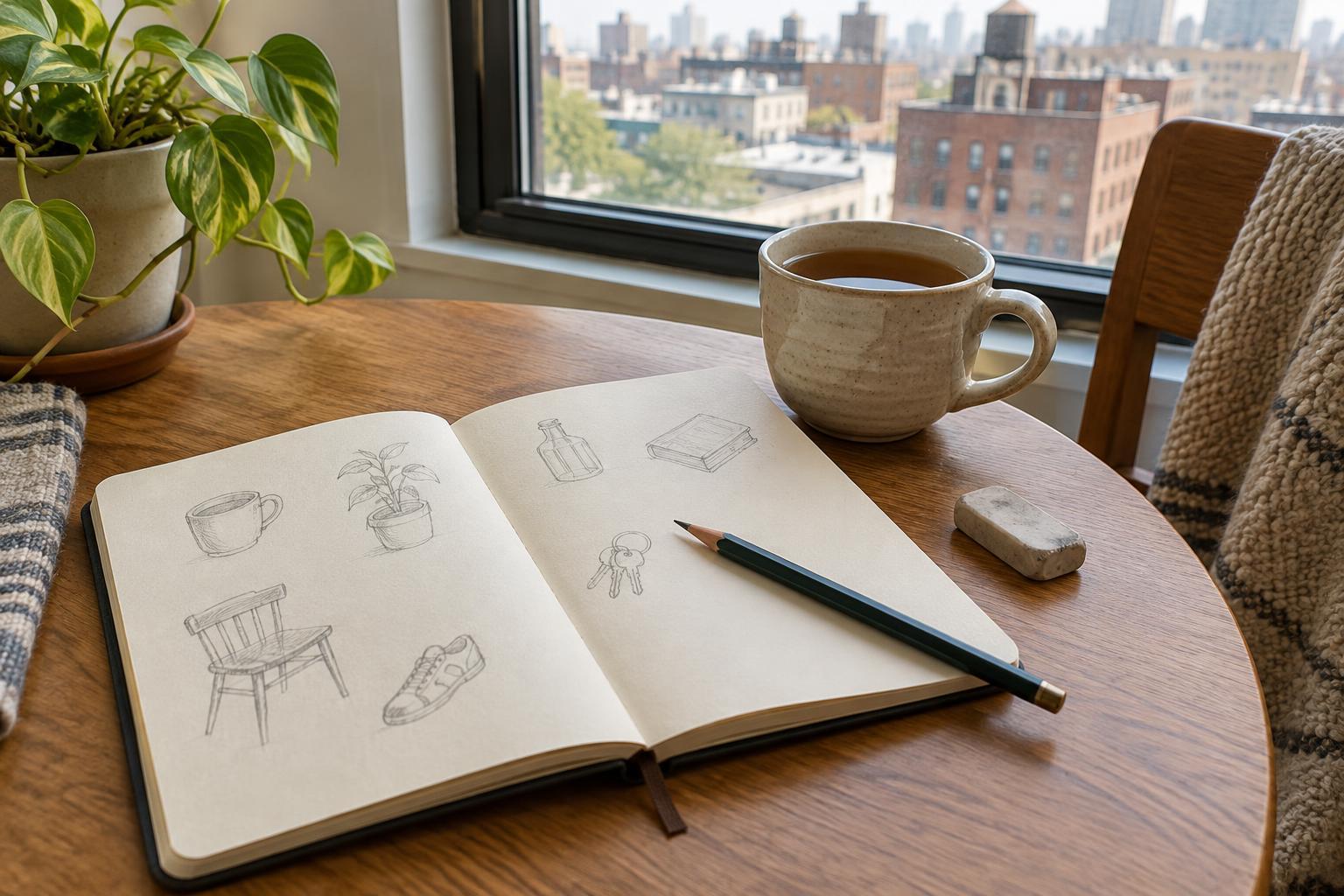
If the first page feels important, begin somewhere else. Open to a page in the middle and draw the nearest ordinary object: a key, a cup or the corner of a bag. Give yourself two minutes, and stop when the time is up. An incomplete drawing still counts as a useful first mark.
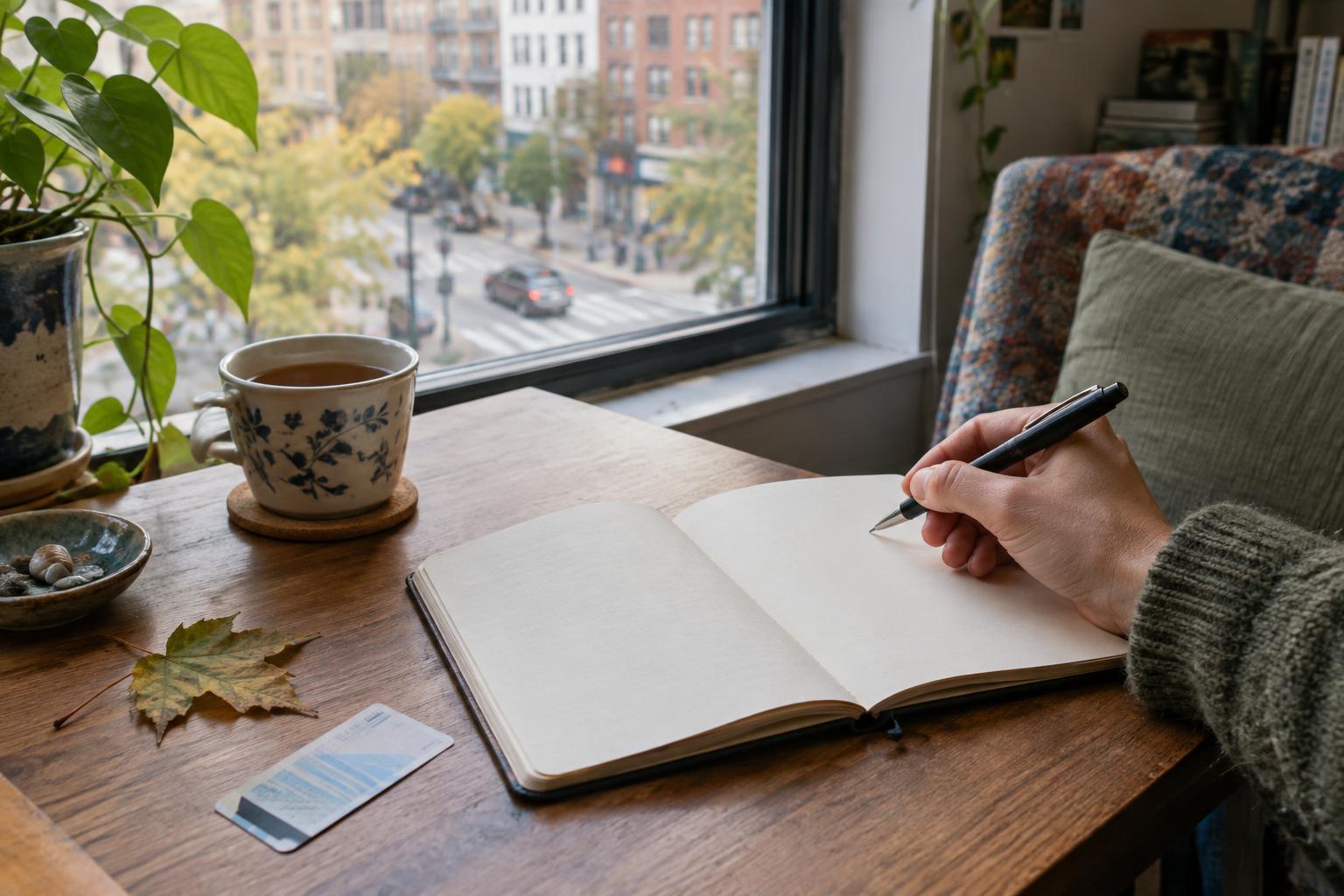
You can also remove the pressure of a pristine page before you draw. Make a few pencil lines, add a patch of color or write a short note about where you are. Then draw around it when you feel like it. A page with something already on it often feels less like a test. If you dislike a mark, you can leave it, work over it or turn the page.
Use formats that fit small pockets of time
A sketchbook habit is easier to keep when it fits the time you actually have. On a crowded day, that might mean drawing one window frame while you wait for a friend or making a row of quick shapes before bed. You do not need a complete scene. A single sleeve, plant leaf or shadow can hold your attention long enough to give you a pleasant break.
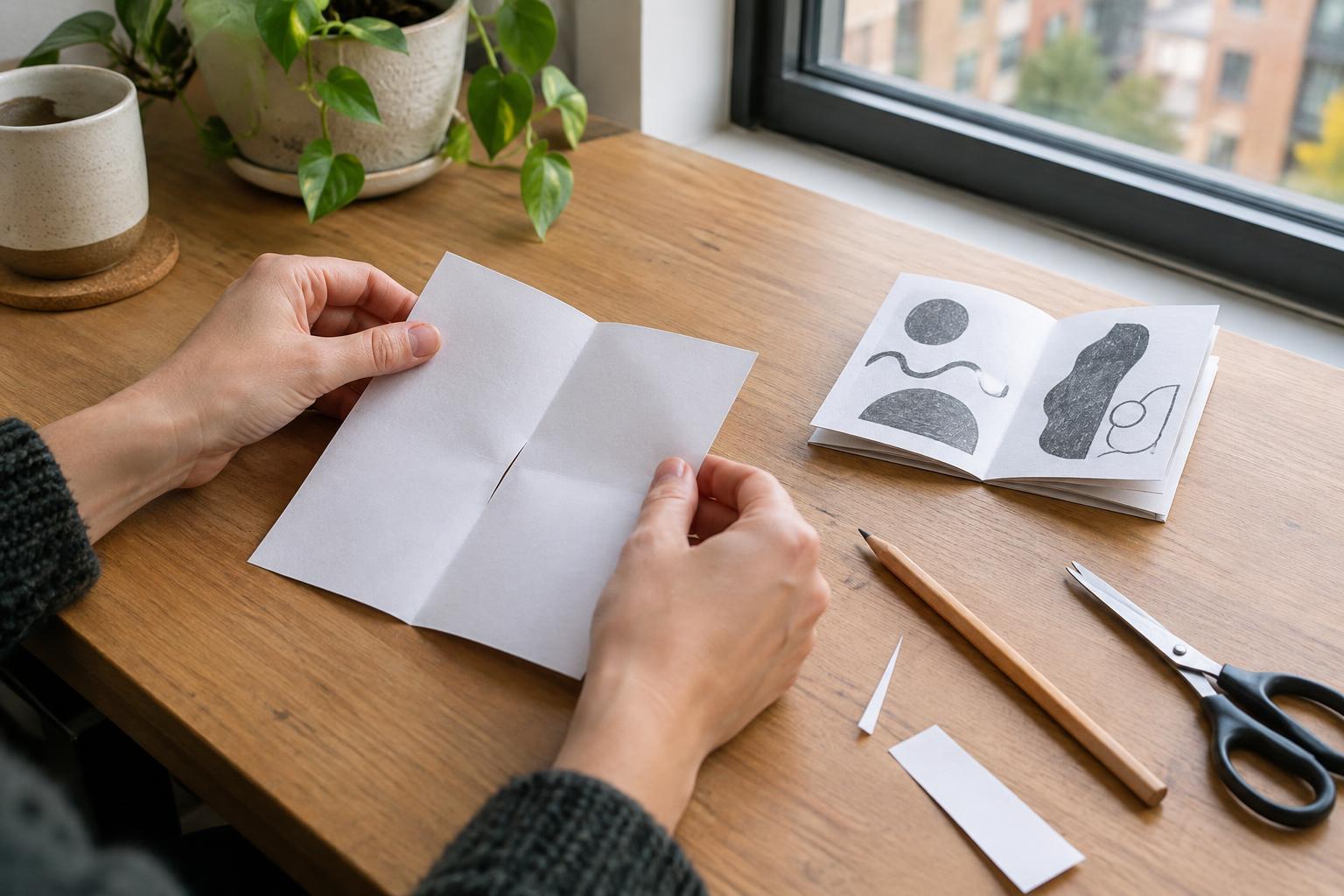
Try repeating a simple format when you do not know what to draw. Divide a page into four boxes for four things you noticed that day. Fill a narrow strip with patterns from clothing or packaging. Draw the same object from two angles. Repetition gives you a starting point, while the details you choose keep each session interesting.
Let pages stay messy, empty or unfinished
Not every page needs to earn its place. Some sketches will be awkward, and some pages may contain only a line or a note. Keeping them can show how an idea developed, but you do not have to treat every mark as meaningful. A sketchbook is useful partly because it lets you try things without deciding in advance whether they will work.
It is also fine to leave gaps. You can skip a page, return to it months later or never use it at all. You can keep several kinds of work in the same book: careful drawings beside scribbles, lists and color tests. Instead of measuring progress by how quickly the pages fill, notice whether the book helps you look more closely or enjoy a quiet moment.
Keep the invitation visible
Make sketching convenient enough that it can happen on impulse. A small book and one pen may be easier to use regularly than a collection of supplies you have to set up. Keep them where you tend to pause, such as beside a chair or in a bag. If carrying a book is inconvenient, jot down an idea and draw it later from memory.
When you finish a session, leave yourself an easy next step. Write “draw the view from this seat” on the following page, or mark a detail you would like to explore again. You can also close the book with no plan at all. The goal is not to fill every page; it is to have a welcoming place to return to when a few free minutes appear.