Make the routine small enough to use
After a busy day, a creative project can sound appealing right up until it requires clearing a table, finding supplies, or deciding what to make. A useful wind-down routine removes most of those decisions. Its purpose is not to finish impressive work; it is to give your attention somewhere enjoyable to land for a few minutes.
Start with a 15-minute window you can usually protect, such as the time after dinner or before your usual evening tasks. The exact hour matters less than having a recognizable cue. Making tea, putting your phone on a shelf, or switching on a desk lamp can signal that this is your short creative break. If your schedule varies, attach the routine to something you already do rather than to a fixed time on the clock.
Choose an activity with a quick entrance
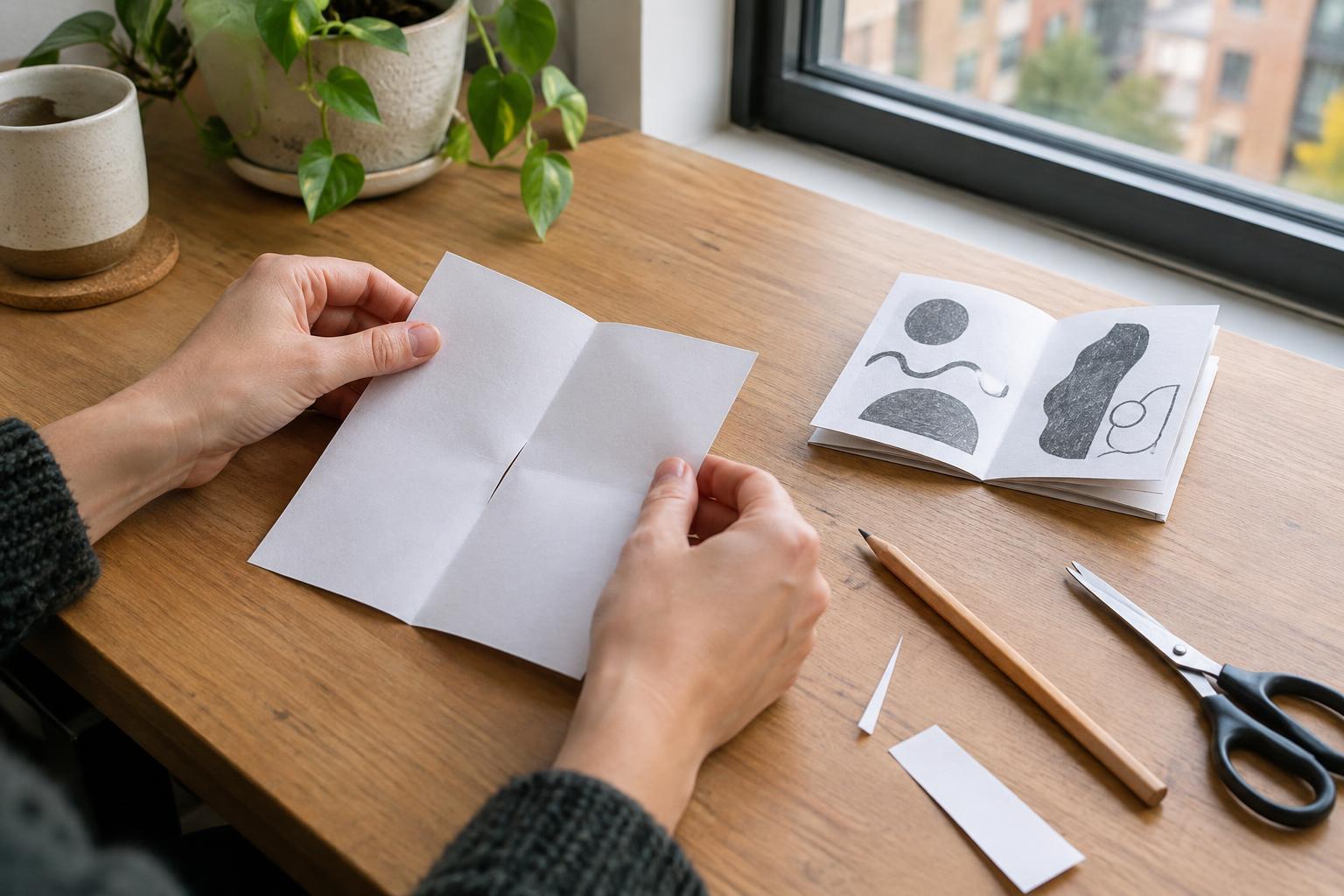
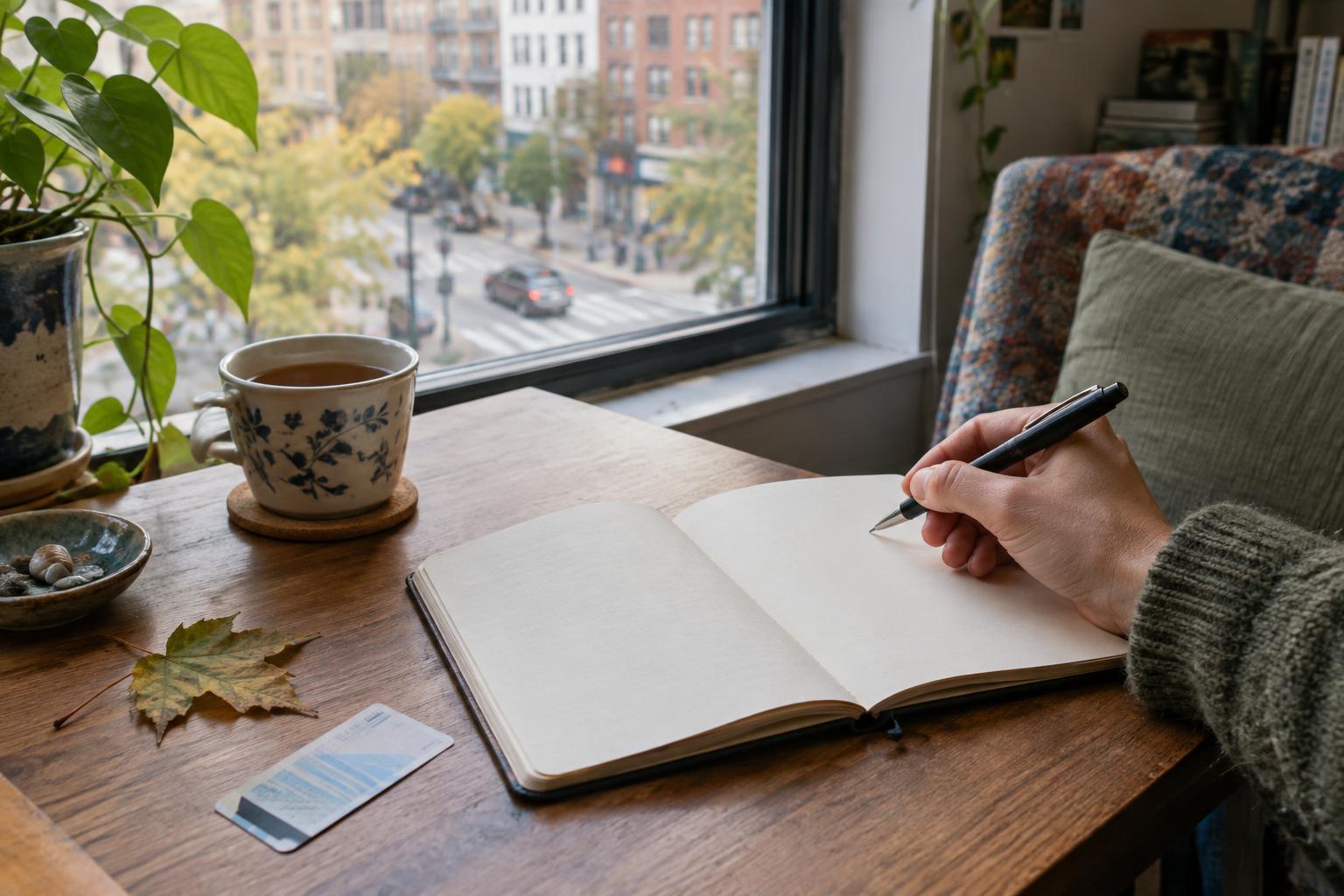
Pick something you can begin in under two minutes and leave unfinished without a problem. Sketching with one pen, writing a few lines in a notebook, folding paper, arranging a small collage, or making a short melody all fit. A large painting, a complicated recipe, or a project that needs several tools may be satisfying, but it is harder to use when your available time is brief.
Keep the starting prompt narrow. Instead of “write something,” try “describe one sound from today.” Instead of “draw a picture,” draw the same object from two angles. Repeating a prompt is allowed: familiarity can make it easier to begin, while the results can still change from day to day. Choose an activity you like doing, not just one whose finished products you admire.
Give the 15 minutes a simple shape
Use the first two minutes to settle in. Get your supplies, clear only the space you need, and choose one small prompt. Set a timer if it helps you avoid checking the clock. If timers feel abrupt, use a familiar short playlist or another gentle cue instead.
Spend about ten minutes making something. Follow the prompt, but do not spend the whole session planning the best possible result. You might fill half a page with quick shapes, write six sentences, or test color combinations on scrap paper. When you get stuck, make a smaller version of the task: one line, one shape, or one variation is enough to keep going.
Save the final three minutes for a deliberate stop. Put tools back, mark where you might continue, and notice one detail you enjoyed or want to try next time. This closing step keeps a pleasant break from turning into a cleanup chore. It also gives you a starting point for the next session.
Set up a space that is easy to reset
You do not need a dedicated creative corner. A tray, pouch, or small box can hold everything for one activity and move between a table, sofa, and shelf. For drawing, that might mean a notebook and two pens. For paper collage, it could be a glue stick, a few saved scraps, and a card to work on. Limiting supplies is not a rule about creativity; it is a way to make starting and tidying easier.
Consider the space you share with others. Choose low-mess materials if the table is needed soon afterward, and keep anything sharp or easily spilled stored appropriately. Headphones, a lap desk, or a washable mat may help in a compact home, but only add accessories that solve a problem you actually encounter.
Let the routine change with your energy
Some evenings invite experimentation; others call for a familiar, almost repetitive task. Keep a low-effort option ready, such as shading a page of shapes, copying a short passage into a notebook, or adding one element to an ongoing sketch. You can also stop after five minutes. A routine is more likely to remain useful if it can shrink when the day has been demanding.
Every few weeks, ask whether the break still feels inviting. If setup has become a nuisance, remove a step. If you are bored, change the prompt before buying new supplies. And if you miss a day, simply start again when there is room. The value of a 15-minute creative routine is that it fits into ordinary life, not that you perform it perfectly.