Make it easy to begin
Drawing can be a pleasant way to spend a quiet moment, even if you have not picked up a pencil in years. The aim here is not to make a picture worth framing. It is to give your attention a small, manageable task: following a line, looking closely at an object, or filling a page with shapes. You can stop after five minutes and still have had a complete drawing session.
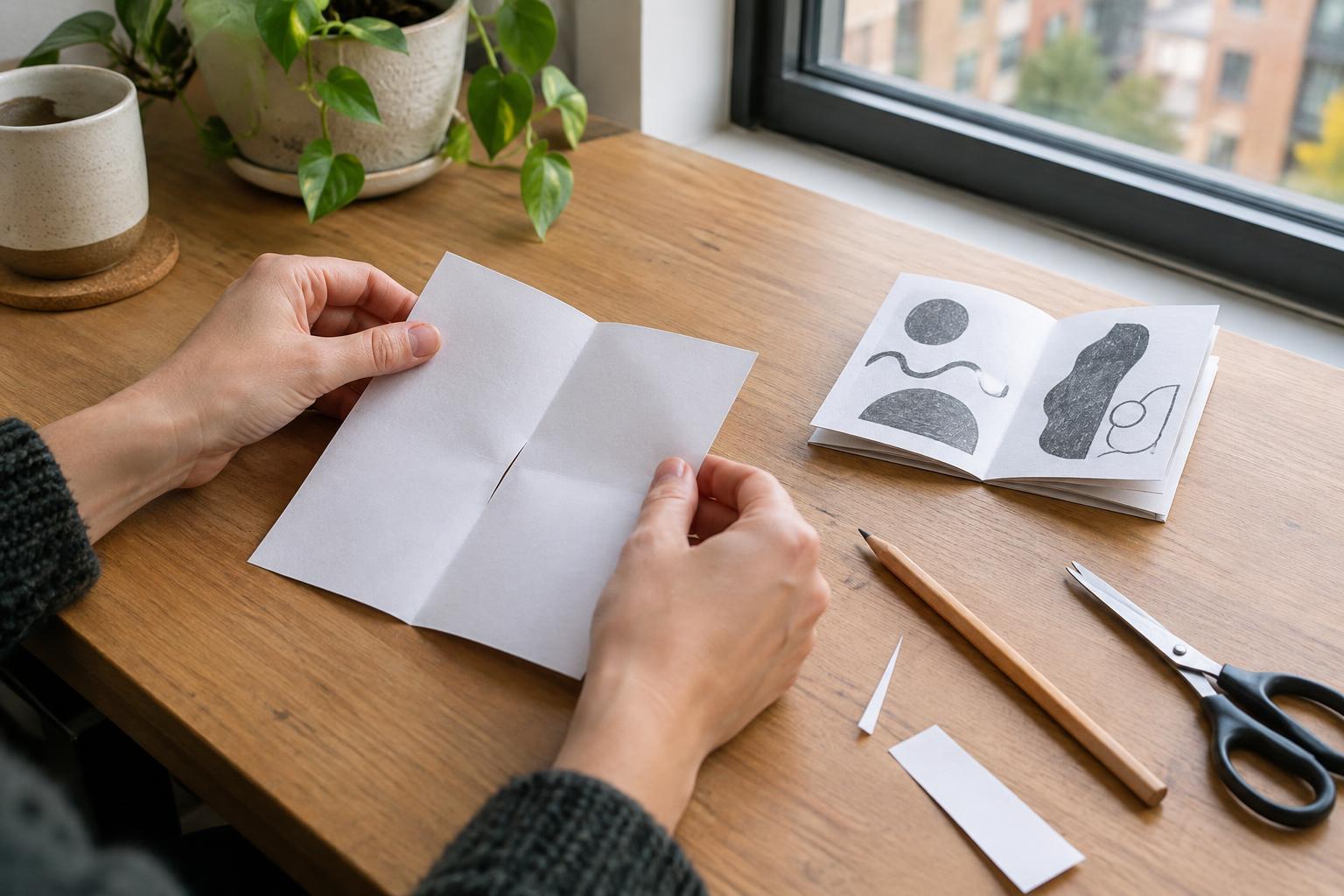
Start with any paper and a pen or pencil that feels comfortable. A small notebook is useful if your free time comes in fragments, but scraps of paper work just as well. Choose a spot where you can rest the page and move your hand easily. Keep your supplies within reach so getting started does not become a project of its own.
Warm up with lines and shapes
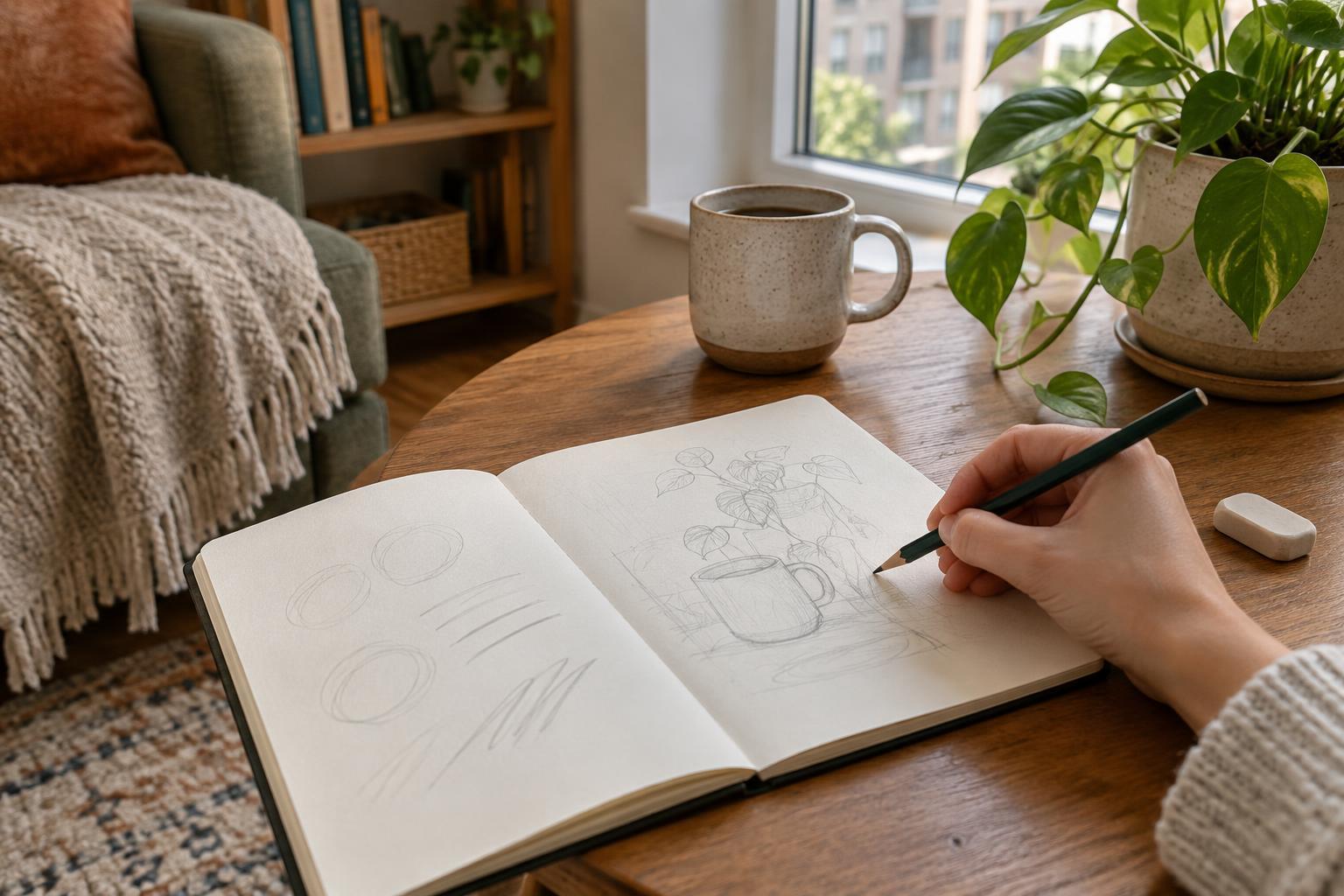
Before trying to draw an object, spend a minute making marks. Draw slow straight lines across the page, then curved lines, loops, and zigzags. Try pressing lightly on one line and more firmly on the next. There is no pattern to get right. This warm-up helps you notice how your hand moves and gives you permission to make imperfect marks.
Next, fill a small area with simple shapes: circles, squares, triangles, or rounded forms that do not have names. Repeat one shape in different sizes, leaving uneven spaces between them. If you like, shade a few shapes with short parallel strokes. Repetition gives your hands something straightforward to do, while the small choices keep the page interesting.
Draw what is in front of you
Pick one ordinary object, such as a mug, a key, or a folded dish towel. Look at its outer edge and draw that outline without worrying about details. You can use several short lines instead of one confident stroke. When you finish, look again: where is the object wider, narrower, flatter, or more curved than you first thought? Add a second outline beside the first if you want to capture what you noticed.
For a different challenge, try a continuous-line drawing. Keep your pen on the paper as you trace the visible parts of the object, allowing the line to wander between them. The result may look strange, and that is part of the exercise. Your job is to keep looking and moving, not to produce an accurate illustration.
Turn a few minutes into a drawing break
If you are short on time, set a gentle limit: one page, one object, or a few minutes before you return to your day. Draw the view from your seat, a plant on a windowsill, or the arrangement of items on a table. A timer can help if it stops you from fussing over details, but skip it if it makes the activity feel rushed.
You can also make a page of small observations. Draw three shapes you see nearby, then add a few words about their textures or shadows. Perhaps a bag has a soft fold, a spoon catches a thin strip of light, or a window frame makes a neat grid. These notes are for you; they do not need to explain themselves to anyone else.
Keep the practice low-pressure
When a drawing does not resemble what you imagined, resist the urge to call it a failure. You might turn the page, draw the same object again from another angle, or add playful patterns around the parts you like. Repeating an exercise is not a test of improvement. It is simply another chance to notice something different.
Store your pages in a folder or notebook if you enjoy looking back at them, or let them go if keeping them creates pressure. On some days, a few loops may be enough; on others, you may want to linger over an object. A relaxing drawing habit is one you can adapt to the time, space, and energy you actually have.