Start with your actual day
A bag can look ideal on a shelf and feel awkward by the second stop of a busy day. Before choosing a style, list what you carry on an ordinary outing: keys, phone, wallet, water bottle, lunch, book, laptop, or a layer for changing weather. Then note what you occasionally add, such as groceries or gym clothes. Choose for the ordinary load rather than the largest load you can imagine.
Think about your route, too. Do you walk for long stretches, stand on transit, cycle, or move between several places? Will you need to get out a pass or phone repeatedly? A useful everyday bag should let you move comfortably and reach essentials without unloading everything onto a counter. If your routine changes by the day, a small primary bag paired with a packable shopping bag may be more flexible than one oversized carryall.
When a backpack makes sense
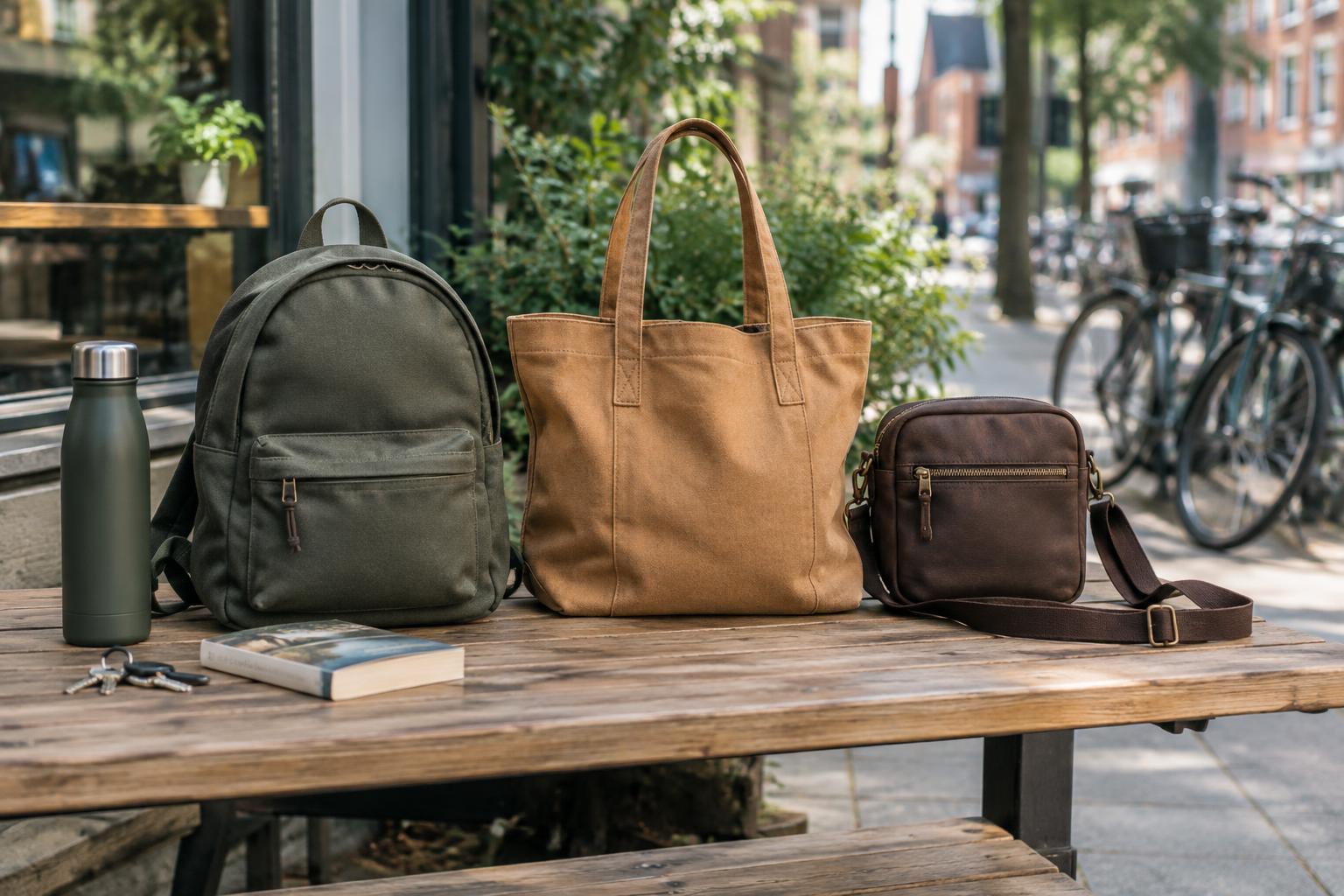
A backpack is worth considering when your regular load includes a laptop, books, lunch, or other bulky items. Two straps can distribute the load more evenly than a single shoulder strap, provided you use both and adjust them so the bag sits comfortably. Check the weight of the empty bag as well as its capacity: extra pockets and heavy hardware are less appealing when you carry them all day.
The trade-off is access. Items in a backpack can be harder to reach while you are walking or standing, and a full pack takes up space in a crowded shop or train. Look for an easy-to-find pocket for small essentials and a main compartment that opens wide enough to see what is inside. A padded laptop sleeve is useful if you carry a computer; if you do not, it may simply take up space. Try the bag with your real belongings before deciding whether its size feels manageable.
Where a tote works best
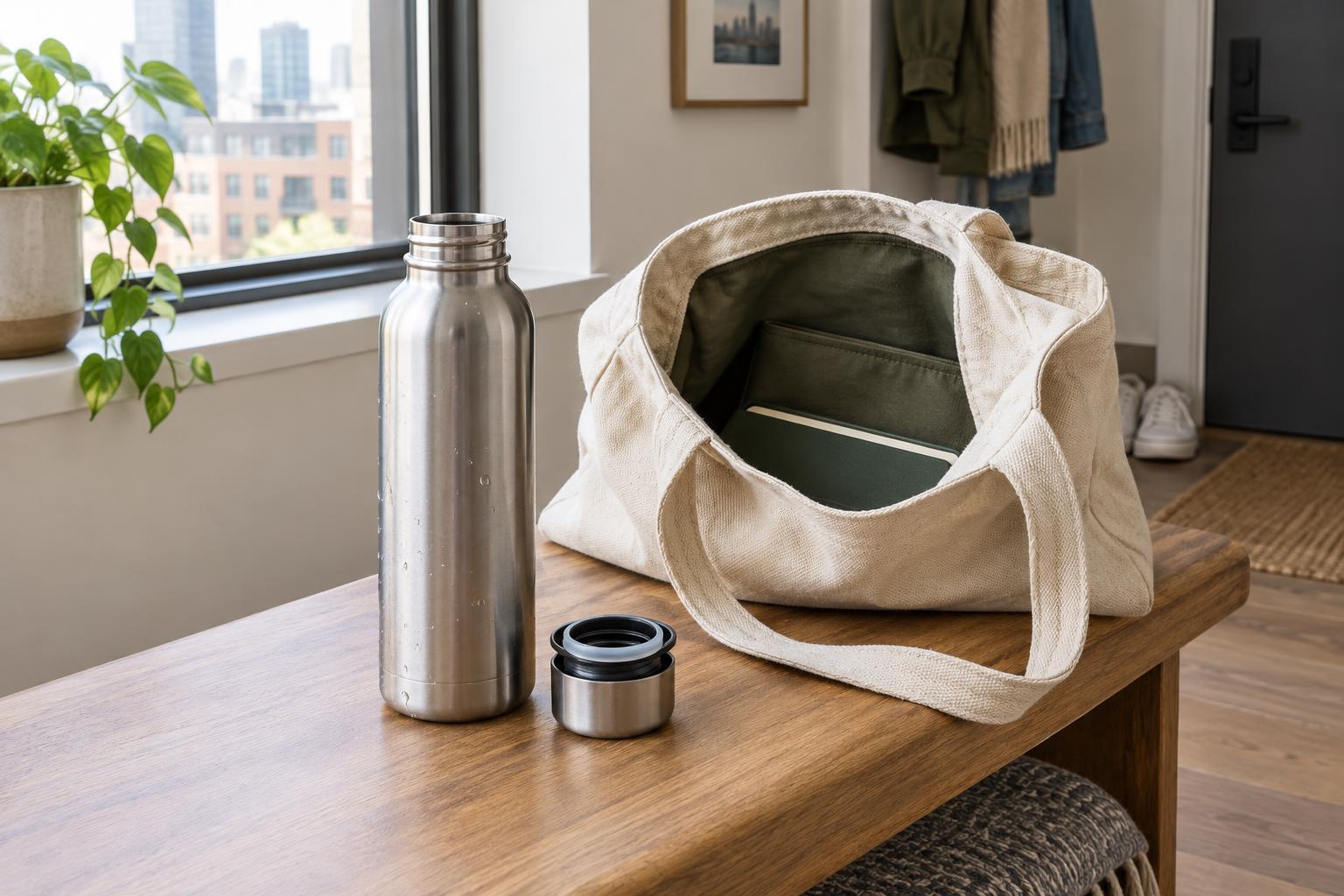
A tote offers a straightforward opening and room for items that vary from day to day. It can suit short errands, a commute with a modest load, or a day when you expect to pick something up on the way home. A structured base helps it stand while you pack it, while a softer tote may fold away more easily. Neither feature is universally better; it depends on whether you value shape or flexibility.
Pay attention to the handles. They should fit over your shoulder with your usual coat on, without slipping constantly or digging in when the tote is full. An open top makes access simple but leaves contents more exposed to weather and accidental spills. If you often carry small loose objects, look for an interior pocket or use a pouch. If you carry a laptop or a full water bottle, test the weight rather than assuming that a roomy tote will also be comfortable.
The case for a crossbody
A crossbody keeps frequently used items close and leaves your hands free. It can be a good fit for walks, quick trips, and days when you carry only the essentials. An adjustable strap lets you position the bag where you can reach it without repeatedly pulling it forward. Check how the bag sits when you bend, climb stairs, and wear a jacket; a strap that feels fine indoors may need adjusting over outerwear.
Capacity is the main limit. A crossbody that comfortably holds a phone, wallet, keys, and a few extras may become lopsided when packed with a bottle, book, or tablet. If your everyday load is substantial, a crossbody can still work as a small companion to a backpack, but carrying two bags is not automatically more convenient. Choose that setup only if it solves a real access problem for you.
Make the final choice in person, if you can
Whichever shape you prefer, inspect the details you will touch every day. Open and close the bag several times. Check whether the zipper moves smoothly, whether straps adjust easily, and whether pockets hold your essentials without making them hard to find. Consider how the material handles a light shower or a crowded commute, but do not assume a bag is waterproof unless its construction supports that claim. A closure, lining, and sensible pocket placement often matter more than a long list of features.
Finally, pack your typical load and walk around with it. A good city bag should feel comfortable, stay reasonably close to your body, and make the items you need most easy to retrieve. If two styles both work, choose the one that suits more of your ordinary days. The aim is not to find a bag for every possible outing; it is to make the next trip out the door a little easier.