Shrink the goal until you can practice it
“Learn a language,” “become a better cook,” and “take up drawing” are good directions, but they are not yet practice plans. Each contains many skills, tools, and possible starting points. For your first week, choose one action you can repeat and observe. Instead of “learn to draw,” try “sketch one household object using simple shapes.” Instead of “cook more,” try “prepare one reliable lunch from ingredients I usually have.”
A useful first-week target is narrow enough to attempt in 15 to 25 minutes. It does not need to represent the whole subject. Ask yourself: What could I do three times this week without buying much or rearranging my life? What would tell me I had completed a session? “Practice speaking” is vague; “describe my commute aloud for three minutes using five new words” gives you a place to begin. You can widen the goal later, once you know what practicing it actually feels like.
Give each session a job
A short session works best when it has a beginning, a task, and a stopping point. One simple pattern is to spend a few minutes reviewing an example, use most of the time to try the skill yourself, and finish by noting what was difficult. If you are learning photography, you might look at one example of framing, take ten photos of the same subject from different positions, then choose one image and write down why you prefer it.
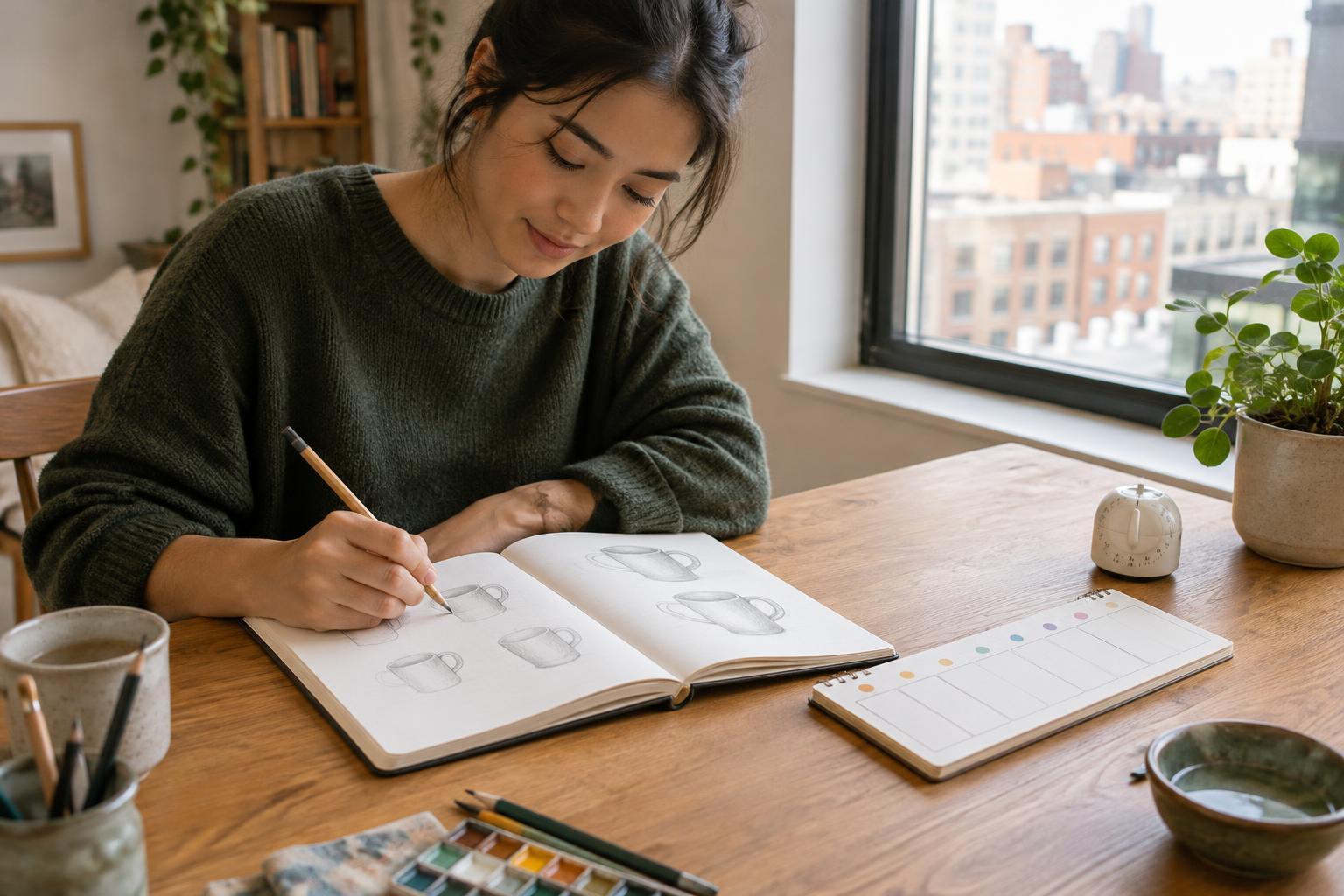
Keep the task consistent across the week so you can spot differences between attempts. Repetition need not mean doing precisely the same thing: a drawing subject can change while the focus stays on basic shapes. Resist the urge to collect several courses, apps, and notebooks before you start. Pick one accessible reference and only the materials required for the first exercise. If a tool is missing, simplify the exercise rather than letting preparation consume the practice time.
Put practice where time already exists
A plan that depends on finding a free evening may be fragile, especially when work, travel, and home responsibilities vary. Look at the coming week and name three plausible windows: perhaps two sessions after breakfast and one on a quieter weekend afternoon. Add a shorter fallback option for a crowded day. Five minutes of reviewing vocabulary or sketching one shape can preserve the habit without pretending it replaces a full session.
Choose a location and setup for each window. In a compact home, that might mean keeping a pencil and small notebook together on a shelf, or saving a practice file where you can open it quickly. If you plan to use a commute, choose an activity that suits it: listening or recall may be practical, while a task requiring a clear table may not be. Make the start easy enough that you can begin before you feel fully motivated.
Make a first-week plan you can finish
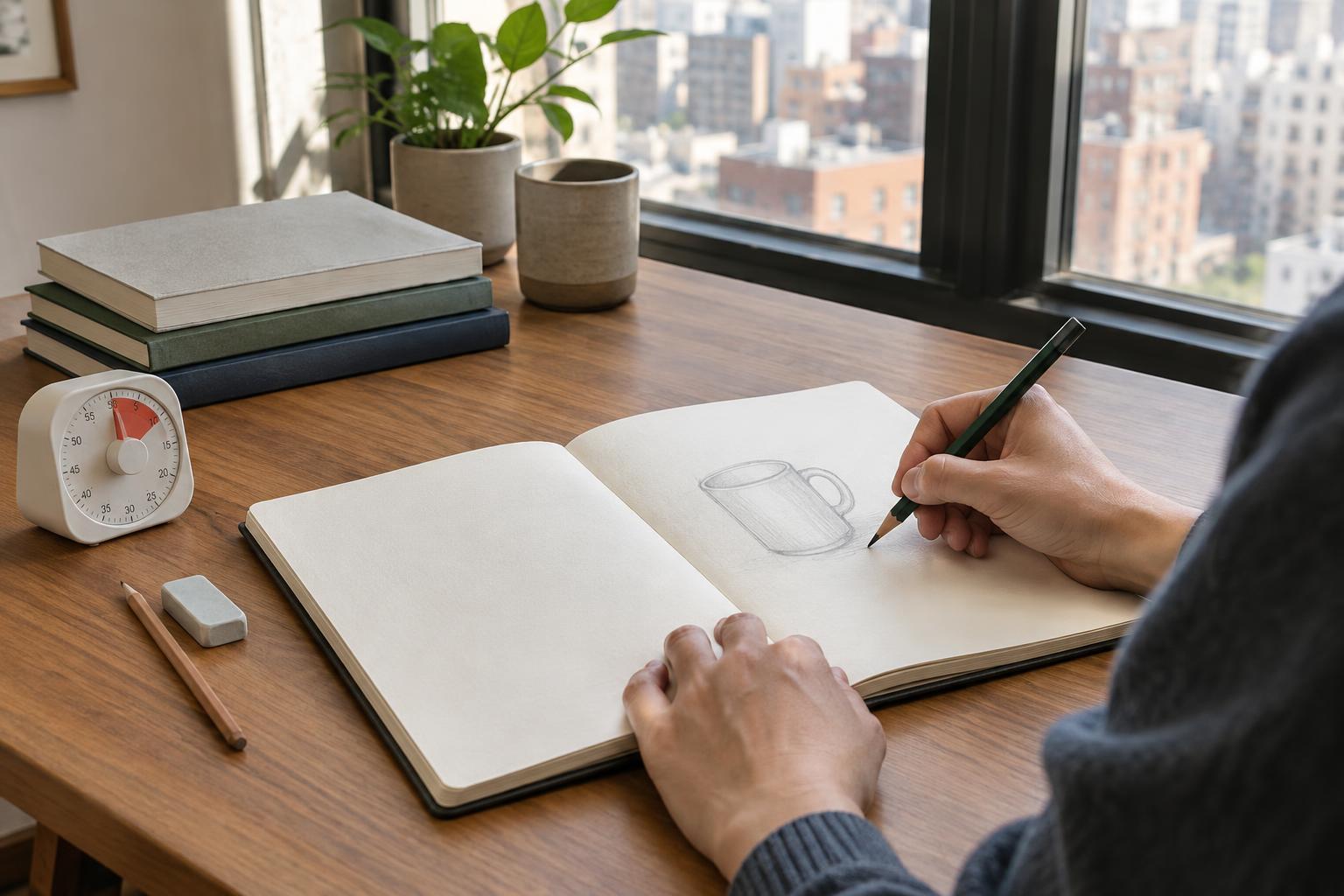
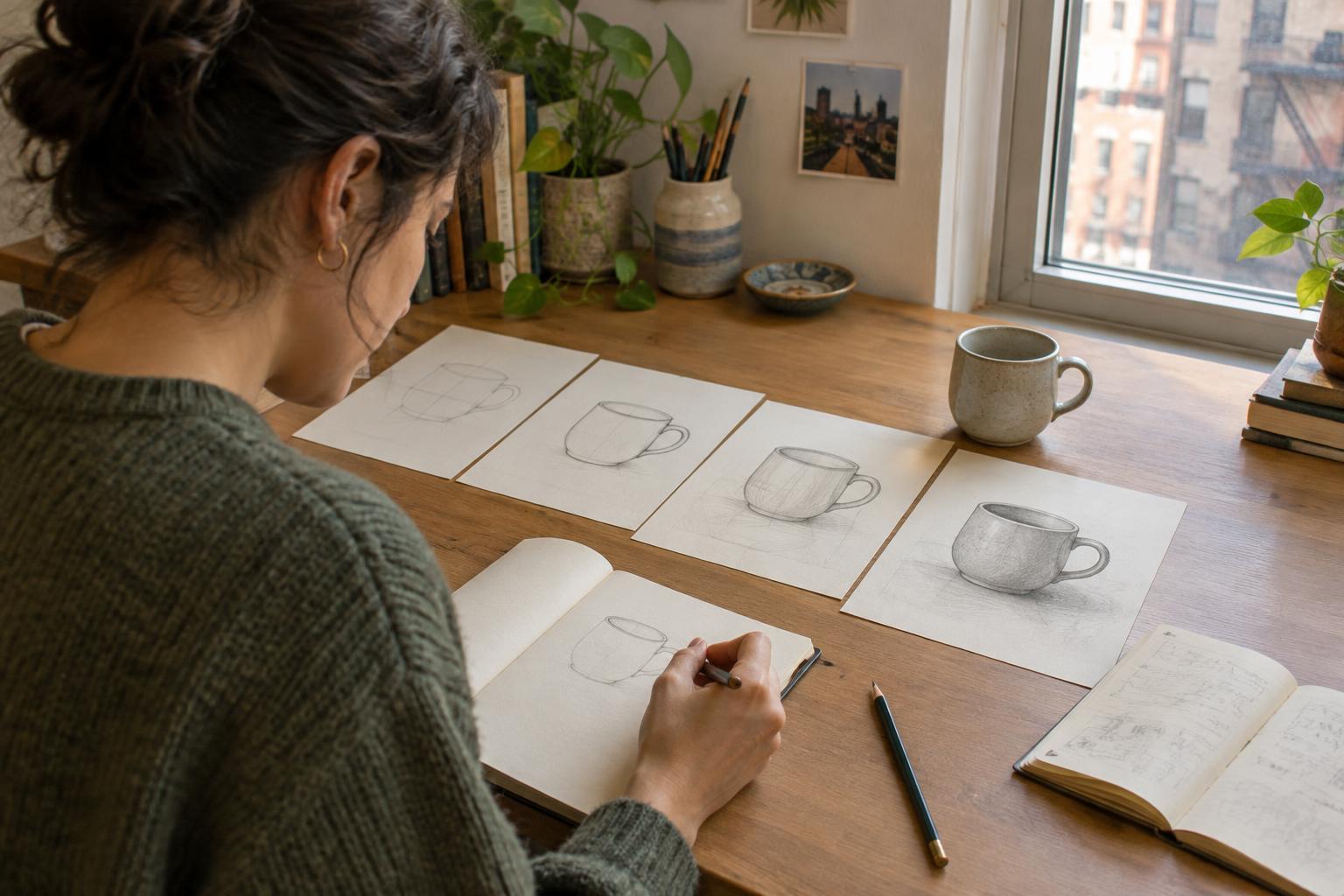
Write the plan as three small appointments rather than a promise to practice “whenever possible.” For example, for basic sketching: on Tuesday, draw a mug for 15 minutes using circles and straight lines; on Thursday, draw the same mug from another angle; on Saturday, draw a different object and compare what felt easier. The point is not to produce three finished pictures. It is to give yourself three chances to make a specific attempt.
For a language goal, the same structure might be: choose five useful phrases, use them in short spoken sentences, then try recalling them without looking. Include the materials and location alongside each appointment so there is less to decide at the last minute. Leave at least one open day between sessions if that makes the plan easier to keep. A realistic schedule is more useful than an ambitious one you must immediately renegotiate.
Review the process, not just the result
At the end of the week, spend ten minutes looking over what you actually did. Which session was easiest to start? Which task was too broad? What question came up more than once? Keep a brief record: a dated sketch, a voice note, a recipe adjustment, or two sentences in a notebook. This gives you something concrete to compare without turning a new skill into a grading exercise.
Then set the next week’s target. You might repeat the same exercise with one added challenge, change the session length, or move practice to a better time of day. If you missed a session, treat that as information about the plan rather than a verdict on your ability. The first week succeeds when it shows you a workable way to return to the skill—and a clear next action when you do.