Measure ability, not attendance
A streak answers one question: Did you practice today? That can be useful, but it says little about what changed. Ten minutes spent repeating a comfortable task may preserve a streak, while one challenging session followed by a few days away may lead to a useful breakthrough. If your schedule varies, a missed day can also make an otherwise productive month feel like a failure.
Start by naming something you want to be able to do. Rather than “get better at drawing,” try “sketch a familiar room with objects in believable positions.” Rather than “learn a language,” try “describe my weekend without reading from notes.” You do not need a perfect test. A clear task gives you something to revisit, and revisiting it makes progress easier to notice.
Make a baseline you can repeat
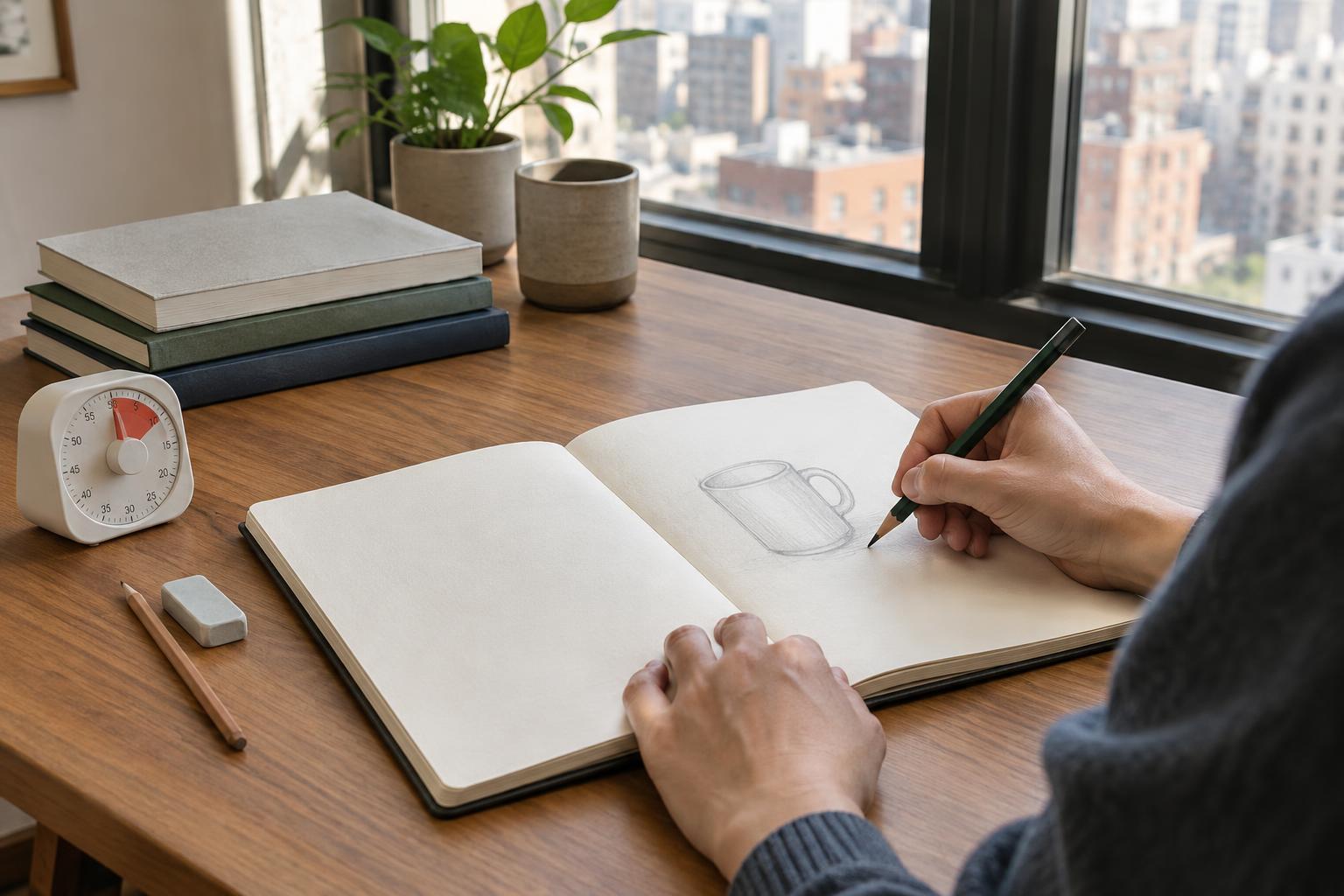
Before changing your practice routine, attempt the task once and keep the result. Save the sketch, record a short explanation, photograph a completed project or write down the steps you took. Add the date and a brief note about the conditions: how long you worked, what tools you used and whether you had help. This is your baseline, not a judgment of your potential.
Choose a task small enough to repeat without turning it into an event. Someone learning to cook might prepare the same simple dish occasionally, noting which steps felt awkward and whether the result matched their intention. Someone learning to code might solve a modest problem, then later try a similar one without looking at the old solution. Keeping the conditions roughly comparable helps you see changes in your skill rather than changes in the task.
Use checkpoints that reveal different kinds of progress
A finished result is only one form of evidence. Track a few observable signs along the way: how much guidance you needed, where you got stuck, whether you noticed your own mistakes and how readily you could try a second approach. These details can reveal progress even when the final result still looks uneven. If you once needed a tutorial for every step and now need one only for a tricky section, that is worth recording.
Keep your checkpoints tied to the skill. For a presentation, you might note whether you can explain the main point without a script and respond to a follow-up question. For sewing, you might note whether you can set up your machine, identify a crooked seam and correct it. Avoid building an elaborate scoring system unless it genuinely helps. A few consistent observations are easier to compare than a long list you stop using.
Keep a brief practice log
After a session, write three short lines: what you worked on, what you could do, and what you will try next. For example: “Practiced drawing shelves from observation. Shapes are clearer, but the angles still drift. Next time, check the largest lines before adding details.” This takes little time and gives your next session a starting point, even if a week passes between attempts.
A log should support practice, not become another task to keep up with. Use a notebook, a note on your phone or a folder of dated examples. If writing after every session feels burdensome, make a note only when you encounter a new obstacle, solve an old one or complete a checkpoint. The goal is to leave enough evidence that you can recognize a pattern later.
Review the pattern and choose the next step
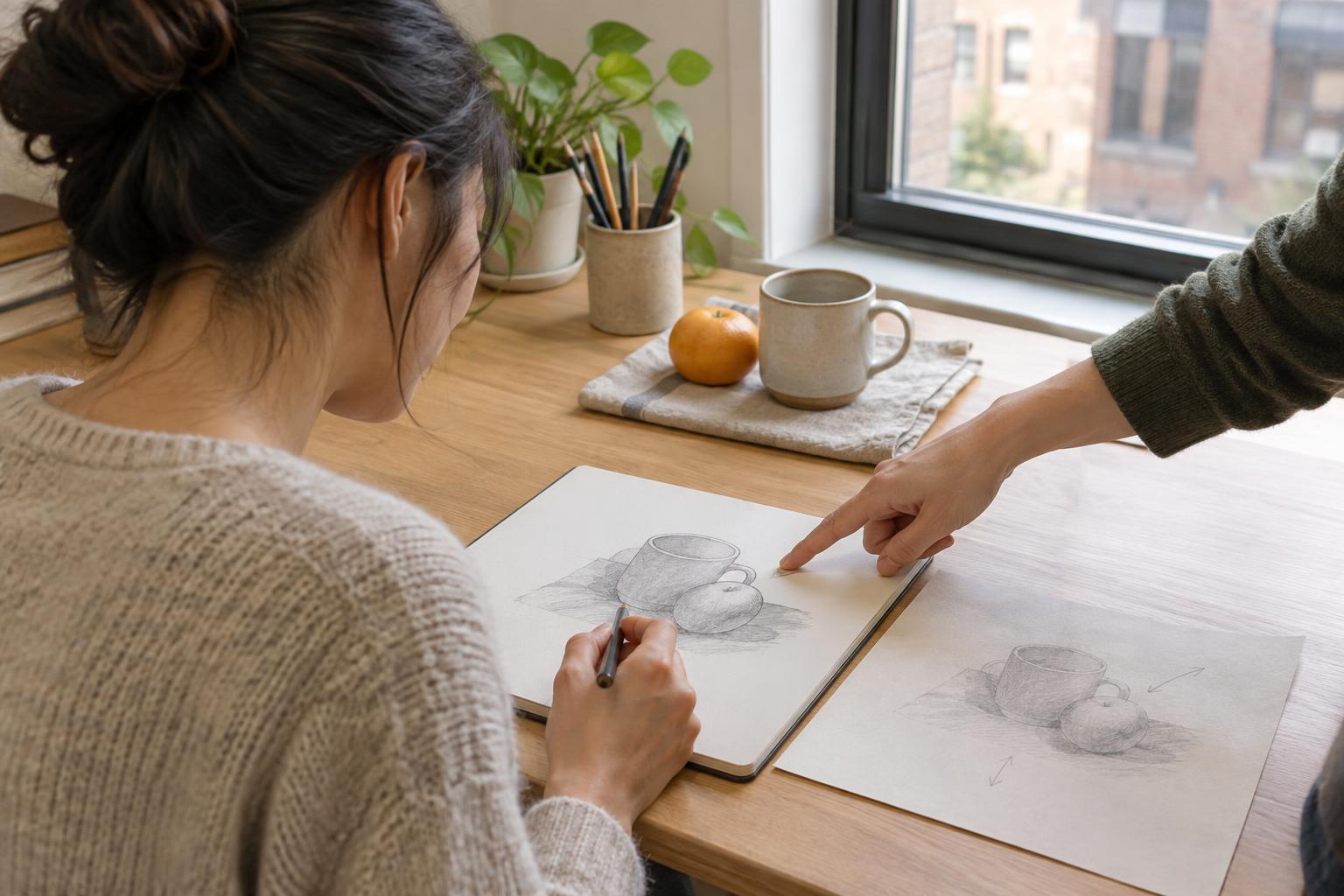
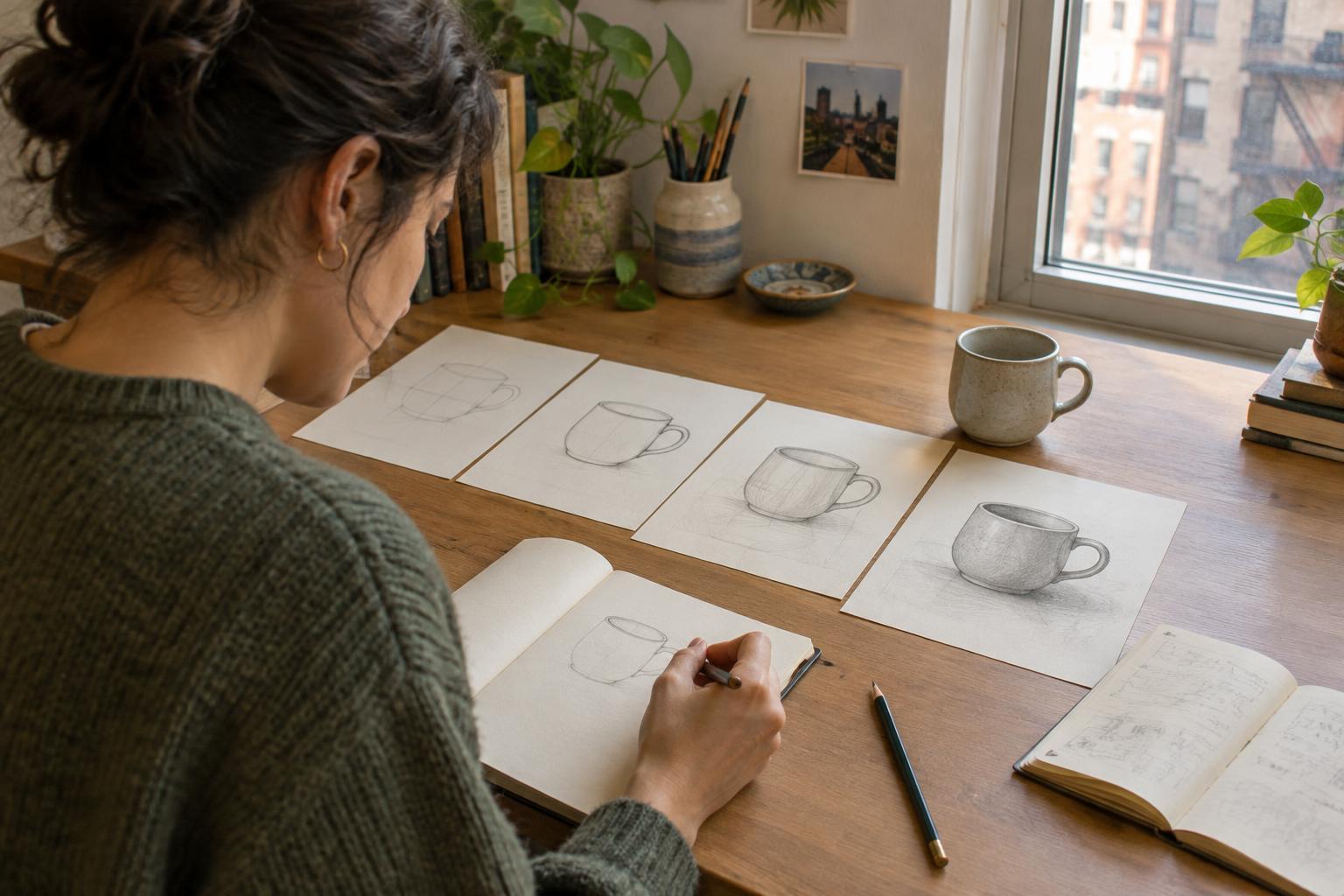
Every few weeks or after several practice sessions, return to your baseline and recent examples. Try the same task again before looking at your earlier attempt. Then compare them: What feels easier? What still requires attention? Did your result improve, or did you become better at spotting what needs work? Be specific. “I can now start without instructions” gives you more direction than “I’m improving.”
Use the review to decide what to practice next. If one part has become comfortable, add a slightly harder variation. If the same obstacle keeps appearing, give it a focused session instead of repeating the whole task. You can also change your goal when you discover that another part of the skill interests you more. Progress tracking should help you make decisions, not lock you into a plan. A pause does not erase the work you have recorded; your examples will still be there when you return.