Decide what feedback needs to tell you
When you learn on your own, it is easy to mistake time spent practicing for progress. Feedback gives you a way to notice the difference between what you meant to do and what you actually did. It does not have to come from a teacher. A recording, a test project, a clear example or a thoughtful response from another person can all show you something useful.
Start by naming one skill and one result you want from it. “Get better at photography” is broad; “take a clear indoor portrait using window light” gives you something to examine. Then choose two or three features that matter for that result, such as whether the face is sharp, the light is comfortable and the background is distracting. A short checklist makes it easier to recognize progress without judging every aspect of your work at once.
Make your work easy to inspect
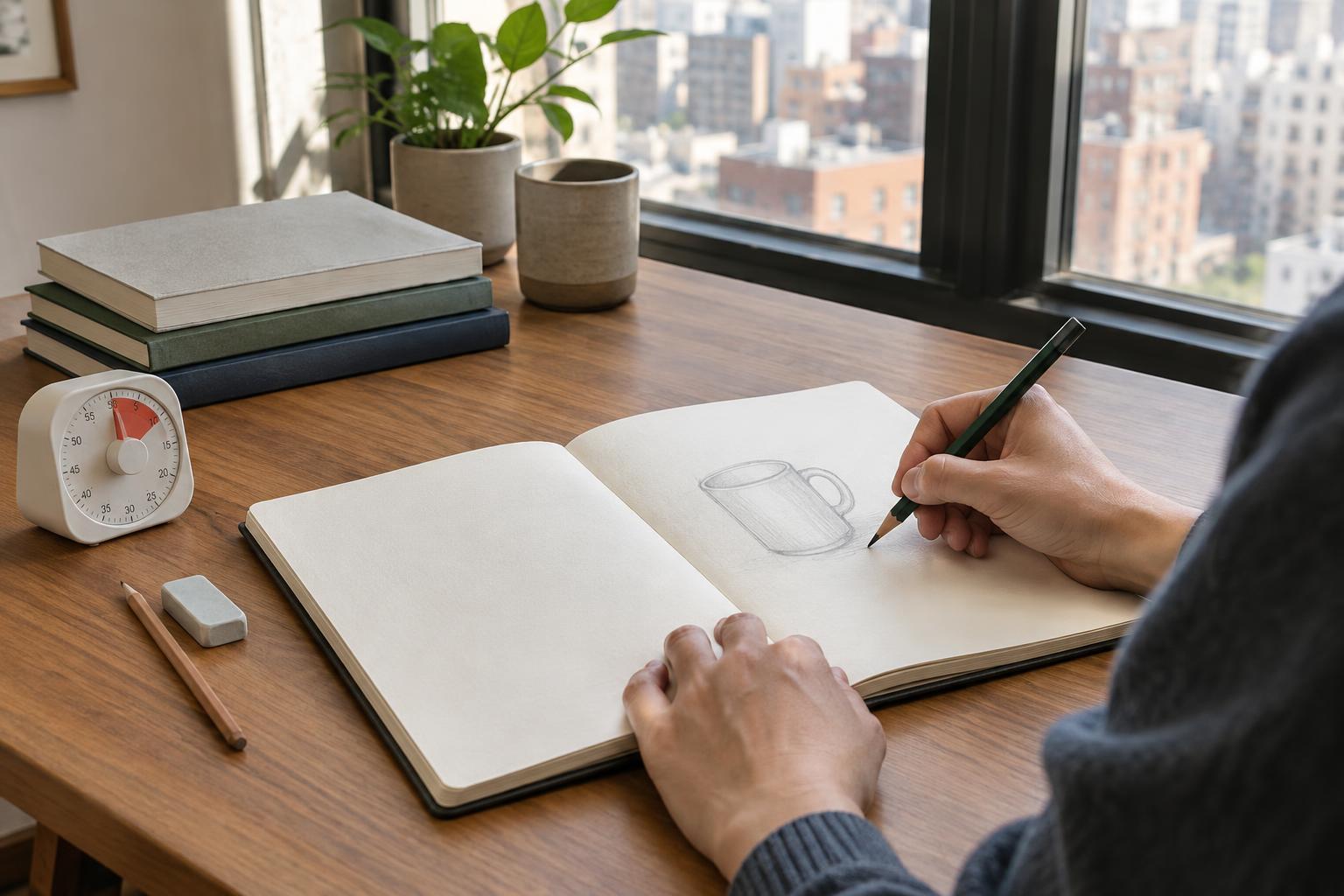
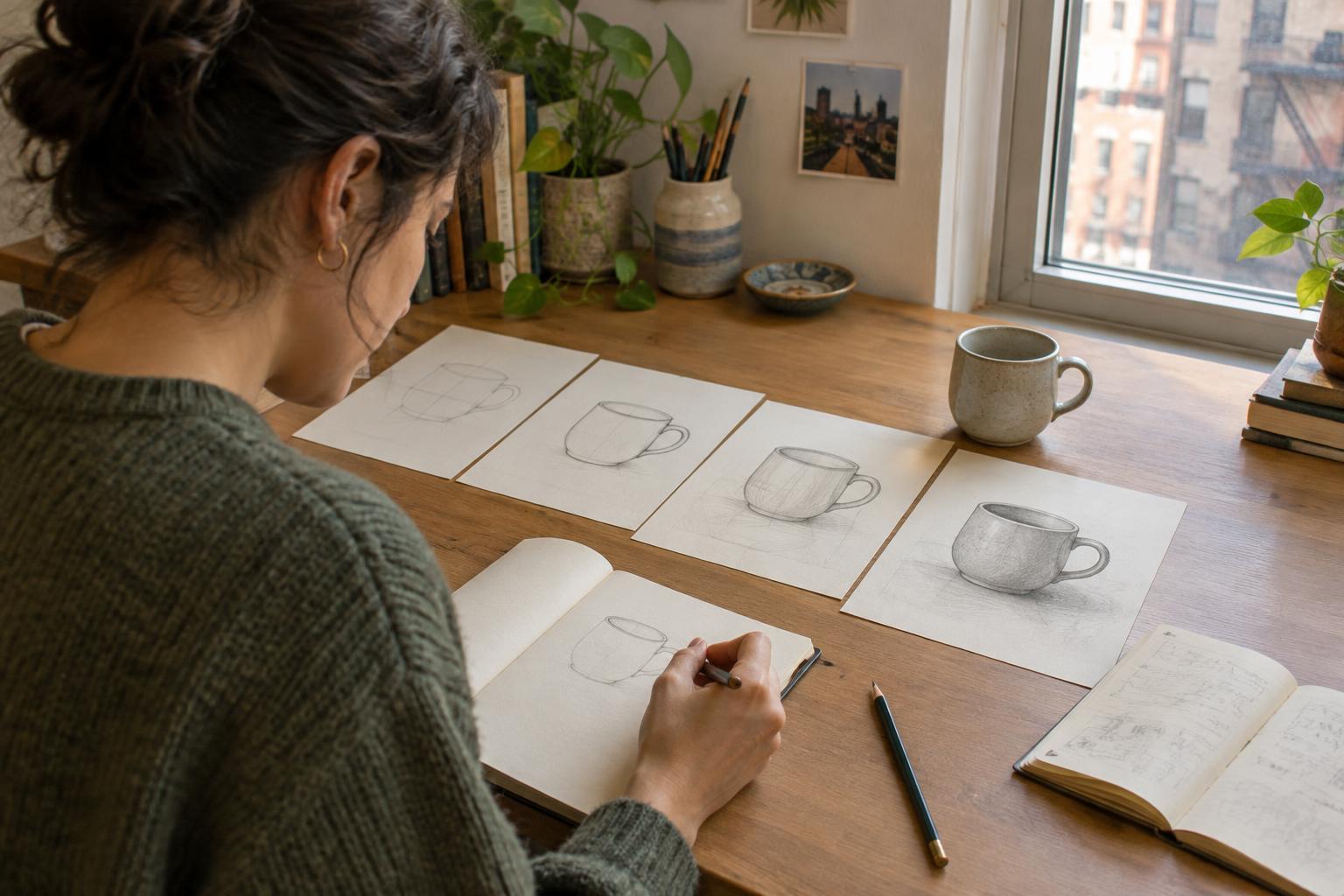
Keep evidence of what you try. Save an early draft, photograph a finished project or record a short practice session, depending on the skill. Add a note about what you intended, what you changed and what felt difficult. You do not need an elaborate tracking system; a dated folder and a few sentences are enough to help you compare attempts rather than rely on memory.
Look at your work after a short break, when the effort of making it is less vivid. Compare it with the goal and checklist you chose, or with an example whose qualities you can identify. Notice specific differences instead of deciding that your work is simply “good” or “bad.” If you are learning to cook, for instance, “the vegetables softened unevenly” points toward an adjustment; “I cannot cook” does not.
Ask questions people can answer
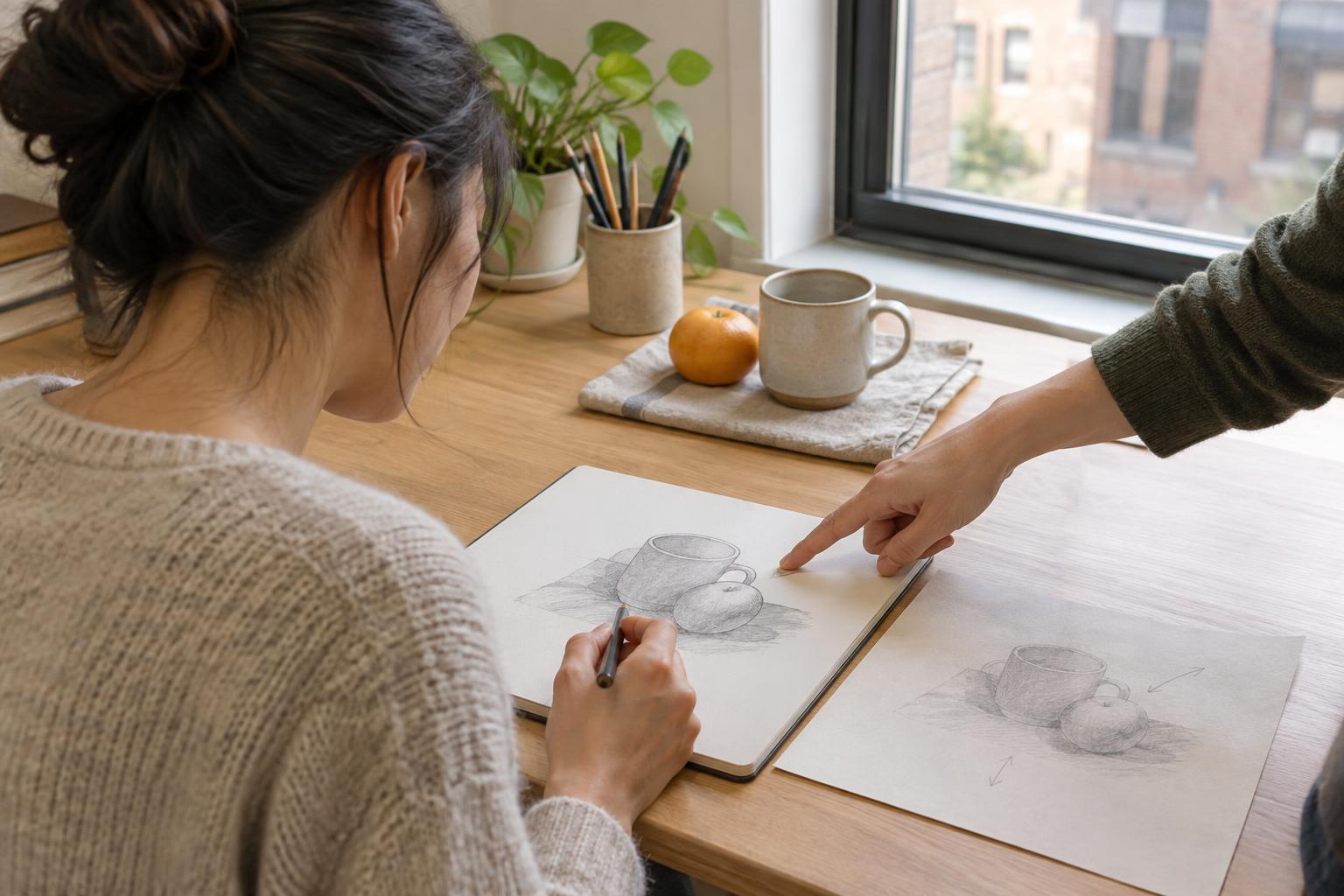
Other people can spot things you have stopped noticing, but broad requests often produce broad replies. Instead of asking, “What do you think?”, explain the purpose of the work and ask about one or two decisions. You might ask whether the opening of a short presentation makes the main point clear, or where a listener lost track of an explanation. If you have a draft and a revision, asking which works better for your stated goal can make the response more concrete.
Choose the person with the question in mind. A beginner can tell you where instructions are confusing; someone with more experience may notice a technical habit you can change. You can also ask a peer who is learning the same skill to exchange notes. Respect the time involved: share a small sample, say what kind of response would help and make it easy for them to decline. If the work contains personal details, remove them before sharing or keep the review private.
Turn comments into a small experiment
Feedback becomes useful when it changes what you do next. After receiving comments, write down the points you understand, any questions you still have and one adjustment to test. If several people say a drawing feels crowded, for example, try making one version with fewer elements. Compare it with the original against your goal. Changing one thing at a time helps you see whether the adjustment helped.
Not every comment needs to become a rule. People may have different tastes, misunderstand your aim or suggest changes outside the scope of your current practice. Look for comments that identify an observable issue and explain its effect. If feedback conflicts, return to the purpose of the work and test the options when you can. Thank the person for their perspective without feeling obliged to use every suggestion.
Build a repeatable feedback routine
A simple cycle is easier to maintain than a complicated review plan: make a small attempt, check it against a few criteria, ask one focused question if needed, revise and save both versions. Decide in advance when to pause for review, such as after finishing a short project or completing several practice sessions. Constant evaluation can interrupt the work itself; too little evaluation can leave you repeating the same mistake.
Over time, look through your saved attempts for patterns. Which problems keep appearing? Which once-difficult tasks now feel manageable? Use those observations to choose your next practice goal. Independent learning works best when you are willing to inspect your work with curiosity: not to prove that every attempt succeeded, but to find the next useful thing to try.