Start with what you actually use
Without a dedicated closet, every spare sheet and towel competes with something else for space. Before buying bins, gather your linens in one place and sort them by use: bed sheets, bath towels, hand towels, washcloths and less-frequent items such as guest bedding. Set aside worn pieces you no longer want to use. This gives you a clearer picture of how much storage you need, rather than how much storage you can squeeze into the apartment.
Keep quantities tied to your routines. If you can wash and dry bedding regularly, one set on the bed and one clean set ready to use may be enough for each bed. Towels depend on household size, laundry access and how often guests visit. The goal is not to meet a universal number; it is to keep a manageable supply that works when laundry is delayed. Give any extras you decide to keep a specific place.
Put everyday items close to where they belong
A storage system is easier to maintain when clean items have a short trip from storage to use. Bathroom shelves, a narrow cart or a cabinet outside the bathroom can hold frequently used towels. If the bathroom gets damp, choose a drier spot nearby rather than packing clean towels beside the shower. Leave room for air to circulate, and put towels away only when they are fully dry.
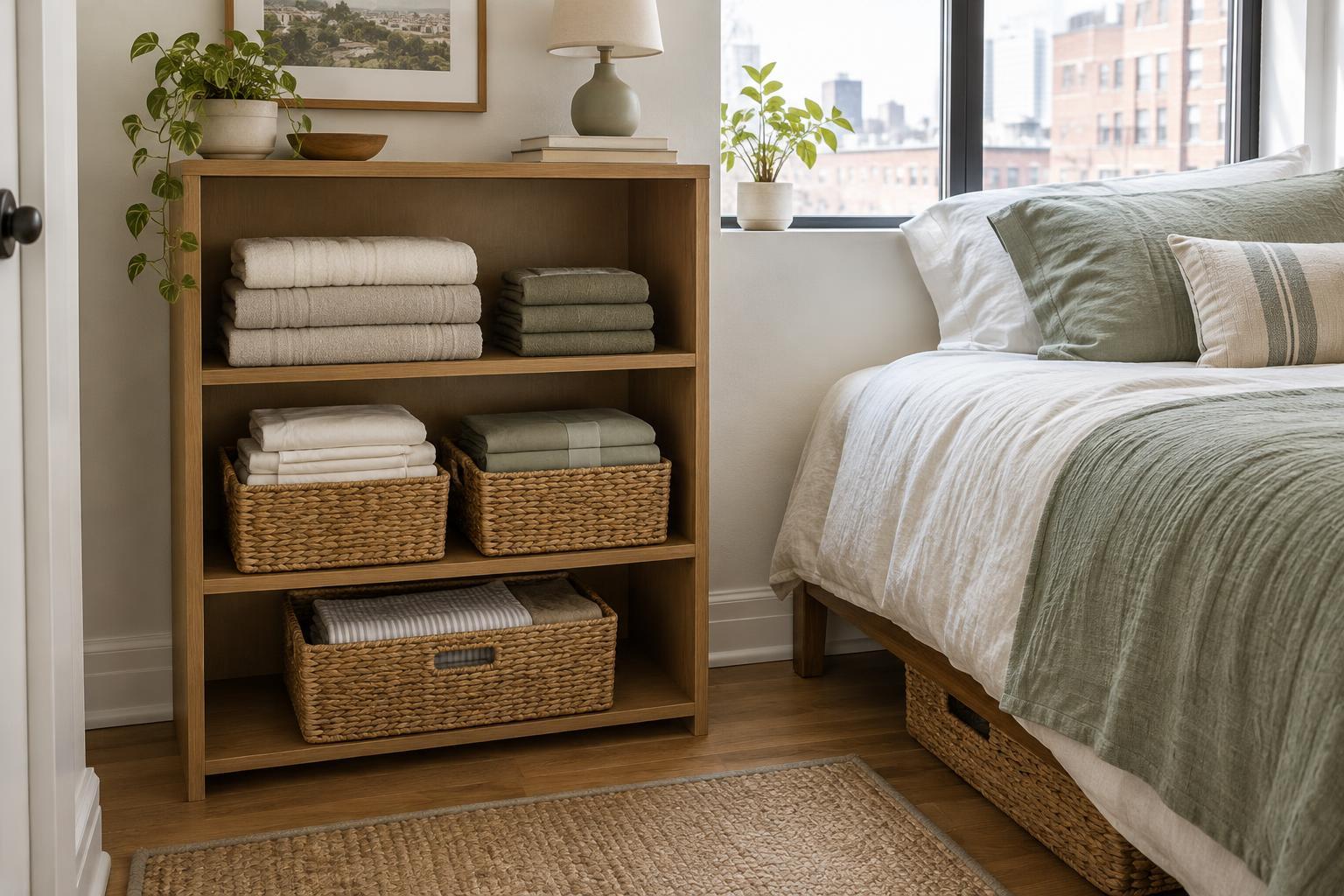
For sheets, look first in the bedroom. Space under the bed, the top shelf of a wardrobe or a low dresser drawer may fit spare sets. Under-bed containers help protect fabric from dust, but measure the clearance before buying them and make sure you can pull them out easily. If the bed is difficult to reach, store the set you change most often somewhere more convenient. The best location is one you will actually use on laundry day.
Use containers to create clear boundaries
When linens share a wardrobe or open shelf with other belongings, a container makes their space visible. A fabric bin can corral towels on a shelf; a lidded box may suit sheets stored under a bed. Choose containers for the available space and the weight you can comfortably lift, not just their appearance. Open baskets are convenient for frequently used items, while covered storage is useful where dust is a concern.
Keep categories separate enough that you do not have to empty everything to find a pillowcase. One simple method is to fold a sheet set together and tuck its pieces inside one of its pillowcases. Towels can be folded consistently so stacks stay stable, or rolled if that fits a shallow basket better. Labels help when several people put laundry away, but a system with only a few obvious places may not need them.
Make awkward spaces work without filling every gap
Small homes often have usable space above a dresser, beneath a bench or on the back of a door. These spots can be helpful, provided they do not make daily movement harder. A high shelf is better for lightweight guest linens than for a stack of towels you need each morning. A storage bench can hold spare bedding while adding seating, but check that its contents are easy to reach before relying on it.
Avoid treating every empty corner as a reason to buy another organizer. A crowded shelf makes it harder to remove one item without disturbing the rest, and a bin hidden behind other furniture is easy to forget. Aim for enough room to take out and return each category in one motion. If linens still overflow, revisit the amount you keep before adding storage.
Build a reset into laundry day
A closet-free setup stays orderly when clean laundry goes directly to its assigned spot. Put complete sheet sets together as you fold them, return towels to the front or top of their usual stack, and place newly washed items behind older clean ones if you want to rotate through them. A small basket for clean items awaiting folding can be useful, but try not to let it become permanent storage.
Check the system after a few laundry cycles. If towels routinely end up on a chair, their storage may be too far away or too full. If a spare set is hard to retrieve, move it to a lower shelf or a lighter container. Organizing linens without a closet is less about finding one perfect hiding place and more about giving each item a practical home you can maintain.