Make the goal smaller than the skill
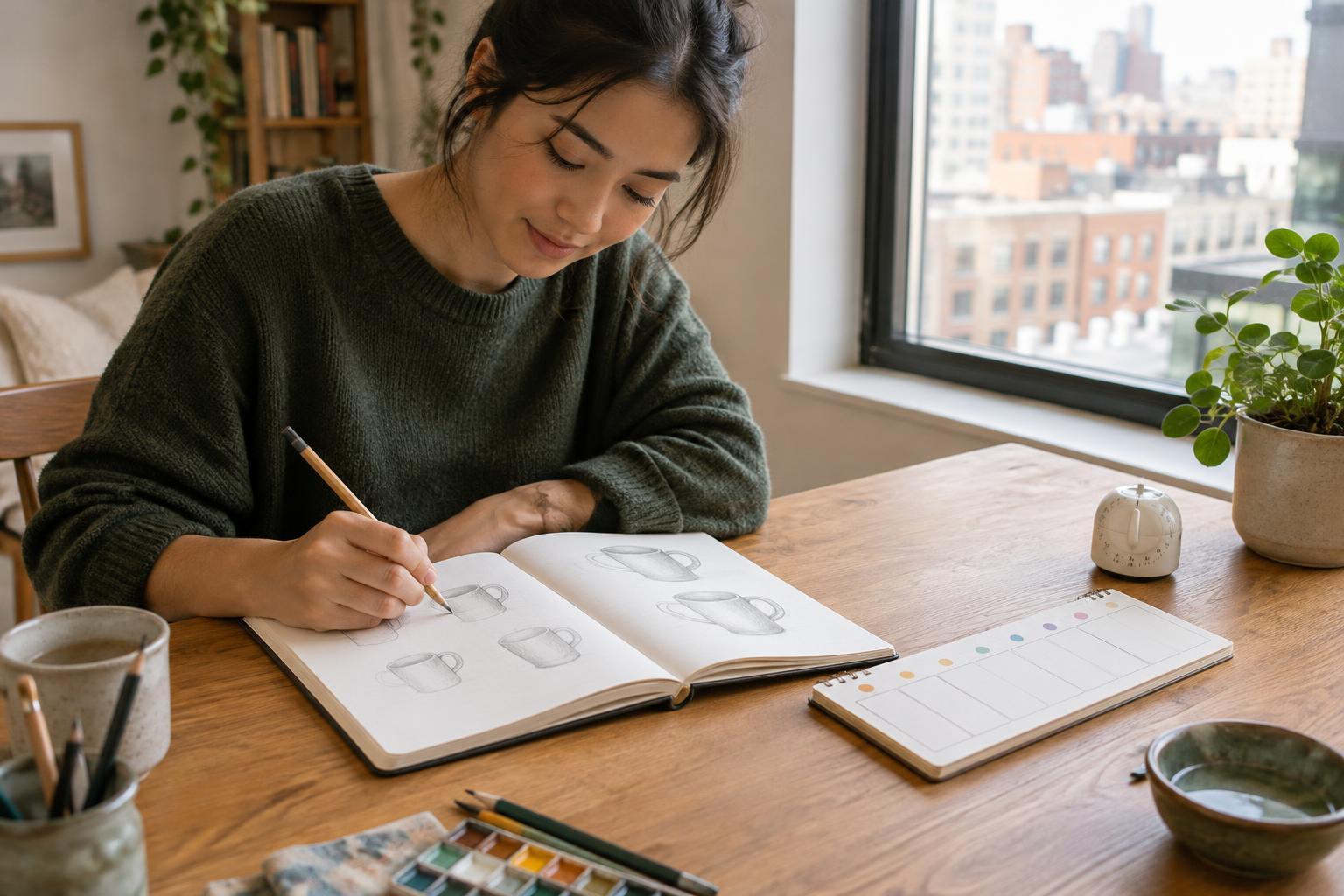
“Learn to draw” is too large a task for ten minutes. “Draw five cups using simple shapes” gives you somewhere to start. The same principle works for a language, an instrument, cooking, or a software tool: choose one action you can complete and inspect before the session ends. A small target makes it easier to practice on a busy day and easier to tell whether the exercise helped.
Pick a skill you genuinely want to use, then list a few parts that support it. If your goal is to speak another language, those parts might include recalling common words, forming questions, and listening for familiar phrases. Choose just one part for a week of short sessions. You are not reducing the ambition of the larger goal; you are giving your limited time a specific job.
Give every minute a purpose
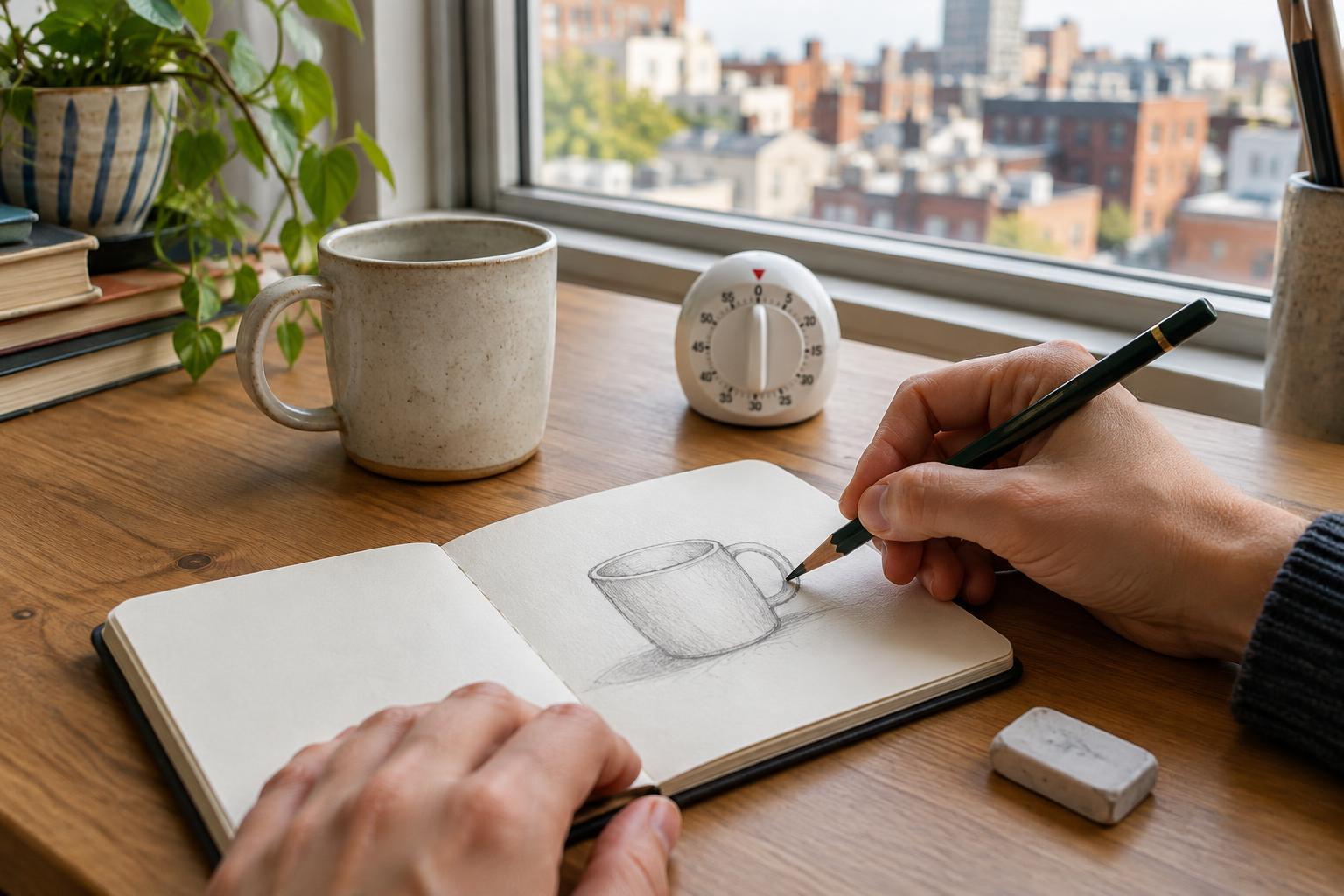
A useful ten-minute session needs little ceremony. Spend the first minute opening your materials and naming the task. Use the next seven or eight minutes to attempt it, and reserve the final minute to notice what happened. You might practice one chord change, write three clear sentences, or repeat a knife technique slowly with an appropriate, safe ingredient. The point is not to rush through as many activities as possible. It is to give one activity your attention.
Keep the exercise just challenging enough that you have to think. Repeating something you can already do without effort may feel pleasant, but it gives you little information about what to improve. On the other hand, a task that cannot reasonably fit into ten minutes may leave you stopping before you have practiced the part that matters. If an exercise is too big, shrink it: work on the opening of a presentation rather than the whole talk, or sketch one object rather than an entire room.
Remove the work before the work
When free time comes in small pockets, setup can consume the session. Prepare a compact practice kit where it makes sense: a notebook and pen, bookmarked lesson, saved reference image, or instrument kept somewhere accessible. Decide in advance what you will do next, so the first ten minutes are not spent choosing among tutorials. For skills that need space, equipment, or supervision, use a short session for a suitable component, such as reviewing steps or planning questions, rather than squeezing an unsafe activity into a tight window.
Attach practice to an existing point in your day instead of waiting for a perfect opening. You might practice after making tea, before putting away your laptop, or when you arrive home. Choose a time you can usually control, and keep a backup option for days when the routine changes. A missed session does not require a longer one tomorrow. Returning to the small exercise is more useful than treating one interruption as the end of the plan.
Use feedback you can act on
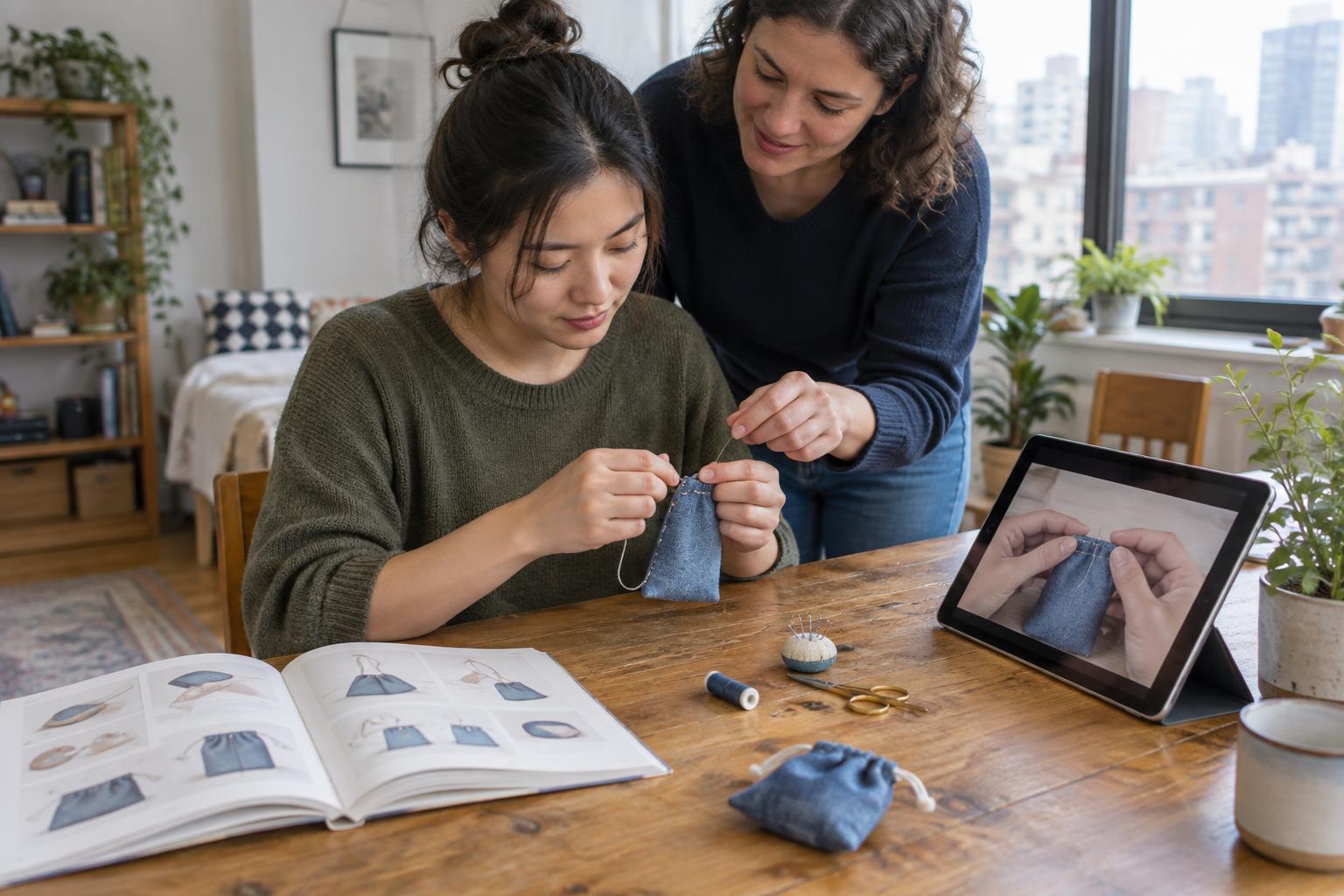
Short sessions are especially valuable when you can compare an attempt with a clear reference. Record yourself saying a sentence and listen for one sound. Compare a drawing with the object in front of you. Run a small piece of code and check whether it behaves as intended. Notice one difference, then make another attempt if time allows. Feedback does not have to be elaborate; it needs to tell you what to try differently.
Keep a brief practice note with three items: what you tried, what was difficult, and what you will try next. A line or two is enough. For example: “Changed between two chords; fingers landed unevenly; slow down and watch the third finger.” This makes the next session easier to start and helps you avoid repeating an exercise without noticing whether it is working. If you cannot judge your own work yet, a trusted teacher, class, or knowledgeable friend may help you identify a useful next step.
Let short sessions support longer ones
Ten minutes can help you begin, repeat, and retain a focused action. It may not be enough to complete a complex project or practice every aspect of a skill. When you have a longer block of time, use it to combine the pieces: hold a conversation, play a full song, cook a complete dish, or build something that uses the techniques you have practiced separately. The short sessions then become preparation rather than a substitute for every kind of learning.
Every so often, revisit your original goal. Can you do something now that felt awkward when you began? Is your current exercise still challenging, or has it become automatic? If it feels easy, add one complication. If it remains frustrating, make the step smaller or look for a clearer explanation. Progress in a new skill is rarely tidy, but a ten-minute session gives you a manageable way to keep showing up and make the next attempt more informed.