Start with the kind of break you need
A park visit does not need an itinerary. Before you leave, decide what would make the time useful: quiet, movement, company or a change of scenery. That small decision helps you choose a destination. A shaded bench may suit a short reading break, while a longer path may be better for a walk after sitting indoors all day.
Try a park you can reach on foot, by bike or as part of a trip you already make. Going somewhere nearby removes the pressure to stay for hours. If your schedule is tight, give yourself a simple goal, such as walking one loop or sitting outside for twenty minutes. A modest visit can still help you notice a different side of your neighborhood.
Bring what you already have
A comfortable visit rarely requires special gear. A reusable water bottle, something to sit on and a layer for changing temperatures may be enough. Pack a book, notebook or sketchpad if you own one, but leave room for doing nothing in particular. If you plan to eat, bringing food from home keeps the outing free and makes an ordinary meal feel less routine.
Check the park’s posted rules before settling in. Some places restrict where people may picnic, bring pets or use equipment. It also helps to know where entrances, restrooms, drinking water and accessible paths are, if those details matter to your visit. Not every park has the same facilities, so choose a shorter stay when you are unsure.
Find free things to do without filling every minute
Walking is an easy starting point, but you can give it a purpose. Follow a path you have never taken, look for different kinds of trees or notice how the park connects to surrounding streets. You might take a few photos, make a quick drawing or write down three details you would normally miss. These small prompts can make a familiar place feel new without turning the visit into a task.
If you want to move more, use an open area for gentle stretching or a game you can play with what you already own. If you want less stimulation, leave your headphones off for a few minutes and pay attention to sounds around you. A park can also be a useful place to practice a skill, such as drawing from observation or reading in a language you are learning. The activity matters less than finding a pace you enjoy.
Make a free gathering easy to join
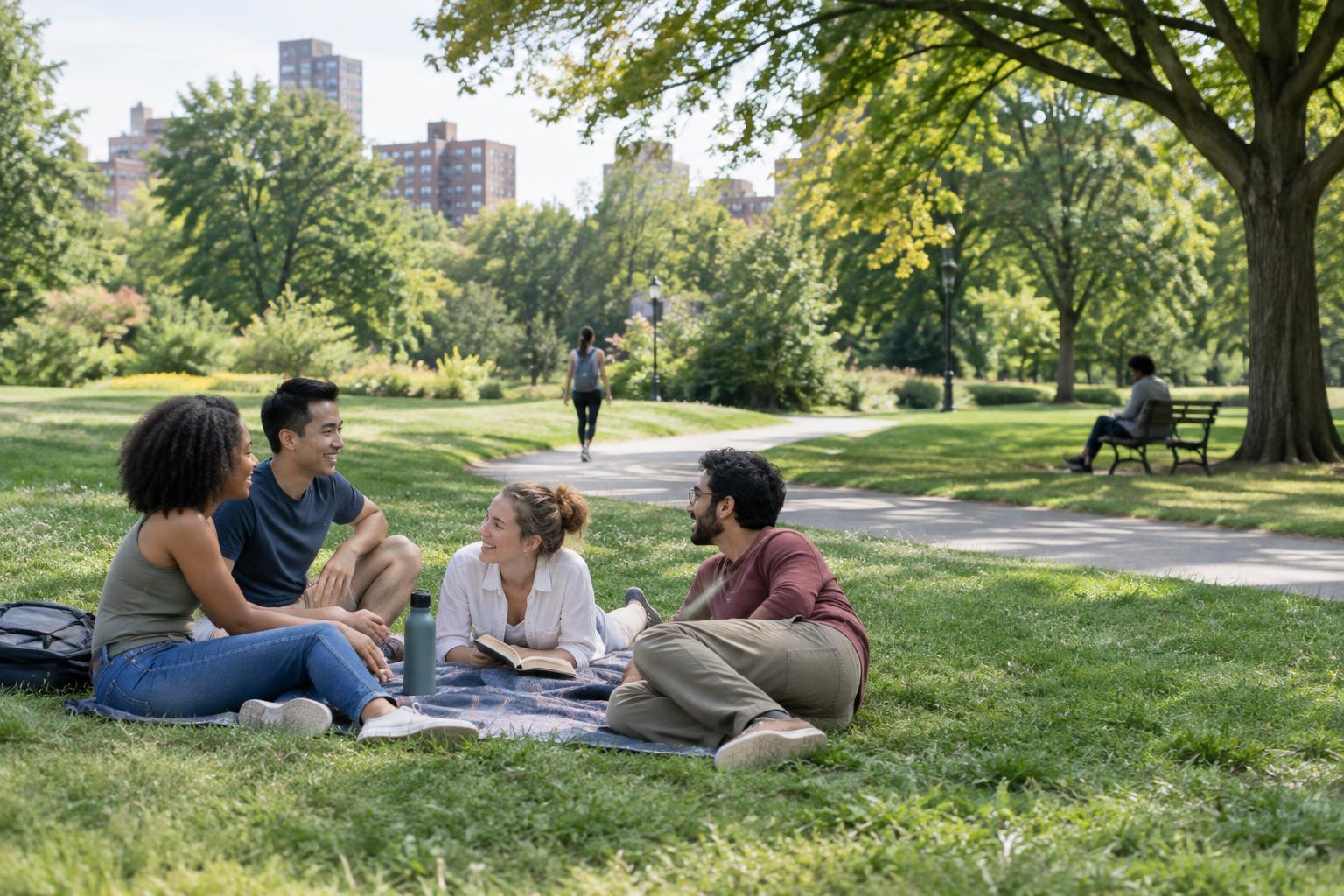
Meeting in a park can be simpler than planning an outing that asks everyone to buy something. Invite a friend for a walk, a chat on a bench or a bring-your-own lunch. Name a clear meeting point and keep the plan flexible: “one loop around the pond” is easier to commit to than an open-ended afternoon. If someone has limited mobility or energy, ask what route and seating would work for them rather than assuming the park is easy to navigate.
For a small group, choose an activity that needs little setup, such as sharing books you already have, playing a word game or taking turns suggesting a walking route. Keep voices and games at a level that leaves room for other visitors. Public space works best when a gathering can enjoy itself without claiming more of the park than it needs.
Leave the park ready for the next person
A free outing still comes with a few responsibilities. Stay on marked paths where requested, give other visitors space and take your litter with you if bins are full. Avoid feeding wildlife; human food may not be suitable for animals, and feeding can change how they behave around people. Check local guidance before collecting plants or other natural objects.
Pay attention to daylight, weather and how busy the park feels, especially if you are visiting alone. You can always change plans or leave early. The best park routine is one you can repeat comfortably: a familiar route, a quiet place to pause and the freedom to enjoy the city without needing to spend money.