Treating the fastest route as the best route
The top result in a transit app is usually an answer to a narrow question: which route appears quickest under the app’s assumptions? It may not account for a difficult crossing, a long walk through a station or the time it takes you to find an unfamiliar platform. A route that saves three minutes on paper can be less useful than one with fewer transfers and clearer directions.
Before choosing, compare at least two options. Look at the number of changes, the walking portions and where the route leaves you at the other end. If you are carrying bags, traveling with a child or heading somewhere unfamiliar, a slightly slower but simpler route may be the more comfortable choice. For a time-sensitive trip, favor a route with room to recover if one vehicle is late.
Reading an arrival estimate as a promise
A countdown can look precise even when conditions are changing. Depending on the service and the information available, an app may show a live vehicle position, a prediction or a scheduled arrival. Those are not interchangeable. An arrival shown as a few minutes away does not guarantee that the vehicle will reach your stop then, or that you can reach the boarding point in time.
Check whether the app explains how it produced the estimate, and refresh the trip when you are close to leaving. If the vehicle seems overdue, look for service notices or another nearby option rather than watching the same countdown indefinitely. Build in a buffer when a missed arrival would have consequences, such as arriving late to an appointment or losing your last convenient connection.
Overlooking the details of a transfer
Transit apps often compress a transfer into a short line of text. In practice, changing services may mean leaving a station, crossing a street, finding another entrance or waiting at a stop with several boarding positions. The suggested transfer time may be feasible for some passengers and stressful for others.
Open the step-by-step directions before setting off. Note the stop name, travel direction and any exit or platform information the app provides. If the connection looks tight, check whether the next service runs often enough to make missing it manageable. When it does not, choose an earlier departure or a route with a longer transfer window. Anyone who needs a step-free route should verify the relevant station and vehicle details through the transit operator as well as the app, since accessibility conditions can change.
Assuming the screen matches the street
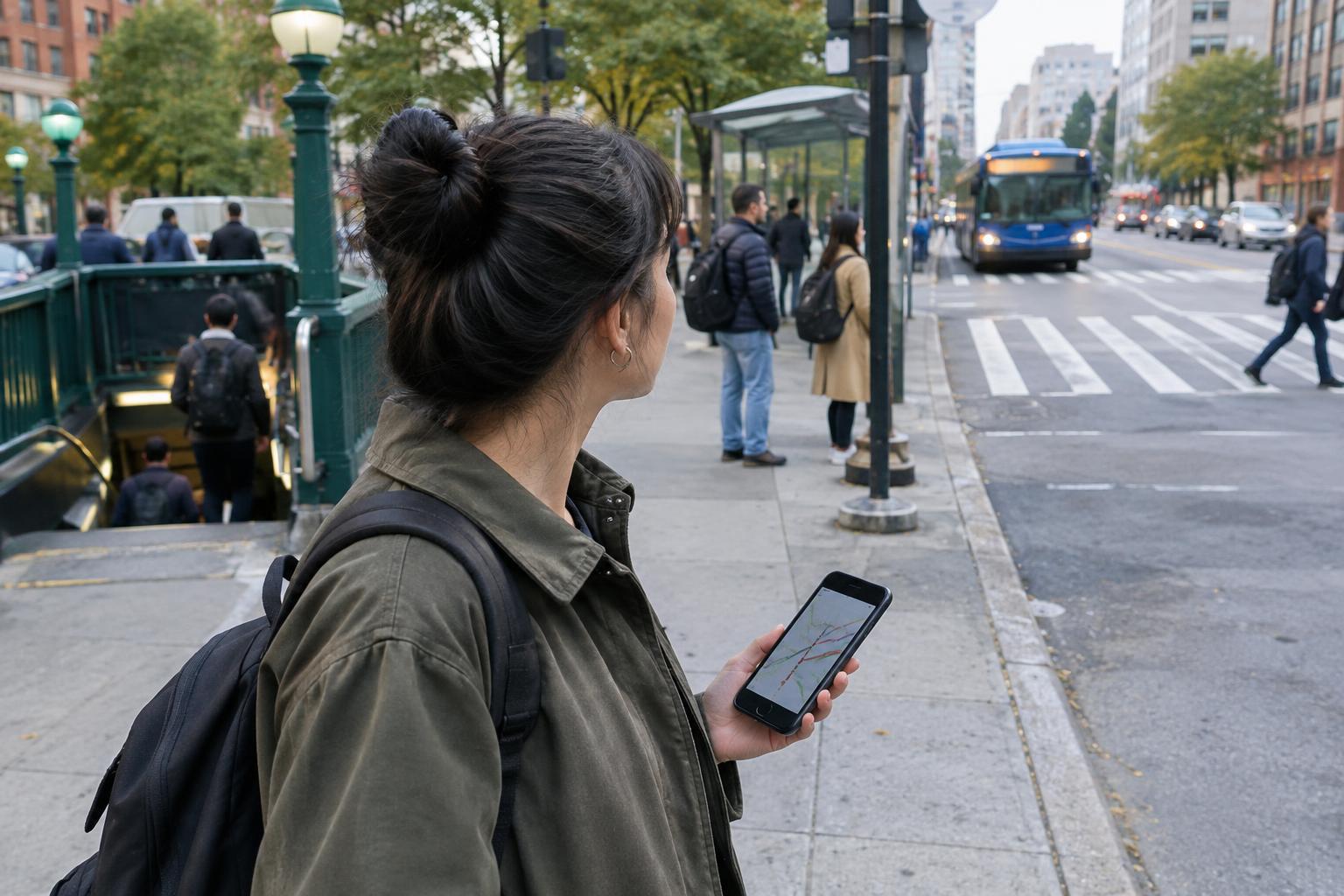
A map can guide you to the right area without identifying the exact place to board. Stops with similar names may sit on opposite sides of a road. Temporary works can move a boarding point, and a station entrance shown on a map may not be the most useful one for your trip. Following the blue dot without checking signs is an easy way to wait for the right service in the wrong place.
Use the app as a guide, then confirm the details on the ground. Match the route number and direction to the stop sign or station display. If something conflicts, pause in a safe spot and check the operator’s posted information. On an unfamiliar journey, take a moment to identify a landmark near your destination so you can recognize when it is time to get off, even if your phone loses its signal.
Leaving no room for a backup plan
A transit app is most helpful when your phone works and the information it shows remains useful. Low battery, weak reception or an unexpected diversion can turn a straightforward journey into guesswork. Repeatedly reopening the same route is not much of a backup if the original plan has stopped making sense.
Before a trip that matters, save the key details: your destination address, the main route, an alternative connection and the name of the stop where you should get off. A screenshot can help when reception drops, though it will not reflect later changes. Consider what you will do if you miss a connection: wait for the next service, walk to another stop or take a different route. The aim is not to plan for every possible disruption. It is to know enough about the journey that one surprise does not leave you stranded at the edge of a map.