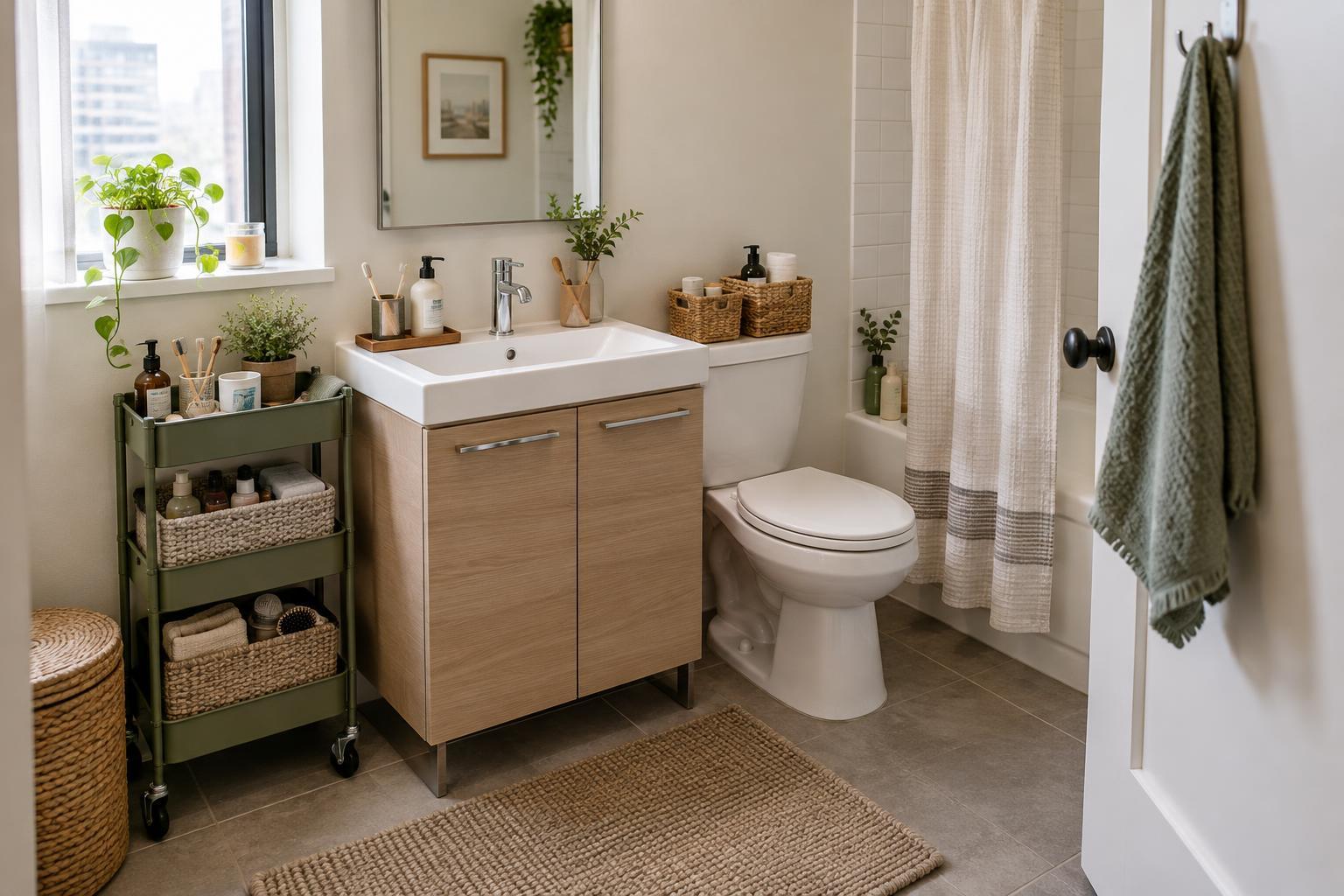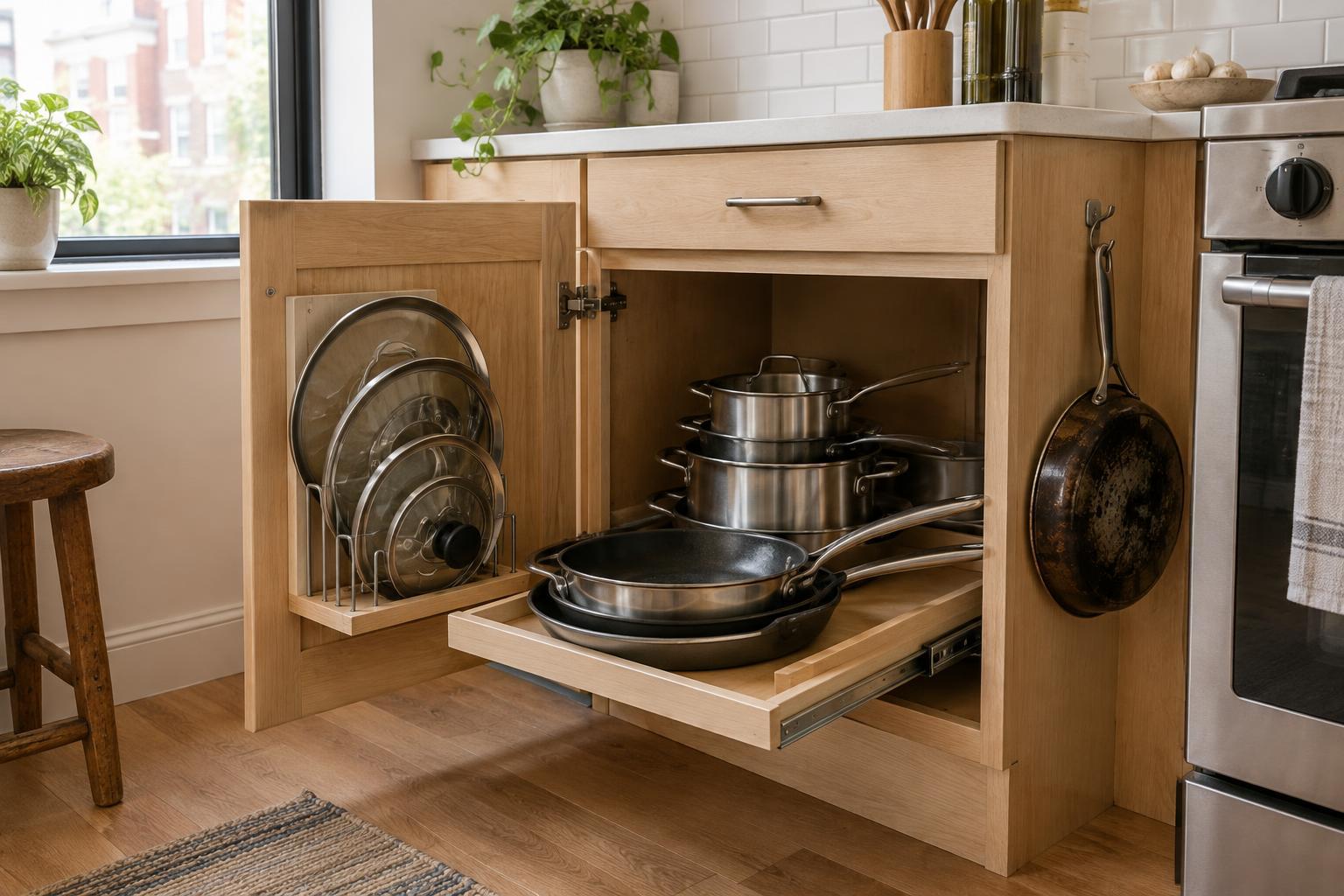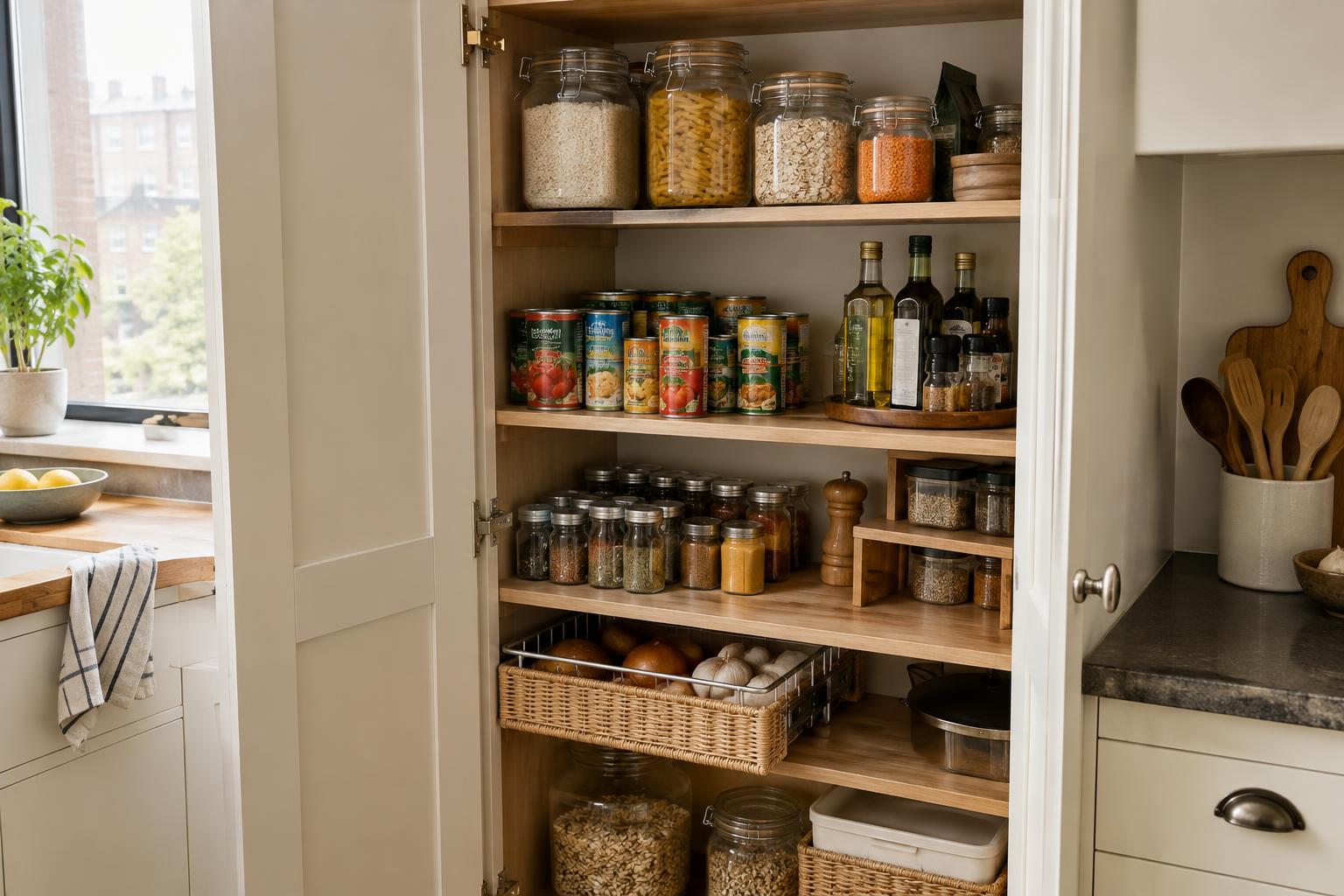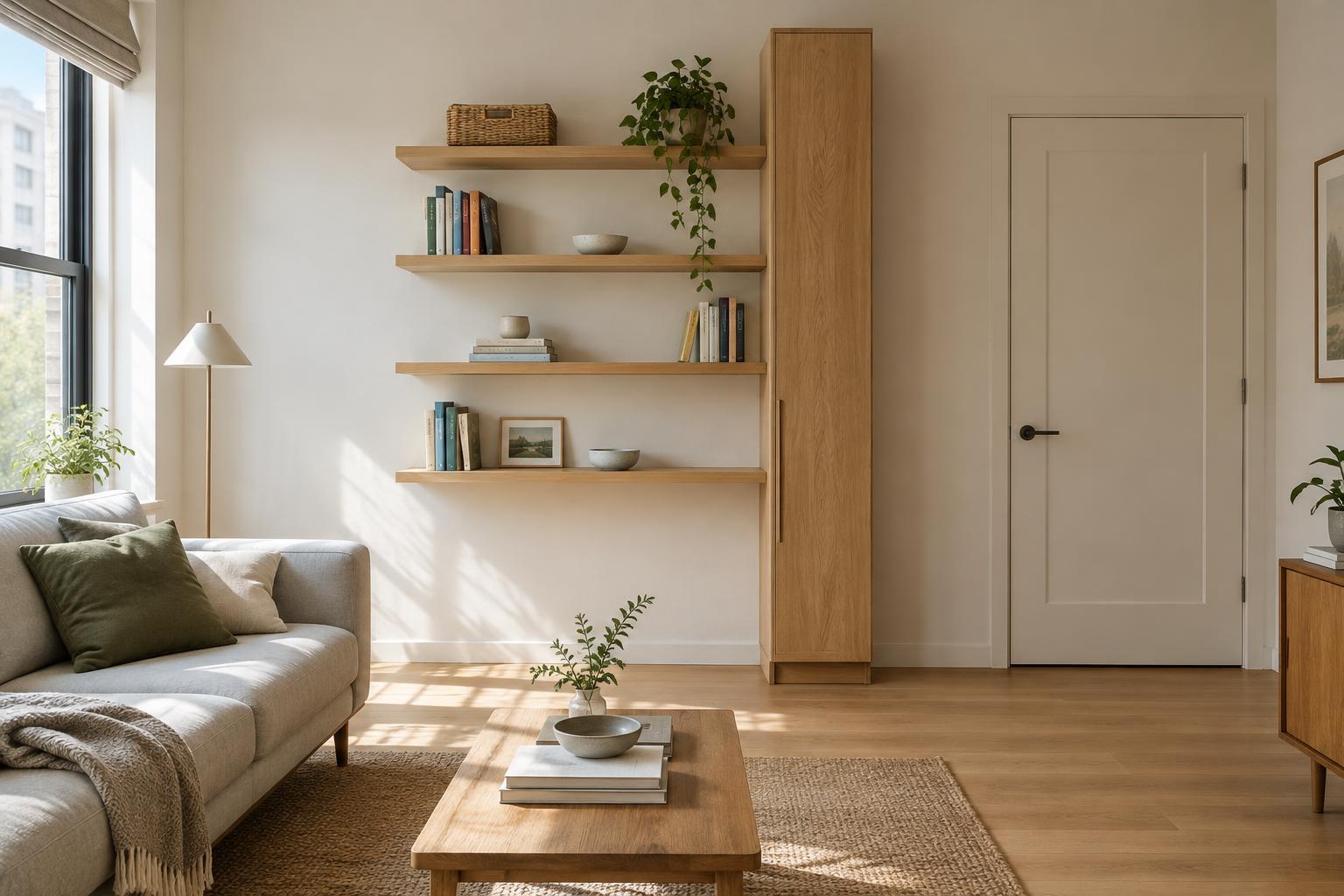
Start with the items, not the empty wall
A clear stretch of wall can look like an invitation to add shelves, but storage works best when it has a job. First, notice which items repeatedly end up on chairs, counters or the floor. Are they coats that need a place near the door, books beside a reading chair or cleaning supplies with no convenient home? Group those items by where you use them. This gives you a reason to use a particular wall rather than a reason to cover every wall.
Before adding anything, sort through the group you want to store. Put away objects that belong elsewhere and let go of duplicates you no longer need. Then estimate how much space the remaining items require, with a little room to take them out easily. Vertical storage should reduce the work of living in the room, not create another tightly packed area to manage.
Choose one useful vertical zone
In a compact room, a concentrated storage zone often feels calmer than hooks and shelves scattered across several walls. A narrow bookcase, a short run of shelves or a wall-mounted rail can collect related things in one place. The choice depends on what you need to store: shelves suit books and boxes, hooks suit items you grab on the way out, and a closed cabinet can hide visually varied supplies.
Look at the room from its entrance and from the seat or work area you use most. A tall unit near a corner may feel less intrusive than one placed in the middle of a prominent wall. Leave clear walking space and check that doors, drawers and windows can still open fully. If furniture or shelving needs to be secured, follow the manufacturer's instructions and use fixings appropriate for the wall; do not assume every wall or adhesive hook can support the same weight.
Match storage height to how often you reach for things
The most convenient storage is usually between your waist and eye level. Give that space to things you use every day, such as keys, a bag, frequently worn layers or a small collection of cooking tools. Less-used items can go higher, provided you can reach them safely when needed. Heavy or awkward objects are generally better kept low, where they are easier to lift and less likely to cause trouble if they fall.
A shelf is only useful if its contents can be taken down without shifting everything in front of them. Avoid stacking boxes so high that labels disappear or retrieval becomes a balancing act. On a door, a slim organizer can hold light supplies, but check that it does not stop the door from closing or scrape the frame. Test the arrangement during an ordinary week: if putting something away takes several steps, the location may be wrong.
Give the eye somewhere to rest
Vertical storage saves floor space, but it can add visual weight. Open shelves display every shape, color and label they hold. To soften that effect, limit open storage to items you like seeing or use often, and place smaller, mismatched objects in a few simple containers. You do not need matching bins throughout the room; a consistent approach within one shelving unit is usually enough to make it easier to scan.
Leave some gaps between groups of objects and resist filling the space above every doorway or piece of furniture. Empty wall is useful: it helps a room feel less crowded and makes the storage you do install easier to understand. If the room already has busy patterns, large furniture or many visible possessions, one closed vertical unit may do more for its sense of order than several open shelves.
Adjust the setup as your routine changes
Start with a small change rather than fitting out the entire room at once. Add the hook, shelf or tall unit that addresses the most persistent pile, then live with it for a few weeks. Notice whether items return to their places naturally. If they do not, move the storage closer to the point of use, make the contents easier to see or reconsider what belongs there.
Keep a little spare capacity so a new book, guest coat or everyday purchase has somewhere to go. When a shelf becomes full, treat that as a prompt to reassess its contents rather than automatically adding another shelf. The aim is not to use all available height. It is to make the room easier to move through, easier to tidy and more comfortable to spend time in.