Start with the space you already have
In a small bathroom, the problem is often not a lack of containers. It is that everyday items compete for the same few surfaces. Before buying an organizer, empty one area at a time: the sink ledge, a drawer, the cabinet under the sink or the shower corner. Group similar items together so you can see what is taking up space. Keep the products you use regularly, set aside unopened backups, and remove empty packaging or items you no longer need.
Notice where clutter gathers during a normal morning or evening. If the sink ledge fills up because there is nowhere convenient to put a toothbrush and face wash, that spot needs an easy-to-reach home. If spare towels crowd the cabinet, consider storing the extras in another room. The aim is not to fit every bathroom-related item into the bathroom; it is to keep the items needed there accessible.
Give each zone one job
Divide the room by activity rather than by product type. The sink area can hold daily grooming items, the shower can hold products used while bathing, and a cabinet or drawer can hold less frequently used supplies. This makes it easier to put things away because each item has a destination close to where it is used.
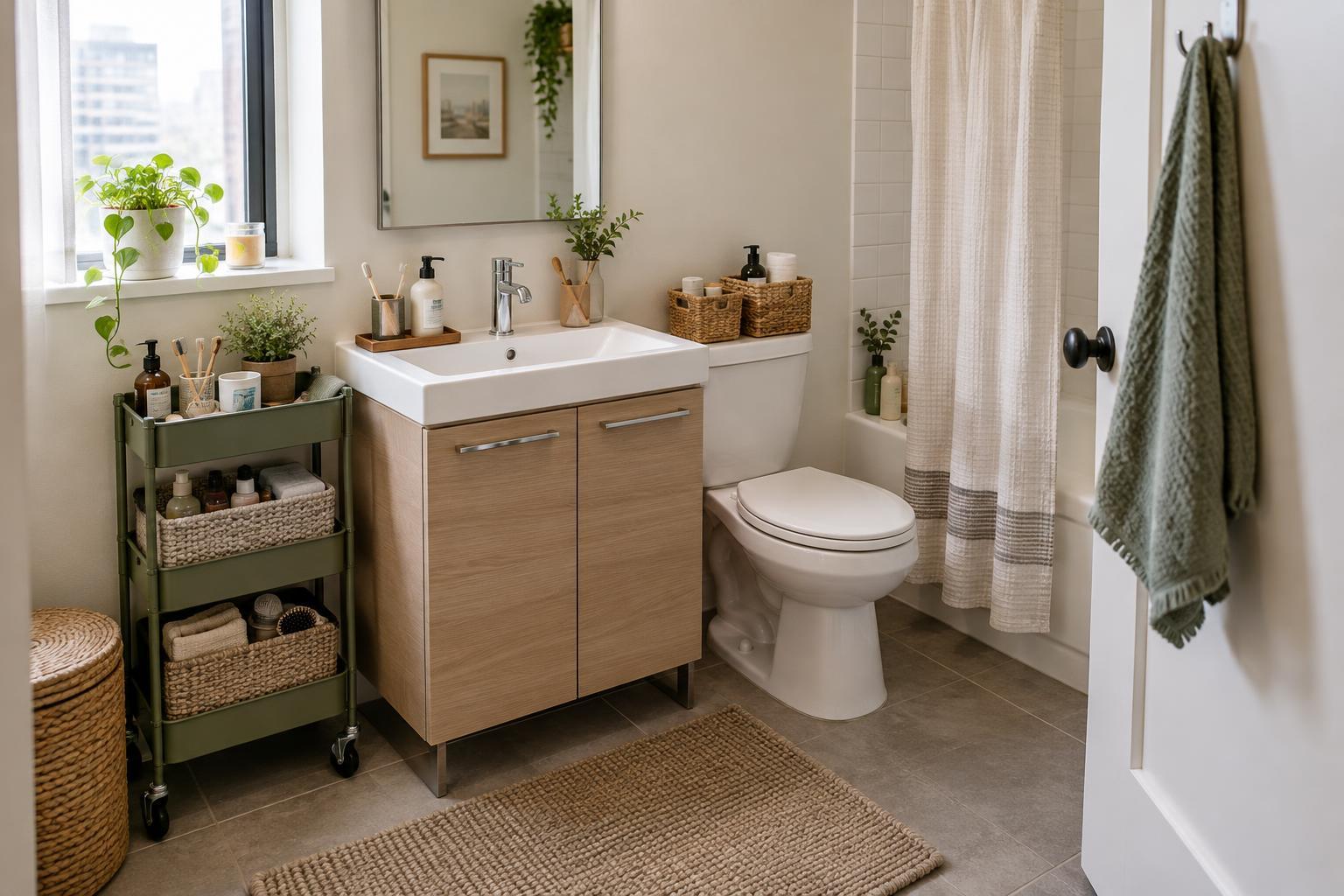
Keep the most visible surfaces selective. A small tray can corral a few daily items on a counter, while a cup or divided container can keep narrow tools upright. If the tray becomes crowded, treat that as a sign to edit it rather than replace it with a larger one. In a shared bathroom, assigning each person a small basket or drawer section can prevent everyone’s belongings from spreading across the same shelf.
Choose removable storage to fit the room
Look for unused space before looking for a new fixture. A slim freestanding cart may fit beside a sink, while stackable bins can make a deep cabinet easier to use. Under-sink storage works best when containers leave access to plumbing and any shutoff valves. Measure the space, including the path of the cabinet door, before choosing a bin or shelf.
Over-door hooks and hanging organizers can put vertical space to work without drilling, provided the door still closes freely and the organizer does not scrape its frame. A tension-mounted caddy may suit some showers, but it needs a stable contact point and should be checked periodically for slipping. Removable adhesive products vary in their surface requirements and weight limits; follow the maker’s directions, and avoid trusting them with heavy or breakable items.
Choose materials with bathroom moisture in mind. Open baskets or containers that are easy to wipe dry may be more practical than tightly packed fabric pockets in a damp corner. Leave room around stored items for cleaning and drying, and keep anything electrical away from water according to its instructions.
Make small containers earn their place
A container helps only when it makes items easier to find or return. Clear bins can reveal their contents at a glance; opaque bins may look calmer on an open shelf. Either way, use broad categories such as “first aid,” “hair tools” or “backups” rather than making a separate compartment for every object. Labels can help in a shared home, especially when several similar bins sit together.
Avoid using every inch of a drawer or shelf. A little open space lets you reach what is behind the front row and makes it easier to notice when supplies are running low. Store heavier items low, keep frequently used items within comfortable reach, and place occasional supplies in the less convenient spots. If a product has to be moved every time you need something else, its assigned place probably needs to change.
Keep the arrangement easy to maintain
A small bathroom will not stay organized if putting things away takes more effort than leaving them out. Test the setup for a week of ordinary use. Watch for items that repeatedly land on the counter, hooks that collect too much, or bins that must be unpacked to reach one bottle. Adjust those spots instead of trying to follow a rigid plan.
A brief reset can do most of the upkeep: return items to their zones, wipe exposed surfaces, and check whether damp containers need drying. When replacing a product, look for an existing backup before buying another. With fewer duplicates and a clear place for daily essentials, even a bathroom with little storage can feel simpler to use—without making a permanent change to the room.