Start with the meals you actually make
Before moving anything, think through a few meals you prepare regularly. Notice which ingredients, pans, utensils, and dishes you reach for in sequence. A cabinet layout that follows those routines is more useful than one based only on how neatly everything fits. If you usually cook at the stove, for example, the pan you use most often belongs closer to it than a roasting dish you bring out occasionally.
Empty one cabinet at a time so the project stays manageable. Set aside anything that belongs elsewhere, is broken, or no longer suits the way you cook. Check pantry items before putting them back, and keep what you plan to use where you can see it. You do not need to replace every container or start with a completely bare kitchen; a clearer arrangement of what you already own may be enough.
Give each cabinet a clear job
Group items by the task they support. One cabinet might hold everyday plates, bowls, and glasses; another might hold baking supplies. Keep frequently used cooking ingredients together rather than scattering them wherever there is space. When several people share the kitchen, clear cabinet roles also make it easier to put things away without asking where they go.
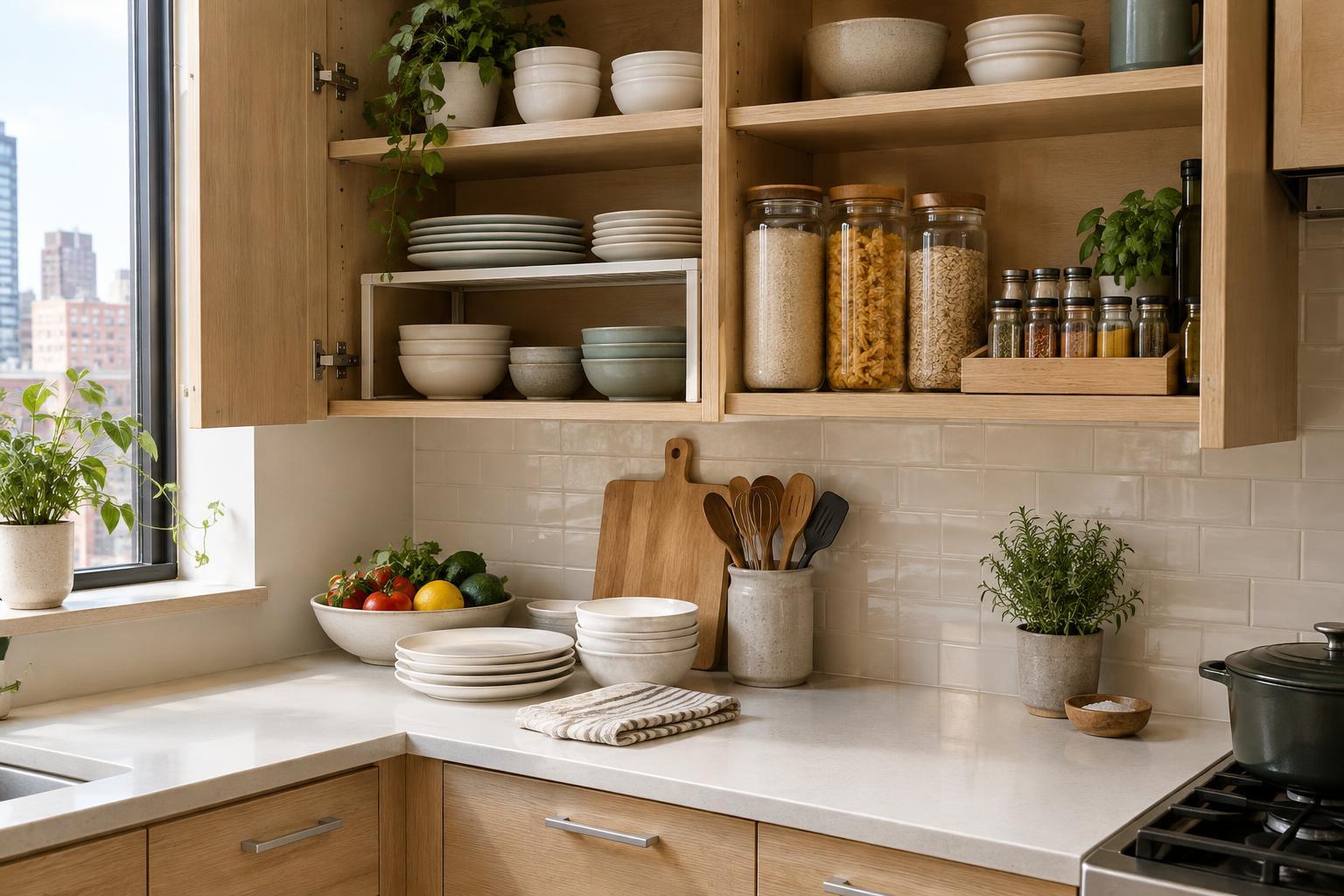
Choose locations according to both use and reach. Daily items are easiest to handle on shelves you can access comfortably. Higher or less convenient shelves can hold lightweight, occasional-use pieces such as serving dishes. Keep heavy cookware on lower shelves if possible, so you do not have to lift it down from overhead. Leave a little open space in each cabinet: an arrangement that only works when every item is perfectly stacked will be frustrating to maintain.
Make ingredients easy to find
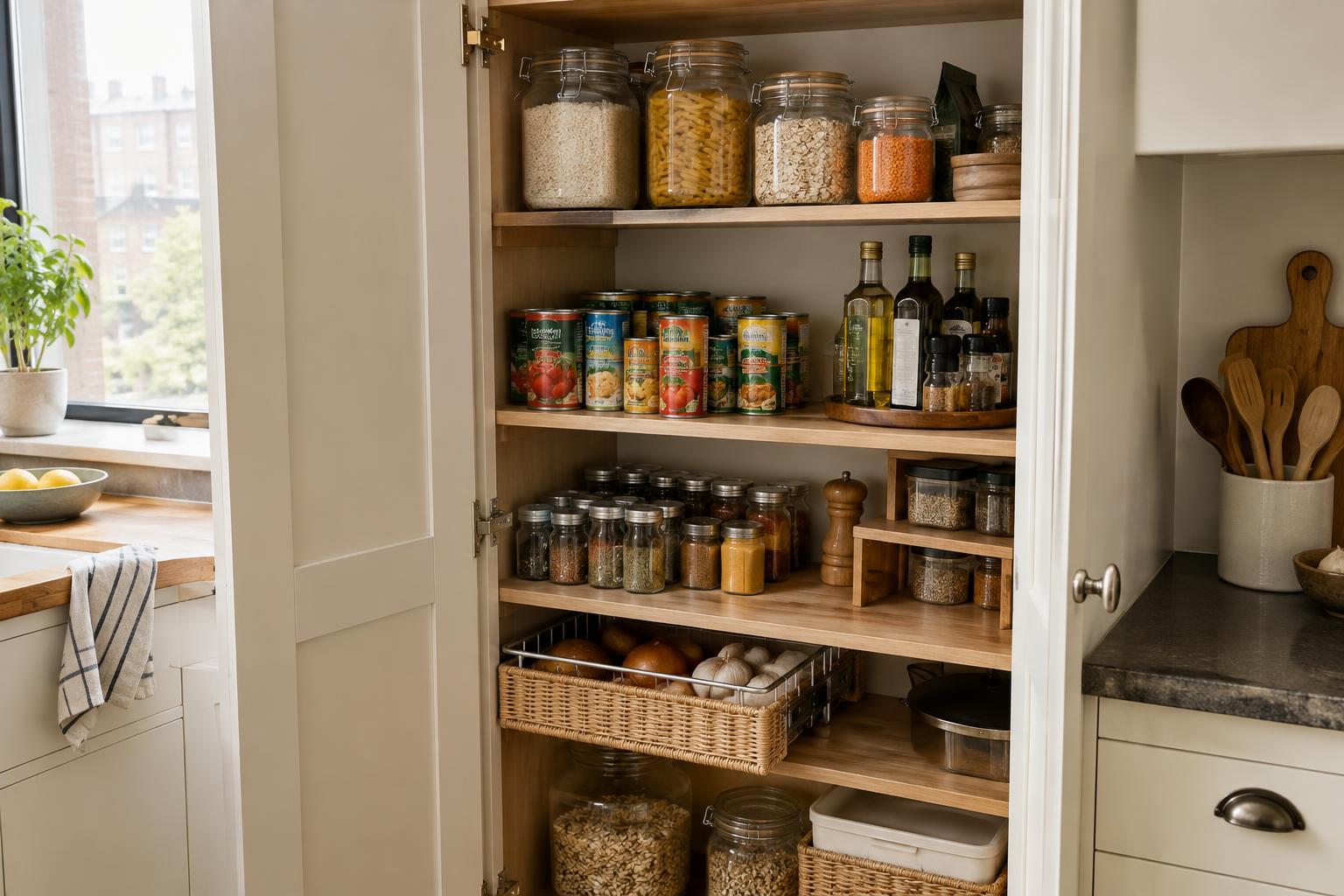
In a food cabinet, place everyday staples toward the front and group similar items together. Pasta and grains can share a shelf, while baking ingredients can occupy a separate area. Put newer packages behind older ones when you restock, so the items already open or waiting to be used remain visible. Small packets are easier to manage in a shallow bin than in a loose pile that slides around whenever you reach for something.
Containers can help when original packaging is awkward, but they are not required. If you transfer food, label the container clearly and retain any preparation details you still need. Avoid stacking items so deeply that you must unpack an entire shelf to reach the back. A small amount of unused space can make the cabinet more functional than another row of tightly packed goods.
Use dividers and risers only where they solve a problem
Simple organizers work best when they address a specific annoyance. A vertical divider can keep cutting boards and baking trays from falling into a stack. A shelf riser may make short cups or bowls easier to reach. A tray can gather small bottles that otherwise get lost at the back of a deep cabinet. Measure the shelf, its door opening, and the items you want to store before buying anything; an organizer that fits the shelf but blocks the door is no help.
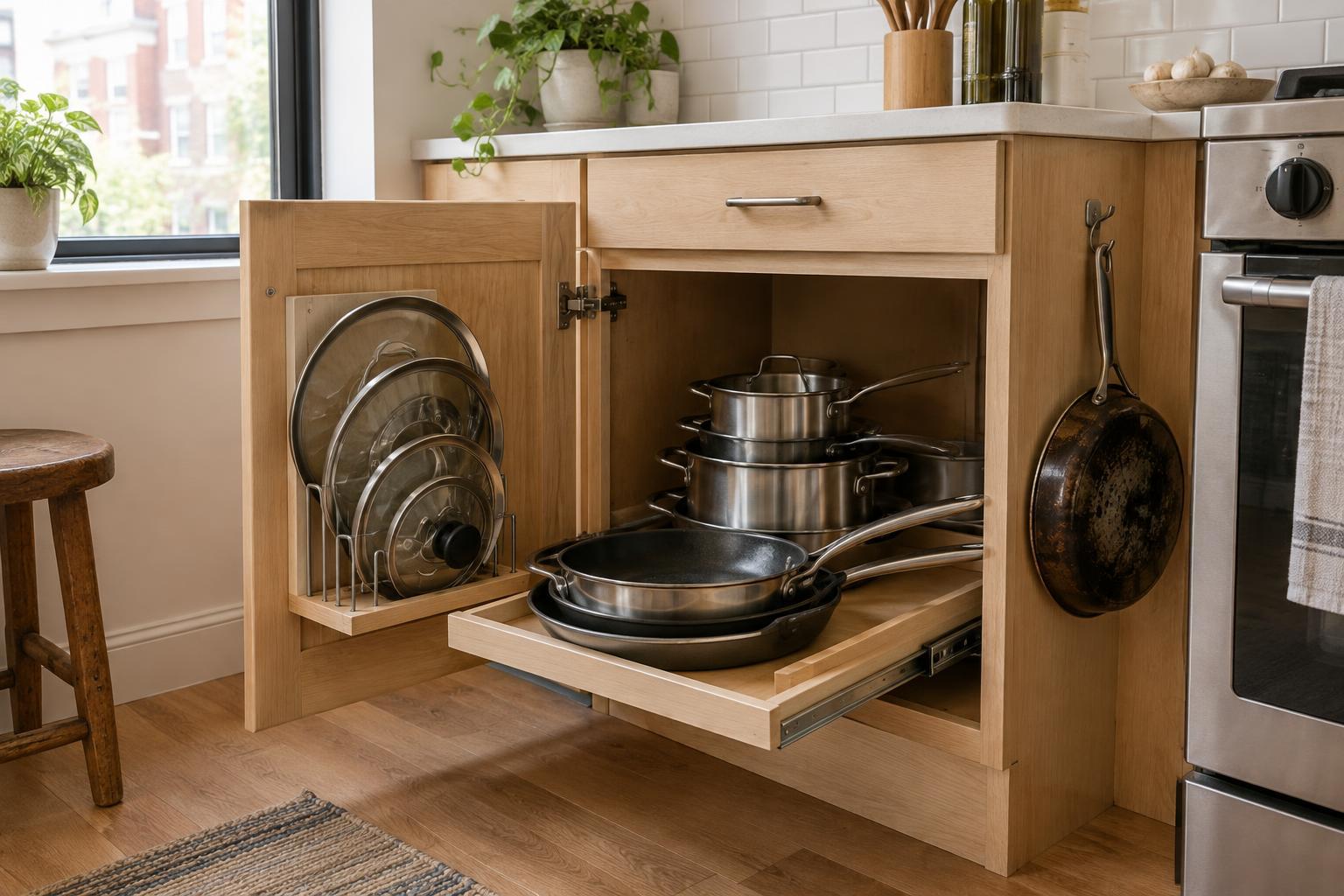
For a small kitchen, look first for unused height and awkward gaps rather than trying to fit more into every shelf. Nesting compatible bowls or pans may free space, provided the stack remains easy to lift. Keep lids near their matching pots, whether that means standing them in a divider or storing them together on a lower shelf. The goal is to remove extra steps, not to create a display that is difficult to use.
Test the layout during a normal week
Once the cabinets are arranged, cook as you normally would. Notice when you cross the kitchen repeatedly for related items, move several things to reach one pan, or hesitate over where something belongs. Those moments show where a cabinet needs adjusting. You might move a mixing bowl closer to your prep area or give lunch containers a shelf near the dishes you use with them.
Keep upkeep simple. Return items to their assigned areas after washing, and take a quick look at crowded shelves before adding groceries or equipment. If a category repeatedly overflows, reconsider its space or the amount you keep. A useful cabinet system is not fixed forever: it should be easy to revise as your meals, household, and available time change.