Give the reset a clear job
A weekly reset is a brief appointment with the things that have drifted out of place. It is not a deep clean or a promise to reorganize every cupboard. Its job is to make your home easier to use on an ordinary weekday: a clear spot to prepare food, somewhere to sit, and a reliable place to find your keys.
Choose a time you can usually protect, such as an hour before a quiet evening or a short stretch before your first workday. If a full hour feels unrealistic, start with 20 minutes. Write down the few areas that cause the most friction during the week. In a compact home, the entryway, kitchen counter and laundry area may matter more than a rarely used shelf. Let those areas set the agenda.
Start with a quick collection round
Walk through your home with a small basket or bag and collect items that belong elsewhere. Gather cups, loose clothing, mail, packaging and objects left on shared surfaces. Do not stop to reorganize a drawer as you go. The first round is for seeing what has accumulated and bringing it together.
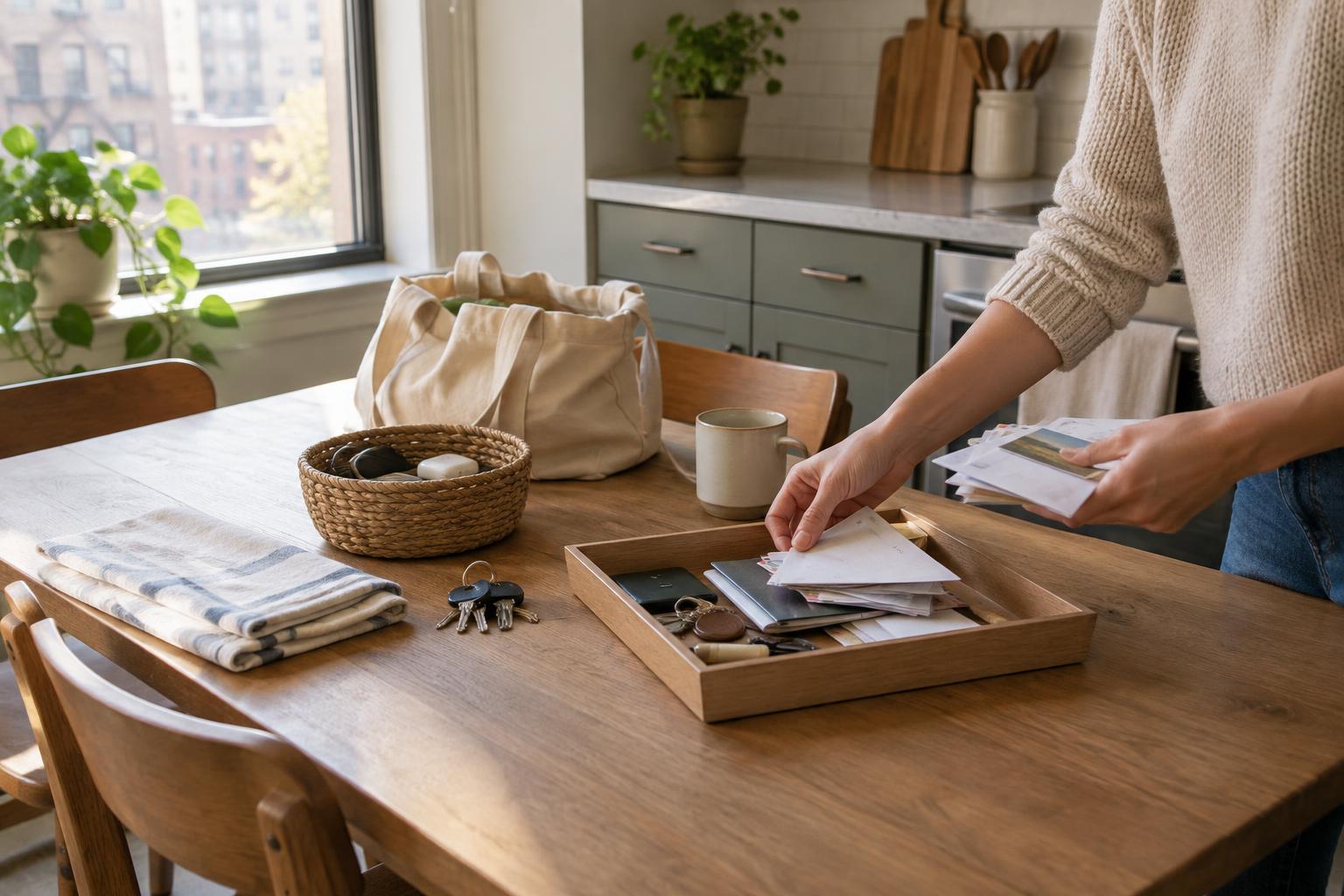
Sort what you collected into a few practical groups: put away, wash, recycle or discard, and decide. Return the obvious items first. For anything that needs a decision, set aside a small, visible holding spot rather than spreading it back across the room. A single tray for unanswered mail is easier to handle next week than several separate piles. Keep that spot limited in size so it does not become permanent storage.
Reset the surfaces you actually use
Once stray items are moving toward their homes, clear the surfaces that support daily routines. Put dishes in the sink or dishwasher, wipe the food-preparation area, and make enough room at your table or desk for its main purpose. If shoes or bags crowd the doorway, return them to a rack, hook or designated corner. The goal is not an empty-looking room; it is a room where the next task can begin without first moving a pile.
Use this pass to notice where clutter repeatedly lands. If coats always end up on a chair, a hook near the door may work better than hangers in a distant closet. If charging cables spread across the table, a small container near an outlet may help. Treat these patterns as information about your routine, not as evidence that you need to try harder.
Handle the small tasks that create bigger messes
Some clutter grows because an unfinished task is attached to it. A package waits for its contents to be put away. Clean laundry waits to be folded. A form waits for an answer. Choose one or two of these tasks during each reset, especially those blocking a space you need. Finishing a small task can free more room than shifting its contents into a neater stack.
Give recurring incoming items a simple route. Open mail beside a recycling bin, put reusable bags back by the door, and move items meant for returns into one marked bag. If something cannot be finished now, record its next action in a place you check regularly. A note such as “measure shelf before buying a box” is more useful than a vague reminder to “sort storage.”
End by making next week easier
Reserve the last few minutes for a look ahead. Check whether you have space for the laundry you expect to do, whether your everyday bag has what it needs, and whether a busy day will leave dishes or recycling without a place to go. This is also a good moment to empty the small holding spot if its decisions are quick. Leave larger projects for a separate session.
Keep the routine flexible. On a crowded week, collect rubbish, return essentials and clear one useful surface; that still counts as a reset. On a quieter week, you can address a recurring trouble spot. A written checklist can help, but keep it short enough that you will use it. The best weekly reset is not the most thorough one. It is the one you can repeat, even when your free time is limited.