Map the route your laundry takes
In a home without a laundry room, washing clothes is less about finding one perfect storage spot and more about managing a route. Clothes move from where you change, to a hamper, to a washer, then to a drying space and back into storage. Notice where that route breaks down. Do socks pile up beside the bed? Does a full basket block a doorway? Do clean clothes linger because putting them away takes too long? Fixing one troublesome step may help more than buying a larger hamper.
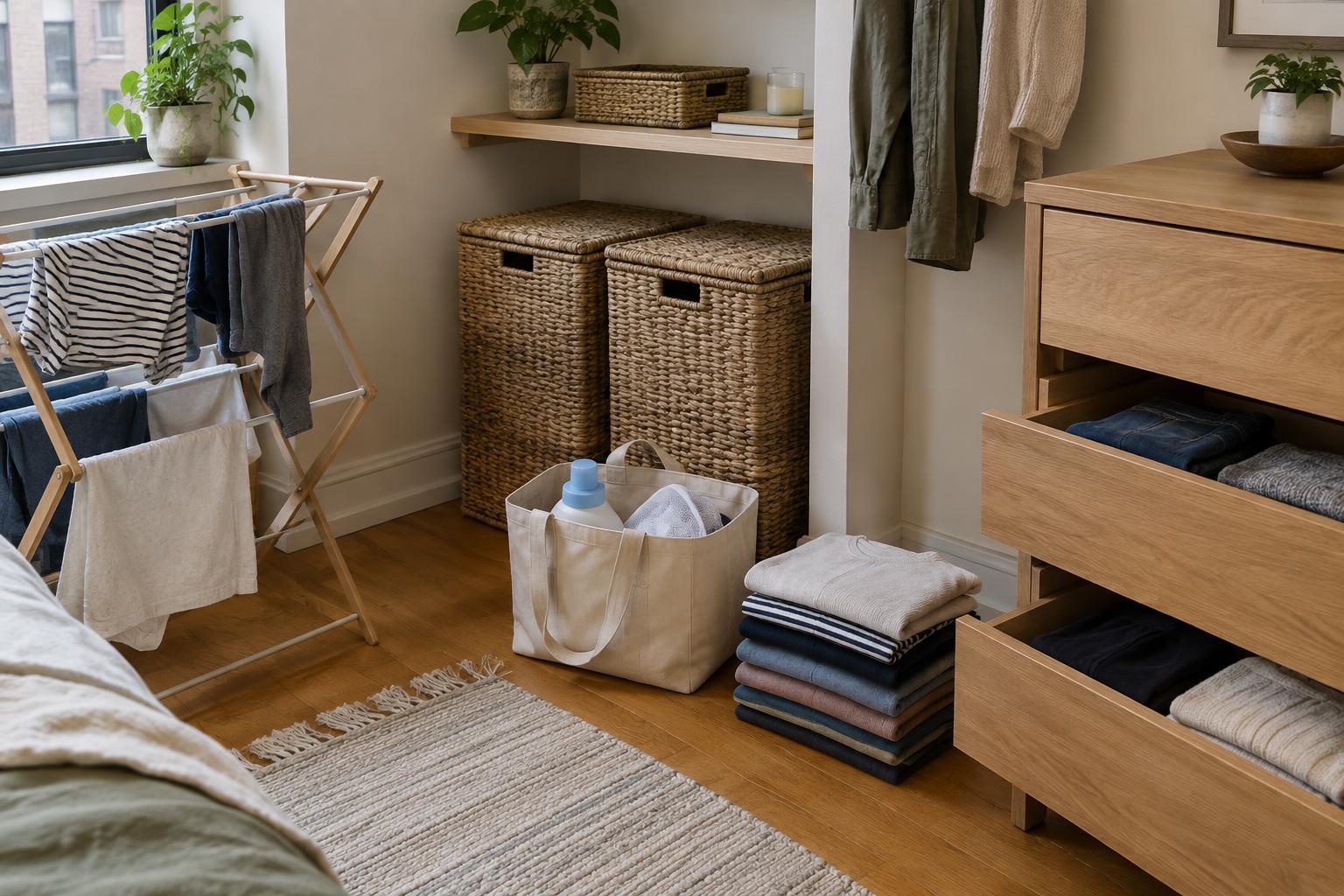
Before rearranging anything, check what space is genuinely available. A narrow corner might hold a tall hamper, while the space under a bed may fit a shallow bag. Keep walkways, doors, and access to outlets clear. If you use a shared laundry room or laundromat, consider where you can set down a bag briefly while getting ready to leave.
Choose a sorting system you can maintain
Sort only as much as your washing habits require. If you usually run one mixed load, a single hamper may be enough. If you regularly separate delicate items or towels, try a small second bag rather than a row of bulky bins. A washable bag can serve as both a sorter and a carrier, reducing the number of containers you need to store.
Place the hamper near the spot where clothes actually come off, provided it does not crowd the room. For a household with more than one person, agree on a simple rule for pockets, damp items, and clothes that can be worn again. Give not-quite-dirty clothes a designated hook or shelf; otherwise, they tend to spread across chairs. Let damp towels or workout clothes dry before placing them in an enclosed hamper.
Build a compact wash-day kit
Keep the supplies needed for a load together so wash day does not begin with a search. A small handled container or pouch can hold detergent, stain-treatment supplies, a mesh bag for delicate items, and any payment items needed for a shared machine. Choose containers you can carry comfortably, and keep cleaning products in their original labeled packaging and away from children and pets.
Match the kit to the trip. If the washer is down the hall, you may need only a light bag. If you travel farther, test the weight of a full load before committing to a large carrier. Two manageable bags can be easier to handle than one overfilled basket, especially on stairs. Leave a little room for freshly washed clothes so they do not need to be packed tightly on the way home.
Plan for drying before you start washing
Drying space is often the real limit in a small home. Before washing items that cannot go in a dryer, decide where they will hang without blocking a door or brushing against furniture. A folding rack can be put away between uses, but only if you have a realistic place to store it. A few sturdy hangers may work better for a small number of garments.
Allow air to circulate around hanging items, and avoid crowding damp clothes into a closed closet. Protect surfaces that could be affected by drips, and check the weight limits and placement instructions for any rack or hanging accessory. If your available space holds only a few pieces at a time, wash those items in smaller batches rather than creating a queue of wet clothes.
Make putting clothes away the final step
Clean laundry needs a landing place, but it should not become a permanent one. Clear a bed or table for folding before you collect a finished load. If you share the home, separate clean clothes by person as you fold them so each stack has an obvious destination. Keeping drawers and shelves reasonably easy to reach makes this last step less daunting.
If folding everything feels like the obstacle, simplify where you can. Some everyday items can go directly into a drawer or basket, while clothes that wrinkle easily may be better placed on hangers. Finish by folding the empty carrier and returning the wash-day kit to its spot. The aim is not a flawless laundry routine; it is a repeatable path that keeps dirty clothes contained and clean clothes usable.