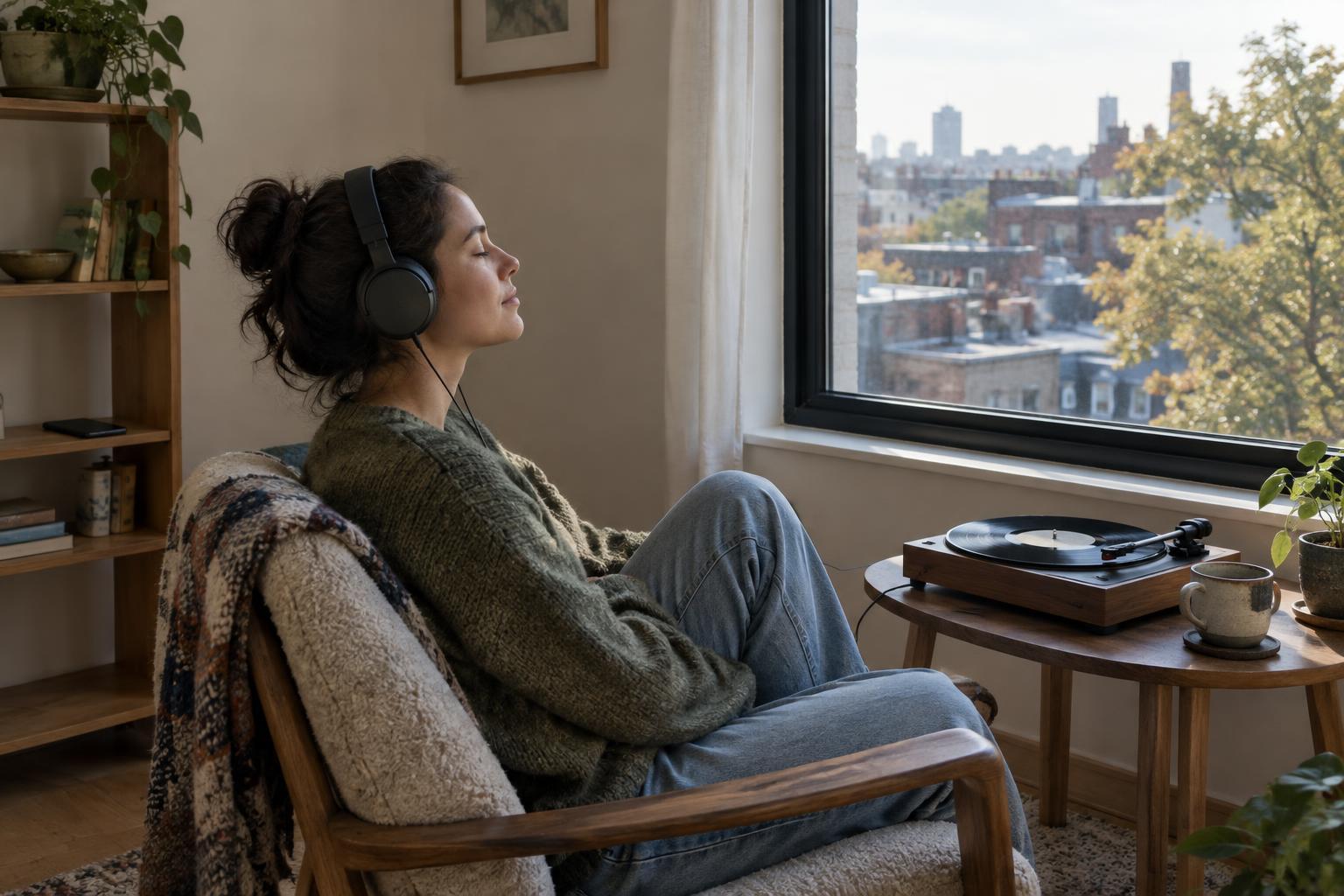
Start with the kind of pause you need
An unwind playlist works best when it has a specific job. Do you want to leave a crowded commute behind, tidy your apartment without rushing, or settle into a quiet evening? Each situation may call for different music. A gentle instrumental track might suit reading, while a familiar song with a steady beat might make washing dishes feel less like another task. There is no single sound that counts as relaxing; the useful question is what helps you feel ready for the next part of your day.
Before choosing songs, describe the shift you want in a few ordinary words: “busy to settled,” “restless to comfortable,” or “work mode to my own time.” Keep those words nearby as you browse. They give you a reason to skip a song you like but that pulls you in the wrong direction. A playlist for unwinding is not a ranking of your favorite music. It is a small tool for a particular moment.
Choose a length you will actually use
Think about where listening fits into your routine before building a long list. If your free time comes in short stretches, make a playlist that lasts roughly as long as one of them. It could accompany the walk home from transit, a quick reset of the living room, or the time it takes to make a simple dinner. A clear endpoint can make the playlist feel like a complete pause rather than an endless stream of choices.
You can also create two versions from the same pool of songs: a short list for weekdays and a longer one for evenings when you have room to linger. This is especially helpful if your schedule changes often. You do not need to fill every minute. A brief playlist that you start regularly is more useful than an elaborate one you keep saving for the right occasion.
Build a gentle progression
Try arranging tracks as a transition rather than sorting them only by genre. The first song can meet you where you are: perhaps it has enough energy to hold your attention after a noisy day. The middle can ease into a steadier pace, with sounds and voices that do not demand much from you. The last track can signal that the listening session is ending. Its purpose is not to make you sleepy; it is to give the playlist a satisfying landing.
Pay attention to the spaces between songs. A sudden jump in volume, a dramatic intro or an unexpected spoken segment might be welcome in one setting and distracting in another. Listen to the transitions while doing the activity the playlist is meant to accompany. If a track makes you reach for the skip button, move it, replace it or remove it. Familiar songs often work well because you already know how they make you feel, but leave room for a few discoveries if you enjoy them.
Make it work in your surroundings
City life rarely provides a perfectly quiet listening space. Your playlist may need to share the room with traffic, neighbors or household tasks. If you are listening while cooking or cleaning, choose songs that remain enjoyable without your full attention. If you are sitting down with a book, you may prefer music that does not compete with the words on the page. The same person can need different playlists for these two kinds of downtime.
Consider how you will start listening, too. Give the playlist a name you will recognize at a glance and save it somewhere easy to find. Set a comfortable volume before you begin, particularly when switching from a noisy street to a quiet room. If headphones make you feel cut off from your surroundings, a speaker at a modest level may suit home listening better. The easier the setup, the less your downtime feels like another thing to manage.
Let the playlist change with you
A useful playlist does not need to stay fixed. After a few listens, notice which songs you look forward to and which ones you tolerate. Remove tracks that no longer fit, even if they were perfect when you added them. You might also keep a small holding list for songs you want to try, then move them into the main playlist only after hearing them in context.
If you find yourself skipping most of the list, it may be time to change its purpose rather than keep polishing it. A playlist made for decompressing after work might not suit a slow weekend morning. Begin again with that moment in mind, using the songs that still feel right. The goal is not to finish a definitive collection. It is to make a little space in your day that feels like your own.